
This new NIL collective could help Kansas State recruit at higher level in all sports
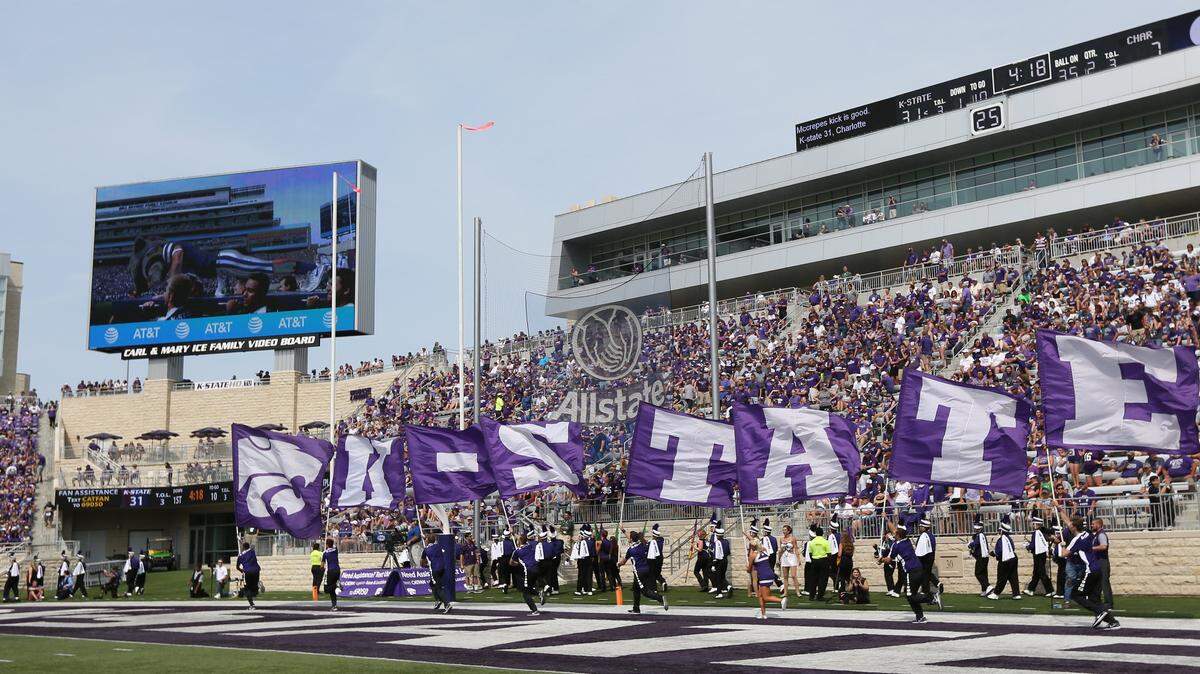
Had college athletes been permitted to earn money through NIL deals back when he played football for the Kansas State Wildcats a decade ago, Curry Sexton knows exactly what kind of business he would have loved to endorse.
“All you can eat at Taco Lucha,” Sexton said. “I would have done something crazy like that. Coach (Bill) Snyder wouldn’t have liked that because I would have been 220 pounds, but that would have been a heck of a deal.”
Aaron Lockett, another former K-State football player, thinks he would have partnered with electronic companies.
“I probably would have gone with a head-phone deal,” Lockett said. “I liked to make music. I was a rapper in high school and had a record deal I was pursuing while I was running track and playing football. I would have also loved to do a clipper deal, because I liked to pretend I was a barber.”
Lockett and Sexton were sharing a few of those stories last October when the focus of their conversation shifted toward the future. Even though they both missed out on NIL (short for Name Image and Likeness) deals while they caught passes and scored touchdowns as K-State receivers, they figured it would be important to help the Wildcats’ current student-athletes cash in on similar opportunities today.
Just like that, an idea was born: They should team up and create a NIL collective specifically designed to help K-State athletes maximize their earning power.
Fast forward seven months, and their vision is about to become reality. With some help from colleague Brian Morris, Lockett and Sexton are poised to launch the project next week. It is called The Wildcats’ Den, even though it is technically a third party that is unaffiliated with the university.
They hope it will be a game-changer for their alma mater.
“It’s almost a must for any Power Five school that wants to remain competitive as far as recruiting and retention goes,” said Sexton, who is now an attorney living in Kansas City. “We have seen these collectives popping up across the country. They started at your big, national-brand schools and now they have found their way down to the K-State level.
“The perception is that it is hard to recruit to K-State. Now, with the transfer portal, it’s probably going to be hard to retain at K-State. We saw a need from a NIL perspective that we thought would be very important. NIL is becoming what facility upgrades were 10 or 15 years ago. It used to be an arms race to see who had the best facilities to recruit the best student-athletes. Now the attention has to shift to NIL.”
Before we go any further, let’s pause for a quick rundown of the current NIL landscape in college sports.
The days of players getting suspended for taking money or a car from a booster are over. College athletes are now permitted to accept just about anything from anyone and retain their college eligibility, so long as a few basic rules are followed.
Players must provide a service in exchange for NIL money or gifts. The service can be as simple as a few posts on social media that promote a business or as complicated as a string of TV commercials. Student-athletes are also now permitted to sell merchandise with their own logos and charge fans for autograph signings.
Recruits can ask coaches general questions about the type of NIL money they can expect to earn in college, but NIL promises are not allowed to be used as a recruiting tool tied to a specific school. Once a recruit enrolls in college, though, his or her earning power is limitless.
Former K-State quarterback Skylar Thompson and former K-State shooting guard Nijel Pack both signed NIL deals with local car dealerships last season. Women’s basketball star Ayoka Lee promoted Wing Stop during the NCAA Tournament.
The goal of The Wildcats’ Den is to make it easier for fans and businesses to arrange future partnerships like those with K-State athletes.
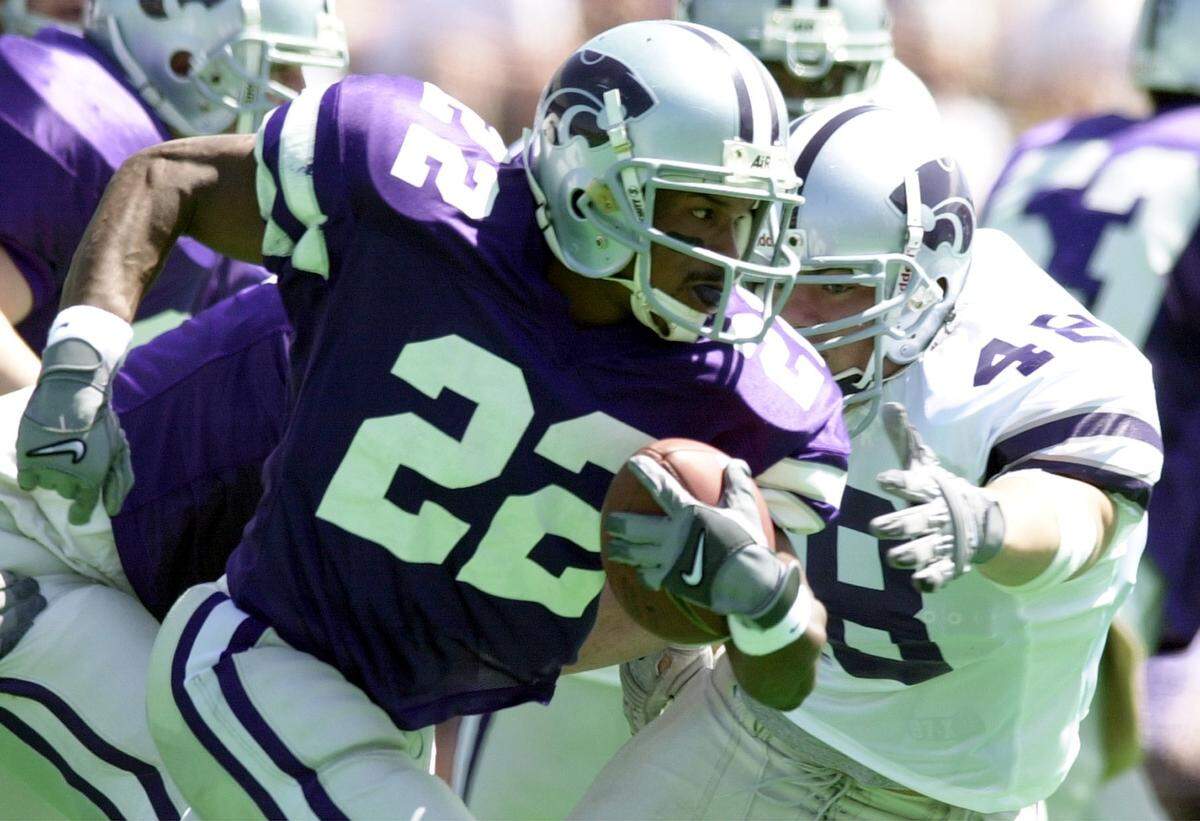
“It’s already helping,” said Lockett, who is now a sports agent living in Houston. “It’s a conversation piece. Now, when you sit down in front of a potential student-athlete you can at least look them in the eye and say we have a platform that allows you to play in the NIL space. Without that, it wasn’t even a conversation. It was based entirely on the student-athlete themselves.”
Lockett also thinks a NIL collective will help K-State by limiting the number of agents that would otherwise contact its student-athletes about providing sponsorship guidance. Having too many, he said, could create a headache.
Sexton says fans and local businesses can support K-State athletes through The Wildcats’ Den in three ways. They can ask the NIL collective to send money to a specific athlete, to a specific team or to an un-allocated fund that the collective will divvy up to athletes of its choosing. Contributions can be big or small.
The only question is, what service will those athletes provide in return? One thing is for sure: it will be meaningful.
“We’re not going to do some of these check-the-box type services where you get $100,000 in exchange for one tweet,” Sexton said. “If we are brokering a deal between a business and a student-athlete, we are going to make sure that the business is getting some bang for their buck.”
Both Lockett and Sexton said they would like to designate most of their un-allocated funds for non-revenue sports.
The Wildcat’s Den arrives at a good time. K-State joins Kansas, TCU, Texas, Texas Tech and West Virginia as Big 12 schools that currently benefit from a NIL collective.
So far, responses to the project have been overwhelmingly positive. In today’s age of college athletics, NIL collectives can be as important as a Hall of Fame coach in recruiting. Sexton said one Manhattan businessman was so eager to strike a NIL deal with one of K-State’s women’s sports teams that they already have a “pretty substantial” deal in place.
Perhaps more details will be revealed after the Wildcats’ Den officially launches on April 20.
Lockett and Sexton hope it will be the first of many.
“I want K-State to be competitive,” Sexton said. “I want K-State and their athletes to be successful. Having been a student-athlete myself who didn’t have real prospects of playing in the NFL, my opportunity to make money off my name, image and likeness was a five-year window while I was in school. I want to make sure that current student-athletes are making the most out of their NIL opportunities now that the policy has changed.”
This story was originally published April 13, 2022 at 5:00 AM with the headline "This new NIL collective could help Kansas State recruit at higher level in all sports."