
What’s next for Big 12 realignment? Our college sports writers make some predictions
It’s been nearly a month since Oklahoma and Texas sparked a new round of conference realignment by announcing plans to leave the Big 12 for the SEC.
A soap opera has followed.
The Big 12 and its remaining teams are in survival mode. The ACC, Big Ten and Pac-12 are discussing a multi-conference alliance. And the SEC is wielding newfound power as if it has become the nation’s first true super league.
The shifting college sports landscape has been both unpredictable and entertaining to watch. That is unlikely to change. It’s impossible to know what will happen next. But it’s never too early to make a few educated guesses.
College sports writers Drew Davison, Blair Kerkhoff and Kellis Robinett are ready to do exactly that after closely following conference realignment over the past few weeks.
Here are their answers to some of the most pressing questions surrounding Big 12 realignment, presented in a round table format:
When do you expect OU and Texas to leave the Big 12?
Kellis Robinett: I’m beginning to think it will be much closer to the publicly stated departure date of July 1, 2025 than we originally expected. In the past, departing Big 12 members have joined new conferences after just one lame-duck season, but this is different than when Colorado, Missouri, Nebraska and Texas A&M were on the way out. The Big 12 doesn’t have equal schools standing by to replace Oklahoma and Texas. It behooves the remaining Big 12 members to bleed as much money as they can out of the Longhorns and Sooners before they join the SEC, whether it be through massive exit fees or four more years of Big 12 membership. For that reason, I expect this to be a slow exit process that could keep OU and Texas in Big 12 country for a few more years.
Drew Davison: My initial prediction has been Texas and Oklahoma playing SEC football starting in 2022. I’m not going to waver from that even though the eight remaining schools appear united in making UT/OU play out the Big 12’s grant of rights deal with Fox and ESPN through the 2024 season, or pay a hefty exit fee. At the end of the day, though, I believe recruits will not look too fondly on playing for Texas and/or Oklahoma as lame-duck teams in the Big 12. I feel the schools will pony up and try to reach a settlement with the league to leave early.
Blair Kerkhoff: If history tell us anything, this will be the final year for Texas and OU in the Big 12. The four previous Big 12 teams to depart — Colorado, Nebraska, Missouri and Texas A&M — all spent one final year in the Big 12. But the Big 12’s grant of rights may complicate things with the Longhorns and Sooners contractually tied to Big 12 until 2024-25. Penalties for leaving early could be assessed — or forgiven — if the Big 12 doesn’t survive beyond this year.
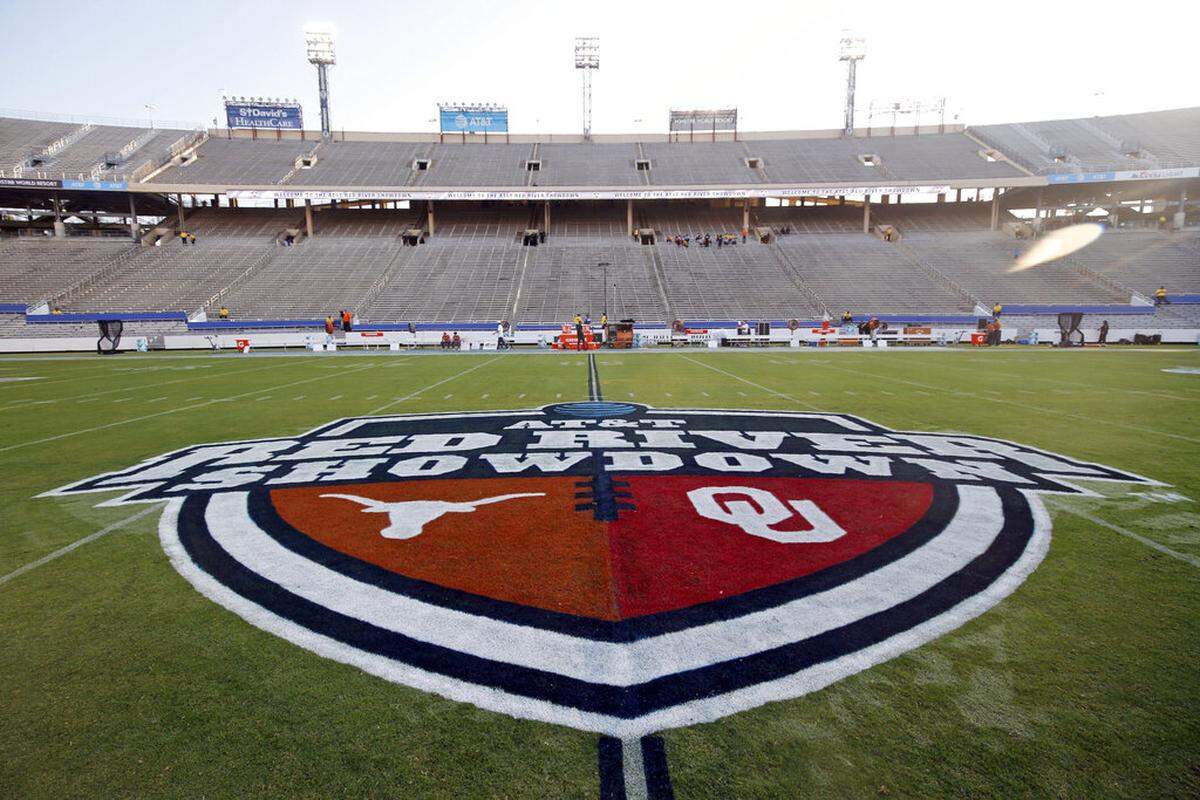
What does it mean for the Big 12 if the ACC, Big Ten and Pac-12 form an alliance?
Kellis Robinett: When this news was first reported by The Athletic, it seemed like the sky was falling for the Big 12. But I’m no longer certain this is actually a doomsday scenario. Yes, it is sobering to realize that commissioners from other power conferences are excluding Bob Bowlsby from their conversations, but it’s also hard to see those leagues forming a concrete alliance that pits them against the world. The Big Ten and Pac-12 once agreed to a scheduling alliance, and it never materialized. I’m skeptical they could revive such plans between three conferences. Even if they did, such an arrangement would make it easy for the Big 12 and SEC to schedule attractive nonconference games, such as Bedlam or Baylor/Texas A&M. Painful as it may be for Big 12 teams to do business with the SEC, there would be money in those games. In any case, a political alliance between the ACC, Big Ten and Pac-12 seems more likely than anything else. That wouldn’t necessarily be bad news for the Big 12, unless they vow not to expand.
Drew Davison: An alliance between those three conferences likely wouldn’t bode well for the remaining schools in the Big 12. If those three leagues align and opt not to expand then the remaining eight schools would not have landing spots other than a remade Big 12. Not to mention the possibility that those leagues forming an alliance that could make for watered down nonconference games throughout the Big 12 in the future.
Blair Kerkhoff: I wouldn’t get too caught up in the recent meetings among the other power conferences. My guess is their alliance is less about scheduling than keeping SEC power in check. It’s wise for the Big Ten, Pac-12 and ACC to keep their lines of communication open and even discuss which Big 12 schools could be most attractive for addition.
What is the best realistic scenario for the team you cover in realignment?
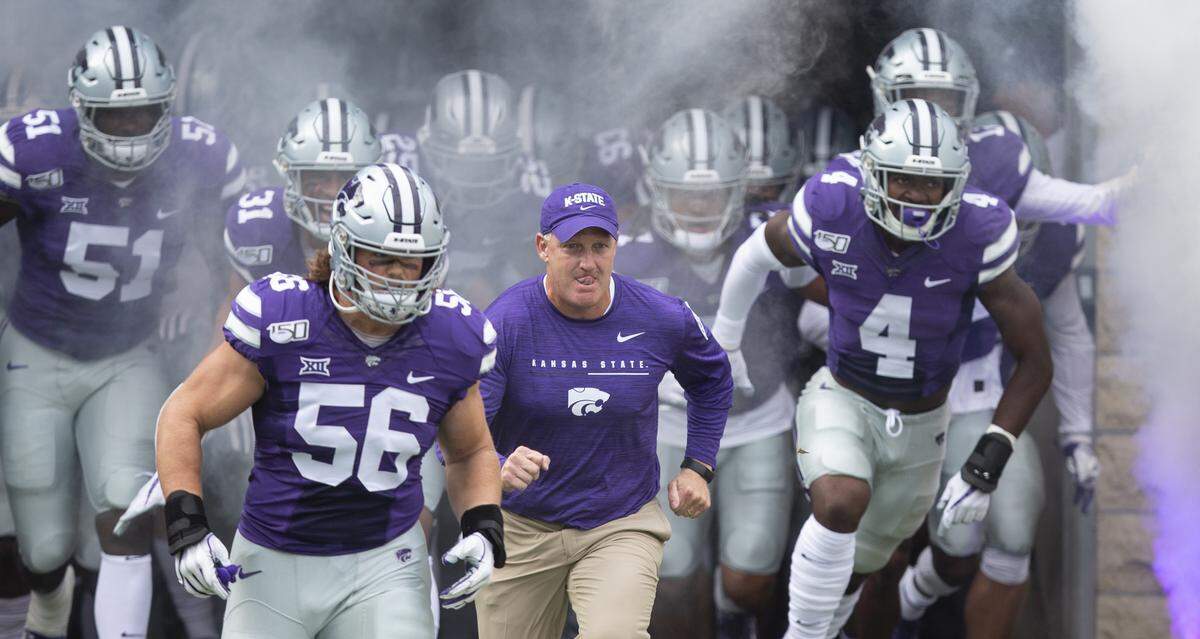
Kellis Robinett: For K-State, the dream is to join the Pac-12. That could happen if the Big 12 and Pac-12 decide to merge conferences or if George Kliavkoff follows in the footsteps of Larry Scott and tries to expand east by poaching four Big 12 members. A full-on merger seems unlikely, but what if ESPN provided incentives to make it happen so the company could get out of its remaining financial obligations to the Big 12 and The Longhorn Network? The Wildcats are unlikely to be at the top of Kliavkoff’s expansion wish list, but none of the remaining Big 12 teams are slam-dunk candidates. Maybe they could attach themselves to a bundle that includes Texas Tech, Oklahoma State and Kansas. It’s a long shot, but it seems more likely than anything that could happen with the other power conferences.
Drew Davison: For practical purposes, let’s rule out two things: the Big 12 convincing schools such as Arizona, Arizona State, Utah and Colorado to join; and the SEC expanding again. With that being said, TCU has strong ties to the West Coast and the Pac-12 remains its best option whether it’s becoming a member of the Pac-12 or the Big 12 forming some sort of scheduling alliance/merger with the conference. The Frogs have a lot of alumni and students coming from the Southern California area, courtesy of their Rose Bowl win in 2011. And they’ve traditionally gone out west for nonconference basketball games. The Pac-12 would seem to make the most sense for Texas Tech and Baylor, too. The Texas schools have discussed sticking together as the three packaged together could be stronger than individually. If the Big 12 dissolves, the Texas schools would have to pitch the Pac-12 on the importance of expanding its footprint into the talent-rich state.
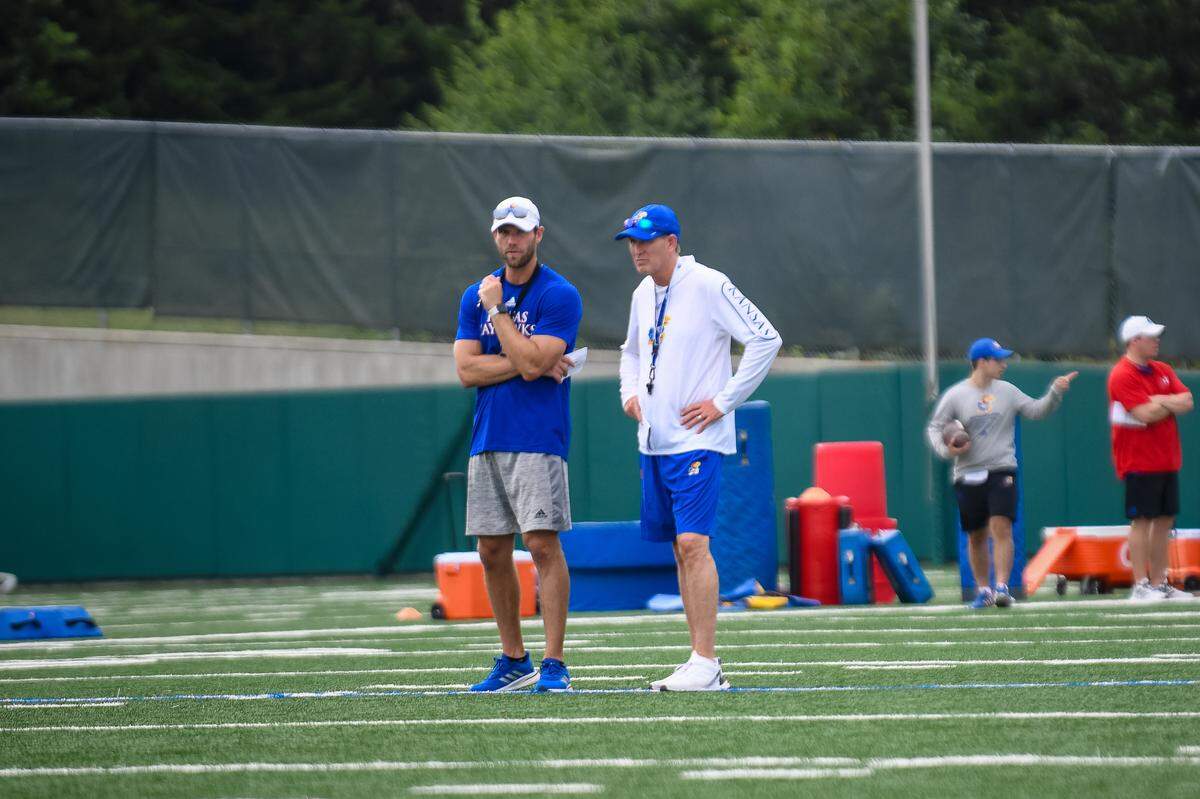
Blair Kerkhoff: For any school, the best realignment scenario is being part of a conference attached to a multi-billion TV deal. If each school could sell itself, I’d think KU and Iowa State would tout AAU affiliation, Jayhawks men’s basketball, Iowa State and Kansas State loyal fan followings in football, Oklahoma State’s deep and proud across-the-board athletic history and the Texas market for Tech, TCU and Baylor. For Kansas City and the basketball tournaments, the best scenario is a conference that includes KU, K-State and Iowa State and the men’s event held at T-Mobile Center.
If the Big 12’s remaining schools stay together, how viable do you think a remodeled conference can be?
Kellis Robinett: From a purely competitive standpoint, a Big 12 that features some combination of Boise State, BYU, Cincinnati, Houston, Memphis and UCF could be fun. On the gridiron, they would play an exciting brand of football that would almost certainly be regarded as the nation’s fifth best conference. Who knows? Maybe it would occasionally surpass the Pac-12. The Big 12 champion would qualify for an expanded playoff and be capable of making some noise once there. On the hardwood, the Big 12 would remain one of the nation’s best men’s basketball leagues even without Oklahoma and Texas. The Big 12 basketball tournaments could remain in Kansas City. That all sounds good to me. Unfortunately, a remodeled Big 12 wouldn’t be nearly as profitable as the current Big 12. Even under the best of circumstances, the league would likely distribute around $14 million less to its members each year.
Drew Davison: The Big 12 would remain a viable league if it goes the expansion route. The league has missed out on opportunities before. Heck, Florida State showed some interest less than a decade ago. Then the league talked with a number of schools in 2016, a couple of which blossomed into top 10 football programs during that span, such as Central Florida and Cincinnati. If those schools did it under the Big 12 umbrella, maybe the league is better positioned today? Back to the question ... I’d think adding Cincinnati, Houston, BYU, Memphis, UCF and South Florida would make for a fun, credible 14-team league. If you want 16? Boise State, San Diego State and Colorado State are on the short list. It may be known as the “fifth best” conference but it’d give the Pac-12 a run for its money in football some years and be a great basketball league (yes, I know basketball doesn’t matter in realignment).
The problem with a restructured Big 12 is that the TV revenue would not be as great as it is in the Big 12. That would translate to heavy cuts for the remaining eight schools, but I’d argue the path to the CFP for the eight remaining schools is more realistic than joining another league. I’d also argue recruiting wouldn’t take as big of a hit as some forecast. Is TCU going to lose a recruit to, say, Georgia Tech or Rutgers just because Georgia Tech is in the ACC and Rutgers is in the Big Ten while TCU is in a remade Big 12? I don’t think so. Conference affiliation matters, of course, but I don’t see it becoming a devastating blow.
Blair Kerkhoff: I could see a Power 4 1/2. A Big 12 with a handful of additions would remain more attractive than the American, Mountain West, Conference USA, Sun Belt or MAC. It likely wouldn’t command the TV dollars it currently receives, but it would be worth more than the other conferences.
What’s your gut prediction on what happens to the Big 12 after OU and Texas leave?
Kellis Robinett: Ask me again next week and I will probably have a different answer, but right now I predict that the Big 12’s remaining eight teams will reluctantly stick together and rebuild the conference through expansion. All eight will try to find better landing spots first, but that is where I expect them to end up.
Drew Davison: My gut says the Big 12 eventually dissolves. It’s hard to envision the league surviving without its two flagships. Eventually I see the other leagues expanding to 16 teams, as well, and some of the remaining Big 12 schools will find homes elsewhere.
Blair Kerkhoff: The best case scenario for college sports is for Texas and OU to remain in the Big 12 until the contract expires. It would give the stakeholders three-plus years to plot the next century instead of conferences and schools having to react to an unexpected and unnecessary move by the SEC. Nobody in college sports, outside of ESPN, wants this to happen. By waiting, conferences, schools and networks would have more time to consider options. Schools in the nation’s heartland have always had a home in a major conference. But my guess is eventually there will no longer be a Big 12.
This story was originally published August 19, 2021 at 5:00 AM with the headline "What’s next for Big 12 realignment? Our college sports writers make some predictions."