
How Johnson County kept more than 1,000 families from homelessness | Opinion
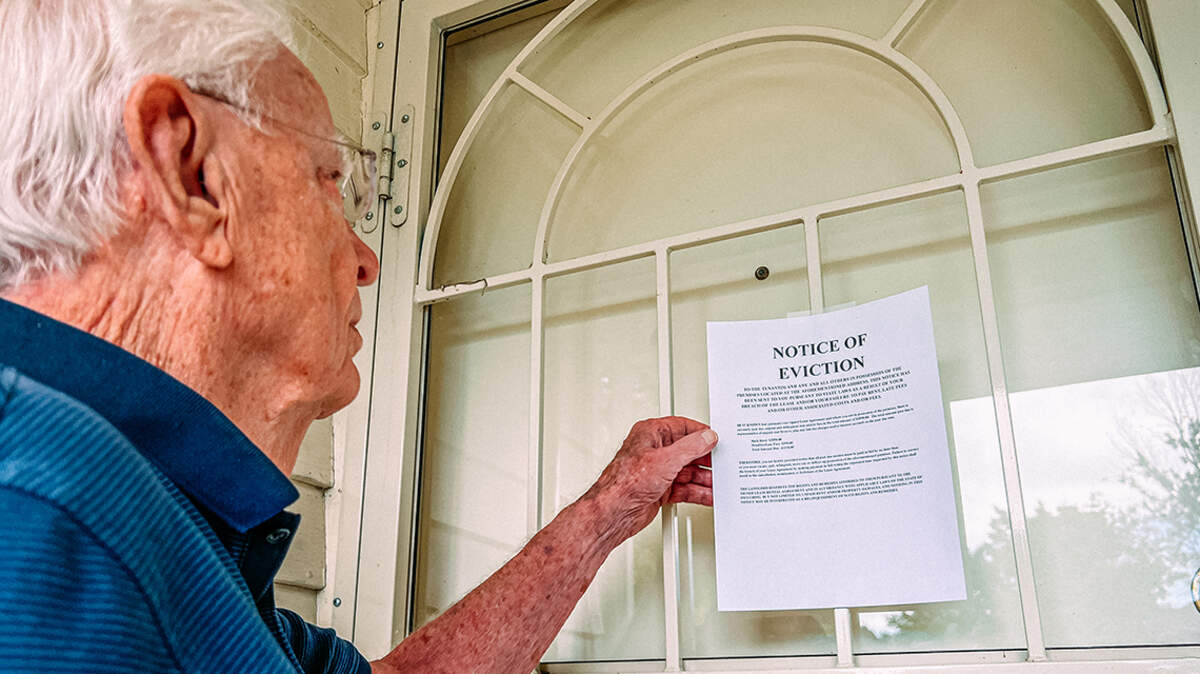
Advocates and legislators recently joined Kansas Gov. Laura Kelly for the signing of House Bill 2357. This landmark legislation establishes a legal pathway for tenants to clear past eviction records and asks district courts to consider mediation in eviction actions.
The eviction mediation legislation grew out of the success of Johnson County District Court’s eviction mediation program, which was made possible through funding provided by the Johnson County Commission. The program has received national recognition and has become a model for other courts throughout Kansas looking to replicate its success.
Kansas has one of the quickest eviction processes in the country, requiring the courts to determine possession of the property within 14 days of the beginning of the process. The law does not require a grace period for late payments or for landlords to accept partial payments, even though these are rights that banks are required to give mortgage holders.
During the COVID-19 pandemic, I received calls from constituents facing eviction notices and in need of resources. Heartbreaking stories emerged, including a veteran receiving cancer treatment, a single mother losing child care and a truck driver with a broken leg and no health insurance. Despite a long history of paying rent on time, these hardworking individuals found themselves with an eviction notice and needing help during a tough time.
In 2023, the pandemic-era rental assistance program ended, and evictions increased. I knew change was needed. I approached District Court Judge McEntee, the sheriff’s office, county housing services and my colleagues to start a pilot mediation program.
The program requires landlords and tenants in eviction court to meet with a neutral third-party mediator to try and reach an agreement, usually including repayment terms and move-out dates. If all parties uphold the terms of the agreement, no eviction judgment is filed. Typically, this results in landlords getting paid and having a clear plan for tenant move-out without an eviction record. The process also includes connecting tenants with resources.
Since the program’s inception, there have been 1,049 mediation agreements, and 76% of them were successful. These tenants are not serial offenders, as 78% of them have not had an eviction filing in the previous past five years. Most participants have incomes below $39,000 and more than half have at least one minor child in the household. Most of these families spend more than 30% of their gross income on housing costs and fall behind after an unforeseen event, such as a job loss, reduction in work hours or a medical issue. According to the 2026 point-in-time study conducted by United Community Services of Johnson County, evictions were reported as a contributing factor among 26% of people experiencing homelessness.
Before the recent passage of H.B. 2357, an eviction would follow a tenant for life, making it almost impossible to find another rental. This law, introduced by state Reps. Cyndi Howerton and Leah Howell, will allow tenants to ask the court to expunge eviction records after three years if all debts are paid and the landlord does not dispute. It also asks courts to consider meditation in eviction actions. This landmark legislation serves as a pioneering example, inspiring other states to adopt similar measures.
My hope through this program is that the county, in collaboration with community partners, will enhance its capacity to provide resources proactively, thereby mitigating the risk of evictions and homelessness.
Once a family has lost their home or is evicted, it is so much more difficult and requires so much more time, effort, money to be able to get them housed again. If we can just prevent it all together in the first place, we never have to go down that road. Most of all, the program works to ensure that kids continue to go to school and they’re safe and stable in homes.
Becky Fast represents the 1st District on the Johnson County Commission.