
How Jerry Moran can help Kansas police focus on actual crime | Opinion
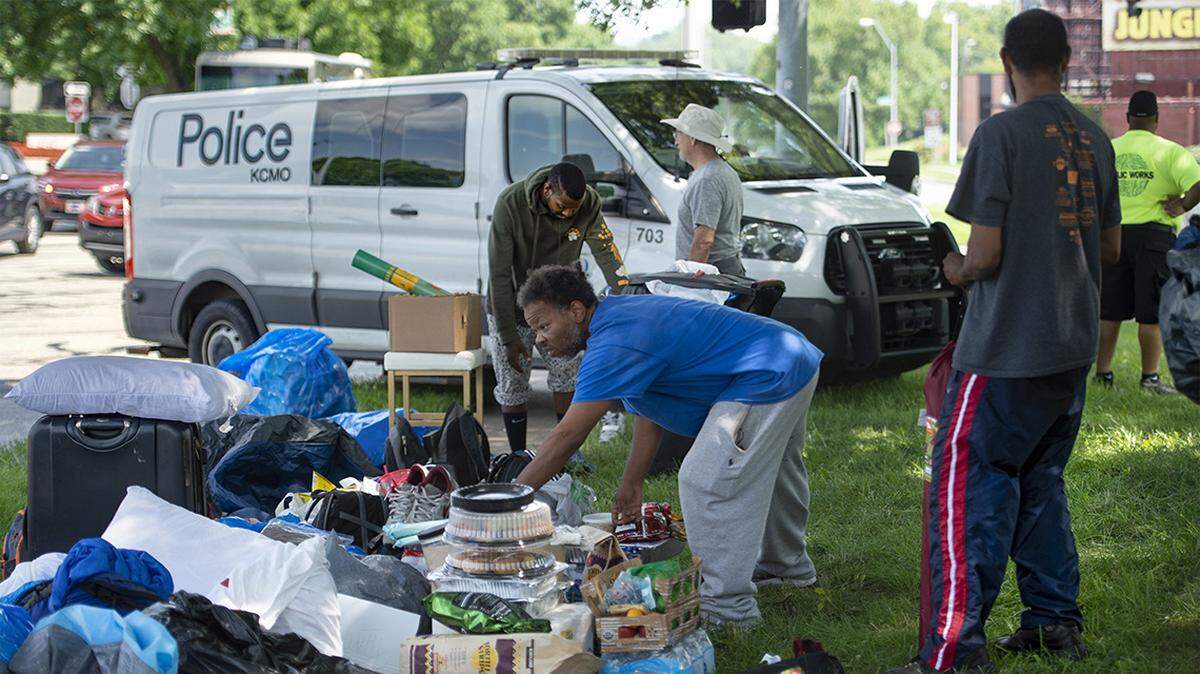
Over my more than two-decade career in law enforcement, I’ve learned an important lesson that most officers come to understand early on: Not every problem can be solved with handcuffs.
Police officers are routinely called to respond to issues involving addiction, mental health, homelessness or poverty. That’s because people dial 911 not only when crimes occur, but when they need help and don’t know where else to turn.
A police response that relies on arrest and incarceration doesn’t serve anyone. The people struggling with these issues don’t benefit from churning through the criminal justice system. Police get frustrated watching the same individuals cycle through arrest, release and crisis. Families want to see their loved ones connected to treatment and support, not simply pushed deeper into instability. Communities want strategies that prevent crime and disorder, not simply fill jails.
My own experience in policing reinforced this lesson. Over the years, I sought out specialized crisis intervention and homeless outreach training that emphasized connecting people to services instead of defaulting to arrest. Time and again, I saw how alternative responses could stabilize situations, reduce repeat police contact and produce better outcomes for everyone.
The results are clear. This approach improves outcomes for people in crisis, reduces unnecessary arrests and helps officers direct resources where they are most needed. Just as important, our work strengthens trust between law enforcement and the communities we serve.
Programs such as Law Enforcement Assisted Diversion or LEAD build on that same principle. These initiatives give officers another option when responding to low-level offenses tied to addiction, mental illness or poverty. Instead of automatically making an arrest, officers can divert individuals to case managers and service providers who connect them with treatment, housing assistance, counseling and other supports designed to reduce future criminal justice involvement.
Research on LEAD programs around the country has shown reductions in recidivism, improvements in housing and employment stability. These programs can also ease pressure on jails, courts and patrol officers by helping address underlying issues before they repeatedly generate emergency calls and arrests.
From a law enforcement perspective, this is not about being soft on crime. It’s about being smarter and more effective in how we use limited public safety resources.
LEAD is not a fringe concept. Similar diversion programs already operate successfully in states across the country, including neighboring Missouri and Indiana. Despite its promise, however, Kansas still lacks the resources necessary to launch and sustain these efforts at scale.
As Congress works through federal budget negotiations for 2027, lawmakers now have an opportunity to change that. By expanding funding for evidence-based diversion programs such as LEAD, elected officials can make a real difference for law enforcement and public safety.
Kansas is uniquely positioned to help move this conversation forward due to the leadership of Sen. Jerry Moran, who currently serves as chair of the Senate appropriations subcommittee overseeing justice funding. Moran has long supported both law enforcement and behavioral health initiatives. Funding LEAD would give officers additional tools to respond effectively to calls that do not require arrest.
For too long, police officers in Kansas have been expected to use a traditional enforcement toolkit to address problems that are driven less by criminal intent than by unmet behavioral health and social service needs. That mismatch has an outsized impact, as these calls make up a disproportionate share of the daily police workload.
LEAD offers a practical alternative that benefits everyone — reducing repeat system involvement, strengthening communities and allowing law enforcement to focus on serious crime. Congress should ensure that states like ours have the resources to invest in a proven approach to public safety.
Nate Schwiethale began his law enforcement career in 2001 as a patrol officer with one of the largest cities in the state. As a member of with Advanced Crisis Intervention Team training, he is a nationally recognized expert on police responses to homelessness for consulting firm Safe Night LLC. He also serves as a speaker for the 501(c)(3) nonprofit Law Enforcement Action Partnership.