
Is Trump’s Iran attack an Epstein files distraction? Examine the evidence | Opinion
One course in law school that is rarely discussed, but extremely important, is evidence. To the layperson, evidence is usually simply viewed as the tools necessary to prove or disprove a criminal or civil case.
But evidence is much more than that. In fact, many trials are won or lost because evidence was illegally obtained, mishandled or contaminated, or the chain of custody was broken. Also, evidence that might seem crucial to one side can be considered irrelevant or prejudicial to the other, leaving it up to the judge to decide whether to admit or omit it from a trial.
Also, there are several types of evidence, and the most potent is often viewed as direct evidence. Many experts place eyewitness testimony into this category because an individual has directly witnessed an incident occur.
But eyewitness testimony has also been discovered to be flawed for a number of reasons:
- Faulty or biased suspect lineups.
- Weapon fixation or weapon focus, where a person doesn’t clearly see an attacker’s face due to focusing on a weapon that the assailant is holding, and thus just makes assumptions about his or her appearance.
- Trauma or faulty memory.
- Problems with cross-racial identification, which, although controversial, nonetheless still does happen when people who don’t regularly interact with people of other races sometimes base eyewitness identifications on broad generalizations instead of specific features.
- And, perhaps the most disturbing — as was alleged in the killing of Cameron Lamb in Kansas City — eyewitness testimony skewed by bias, cronyism and embellishments. In that case, prosecutors presented their theory that the scene was staged after former KCPD detective Eric DeValkenaere fatally shot Lamb, with a gun placed on the ground below the dead man’s arm, and bullets later planted among possessions supposedly retrieved from his pockets.
The weakest form of evidence is often described as circumstantial evidence. The common example used to distinguish between direct and circumstantial evidence is that if we look out a window and see it raining, that is direct evidence, but if we look out a window and see puddles on the ground, we can only assume it rained.
Circumstantial evidence is like a puzzle where one fact standing alone may have a perfectly innocuous explanation, but several pieces of a puzzle can often lead to a definitive conclusion. It should never be dismissed.
For example, there have been murder trials where the victim’s body was never found, but evidence showed they were not accessing bank or credit card accounts, not contacting family members as they habitually did in the past, leaving behind items such as cellphones, purses or wallets, or missing work without explanation.
Grenada, Panama, Iraq, next?
Last November, I wrote in The Star about how often in recent American history, numerous wars have been waged based upon circumstantial evidence. Some examples I cited were the 1983 invasion of Grenada, the 1989 invasion of Panama and the 2003 invasion of Iraq.
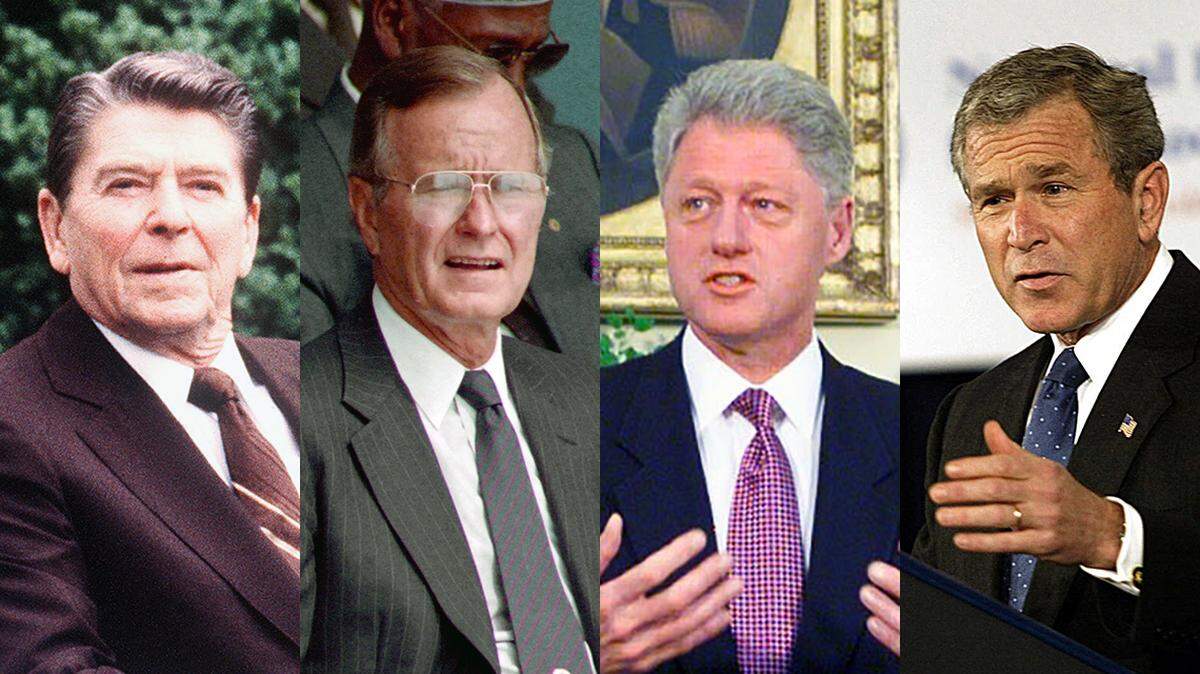
Circumstantial evidence in all these invasions lead me to one conclusion: The presidents who launched them all had self-serving political motives to do so. Ronald Reagan was seeking to divert attention from the Iran-Contra affair. George H.W. Bush was trying to divert attention from the savings and loan scandal. Bill Clinton launched attacks on both Afghanistan and Sudan at roughly the same time his sexual relationship with Monica Lewinsky was revealed. And George W. Bush was seeking to enhance his reelection chances in the 2004 presidential race after a politicized Supreme Court had controversially cleared the way for his presidency in 2000.
When I wrote last, Donald Trump was beating the war drums against Venezuela — and although I didn’t include it in that commentary, increasing political pressure over the Epstein files was weakening his support, even among some members of the MAGA base. Invading Venezuela was apparently becoming a welcome distraction.
Since that time, Trump did invade Venezuela, and that took pressure off for a while. But now circumstantial evidence has once again demonstrated how the invasion of Iran conveniently occurred just as new revelations surfaced discussing how several documents from the Epstein files that raise suspicions about Trump’s activities were inexplicably withheld from public release.
But I am not the only one who suspects Trump’s self-serving motives for starting a war with Iran. Shortly after the invasion, Republican U.S. Rep. Thomas Massie also warned the president that bombing Iran “won’t make the Epstein files go away.”
As I mentioned before, and repeat here as the pattern has reoccurred, it is time — indeed past time — for Americans to stop being duped, and for the lives of young people to stop being sacrificed, just so some demagogues can divert attention away from a political scandal or enhance their standing in the polls. Patriotism is a noble thing, but blind patriotism is not, because it allows those in power to selfishly exploit it by creating red herrings via unnecessary wars. Pay attention to the circumstantial evidence surrounding Trump’s attack on Iran.
Friedrich Nietzsche once said, “Insanity in individuals is something rare — but in groups, parties, nations, and epochs, it is the rule.”
It’s time to stop the insanity, or there may soon be no future epochs to create.
David R. Hoffman is a retired civil rights and constitutional law attorney. He lives in South Bend, Indiana.