
Could Fort Leavenworth get dragged into politics? It’s happened before | Opinion
Almost every state in America hosts a military base, with one of the best-known being Kansas’ Fort Leavenworth in Kansas. These are bases comprised of people, many if not most of them young, who display a willingness to risk their lives to defend the nation’s values.
But what if those in power simply hide behind these values to camouflage the fact that they are using the nation’s military resources for dishonest or self-serving purposes?
Although the Great Lie theory (or, as it is known in the United States, the Big Lie) was discussed in detail in Adolf Hitler’s “Mein Kampf,” it has actually been around ever since governments began, and has been a tool deployed across the political spectrum.
The Great or Big Lie theory argues that while people recognize ordinary lies, regardless of who’s telling them, if a political or religious leader tells major lies, people will tend to accept them as truth in the belief that their leaders would not deceive them about issues of great importance.
History has shown that Great Lies are especially exploited in the buildup to, during and in the aftermath of wars.
For example, the 1890 “battle” of Wounded Knee — which the U.S. Department of Defense recently decided to maintain American soldiers’ Medals of Honor for — was actually more of a massacre of Lakota Sioux people, designed to suppress the Ghost Dance movement that sought to preserve Native American culture. It is estimated that up to 300 tribal members were killed, including numerous women and children.
It is now also believed that the Spanish-American War actually resulted from exaggerations about the cause of the 1898 sinking of the American battleship the USS Maine.
In fact, it can be argued that many, if not most wars and conflicts America has engaged in since the end of World War II have been instigated or escalated for specious reasons, if not outright lies.
Vietnam, Grenada, Panama, Venezuela?
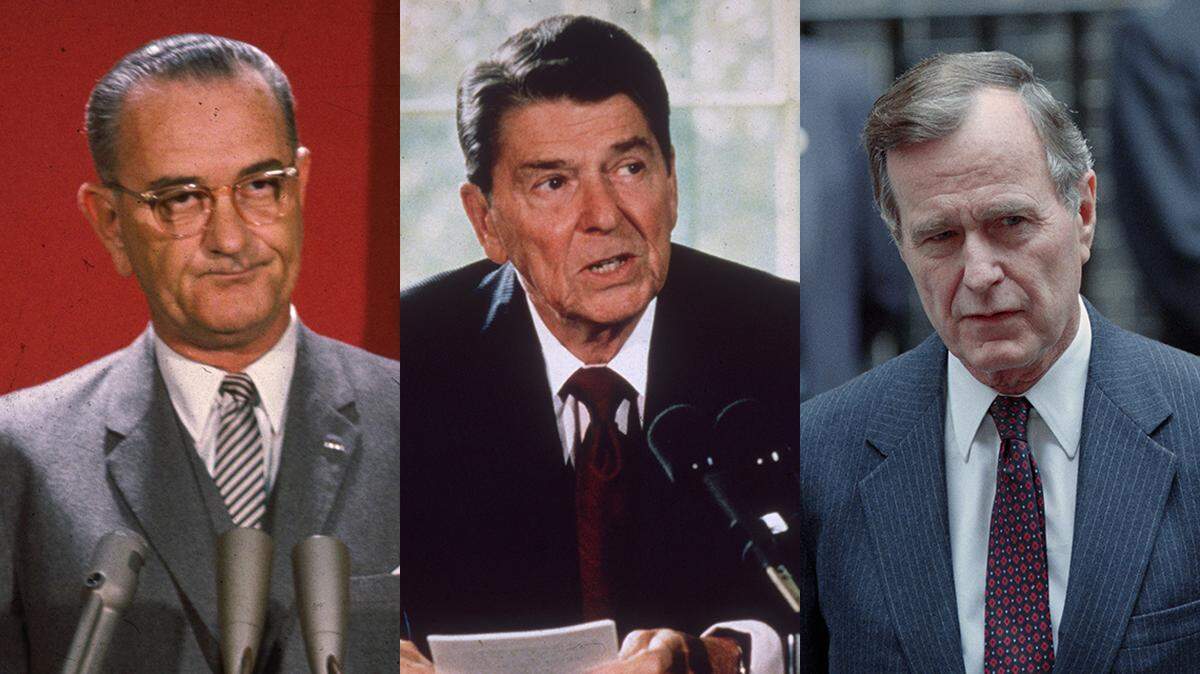
America’s involvement in Vietnam under Lyndon B. Johnson was escalated by claims that in August 1964, U.S. Navy destroyers had been attacked by North Vietnamese vessels in the Gulf of Tonkin — an incident that never occurred. Ronald Reagan’s 1983 invasion of Grenada coincided with the then-escalating Iran-Contra affair. George H.W. Bush’s 1989 invasion of Panama coincided with the savings and loan crisis. And George W. Bush, whose popularity and reelection chances were suffering after taking office with a controversial Supreme Court ruling, launched the 2003 invasion of Iraq on the now disproven arguments that Iraq possessed weapons of mass destruction, or had some involvement in the Sept. 11, 2001, attacks.
The pattern is clear: When American presidents want to divert attention from scandals, enhance their waning political stature or improve their chances for reelection, they frequently use war as a tool to do so — quite possibly involving personnel currently serving at Fort Leavenworth. And, not surprisingly, to ensure victory, their targets are usually impoverished, unallied, militarily weak nations.
But the cost of war for political gain can linger for decades. Not only are people in the invaded nations killed, but American soldiers also lose their lives — not to defend democracy, freedom or human rights, but to satiate the political aspirations of demagogues.
In addition, the destabilization and internecine fighting that frequently occurs after America has declared, “Mission accomplished,” and departed an invaded nation can linger for decades, bringing even more suffering and hardship to the people who still reside there.
This is why it is important for all decent Americans, especially politicians (if there are any decent ones left) to demand evidence that the Venezuelan boats now being targeted are definitely tied to the drug trade and not just being used as a pretext to wage war against Venezuela.
John F. Kennedy once said: “Ask not what your country can do for you. Ask what you can do for your country.”
What you can do for your country is demand that future military actions, and risking the lives of American troops, be based on provable evidence, not simply dubious assertions that scream, “Believe me because I’m a leader.”
David R. Hoffman is a retired civil rights and constitutional law attorney. He lives in South Bend, Indiana.