
Undocumented students who pay in-state tuition make Kansas stronger | Opinion
In his Feb. 28 column, Joel Mathis praised the Kansas statute that establishes a path for undocumented students to pay in-state tuition rates at Kansas public postsecondary institutions. Mathis rightly noted that the students who make use of the law “are Kansans in a very real sense.”
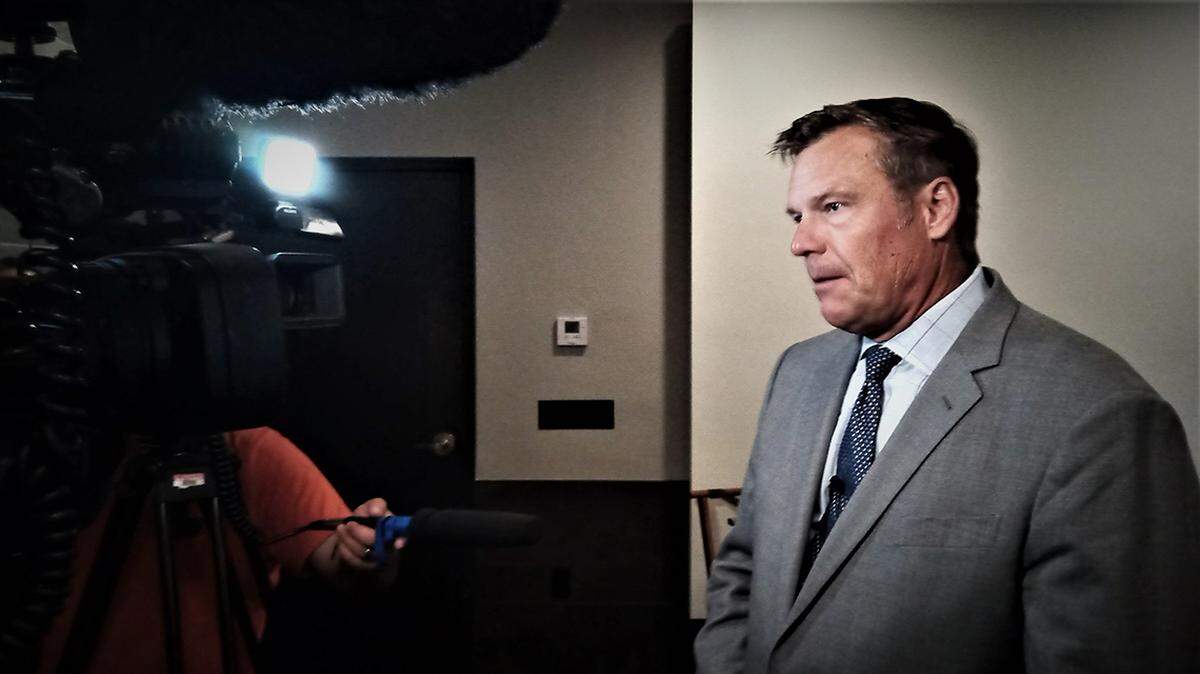
Attorney General Kris Kobach claimed in a social media post that the Kansas statute 76-731a must be set aside pursuant to federal law. Kobach doubled down on this assertion in testimony he gave on Feb. 27 to the Kansas Senate Federal and State Affairs Committee.
Kobach is wrong. He’s basing his argument on a federal statute, 8 USC 1623, that was enacted in 1996. It’s a measure of just how far anti-immigration advocates are willing to bend the law that they would advocate that a federal statute enacted 30 years ago renders illegal a state statute passed in 2004 and successfully implemented in the ensuing 22 years.
Anti-immigration advocates typically refer to “illegal aliens” or “illegals” when attacking K.S.A. 76-731a. They also ignore how carefully that statute sets standards that undocumented students must meet to be able to make use of in-state tuition rates. It’s important, then, to review the language of the statute.
Undocumented students will be treated as residents for the purpose of tuition and fees at Kansas public postsecondary institutions pursuant to that statute if they have 1) attended an accredited Kansas high school for three or more years; 2) graduated from an accredited Kansas high school or earned a Kansas General Educational Development credential; and 3) filed an application to legalize their immigration status, or filed to begin the process to obtain citizenship, or will file legalization or citizenship intention as soon as they are eligible to do so.
That’s hardly a “free ride” for “illegals.” The statute sets out clear standards that undocumented students must meet before they can pay in-state tuition at state public postsecondary institutions. And it’s important to note that the law requires that undocumented students “file an application to legalize their immigration status,” or otherwise take steps to file legalization or citizenship applications.
But that doesn’t satisfy anti-immigration advocates. They argue that the carefully crafted Kansas statute must be set aside by application of federal law. A review of 8 USC 1623 shows that argument is misguided.
That statute provides that “an alien who is not lawfully present in the United States shall not be eligible for any postsecondary education benefit unless a citizen or national of the United States is eligible for such a benefit (in no less an amount, duration, and scope) without regard to whether the citizen or national is such a resident.”
Courts have rejected the argument that this federal statute renders state laws such as K.S.A. 76-731a invalid. They have found that the federal statute does not categorically prohibit states from offering in-state tuition rates to undocumented students. If those state statutes set forth specific standards for granting in-state tuition rates to undocumented students, the federal law does not apply.
Courts have also found that tuition rates are not a “benefit” proscribed by the federal law. That is why the Kansas law is carefully crafted to merely address the way in-state tuition rates are made applicable. The undocumented student who makes use of those rates receives nothing else and must fully fund his or her education in the same manner as any other student.
So, let’s look at how K.S.A. 76-731a is working. From 2010 through 2024, almost 8,000 students have made use of this statutory option. Records maintained by the Kansas Board of Regents show that in 2024, students who were enrolled through this program constituted 11% of the students enrolled at the state’s public universities, 28% at its community colleges and 21% at its technical colleges.
Some of the undocumented students who’ve made use of the statutory authorization are now employed in Kansas and have achieved United States citizenship. That’s sound public policy.
Skeptics may sniff that 8,000 is a small number, but the truth is that Kansas is losing population in some areas of the state. With education and training, students who complete the program and go to work in Kansas contribute to the state’s economic and social well-being.
Kansans should celebrate undocumented students who have paid in-state tuition pursuant to statute, graduated and gone to work in this state. Efforts to repeal the statute that made that possible should be rejected.
Fred Logan is a retired lawyer in Leawood. He served on the Kansas Board of Regents, the governing board for state higher education institutions, from 2011 to 2015.