Young undocumented immigrants aren’t just dreamers, they’re Kansans | Opinion
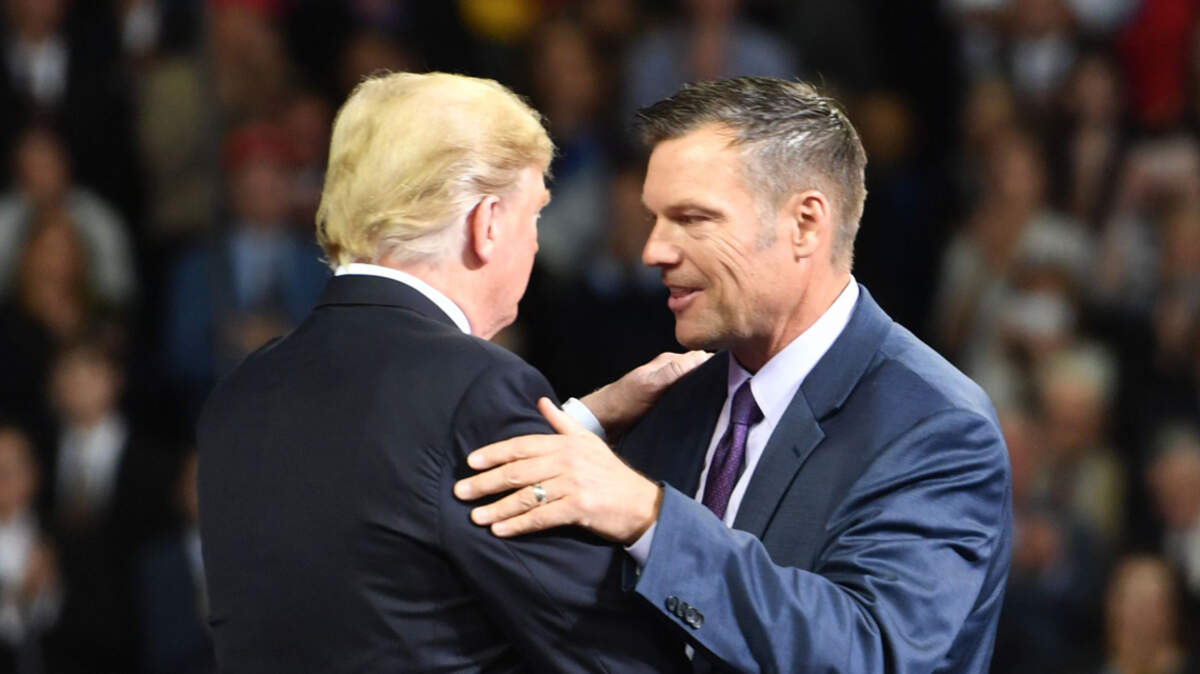
While the president was regaling Congress with lurid anti-immigrant tales the other night, Kansas Attorney General Kris Kobach decided to weigh in on social media — not against murderously criminal “aliens,” as he likes to call them, but against young undocumented immigrants who want to further their education in the Sunflower State.
“Giving in-state tuition rates to illegal aliens, as many states have done, not only violates federal law (8 USC 1623), it treats illegal aliens better than US citizens from other states,” he wrote Tuesday night on X during President Donald Trump’s State of the Union speech.
And, well, he’s only half-right.
It’s true that the undocumented kids who qualify for in-state tuition at Kansas colleges and universities — a law that Kobach wants repealed — are not U.S. citizens.
But they are Kansans in a very real sense.
Getting unstuck
Children should not suffer for the sins of their parents. It’s an age-old concept, one that was at the heart of the 2004 Kansas law that allows in-state tuition for some undocumented migrants.
The idea was this: Lots of immigrants — from Latin America, Africa and Asia — were coming to Kansas to work, often coming into the United States illegally, often dragging their kids along with them rather than leaving their families behind.
The kids, being kids, had no choice in the matter.
But their lives were irrevocably changed by the decisions their parents made. They ended up caught in a sort of limbo. They often grew up with only a dim awareness of or connection to their birth countries. But they were not fully American either, at least in a legal sense.
They were stuck.
The 2004 law was designed to be merciful, to help those young undocumented migrants get unstuck from the consequences of choices made by others. It allowed them eligibility to pay the same public college tuition rates as other Kansans — lower than paid by, say, students coming from Illinois to study here — if they meet a couple of criteria: They have to have attended a Kansas high school for at least three years, earned their diploma or GED, and be working to legalize their status in the United States.
Aside from helping those young people get unstuck, the law also sent a powerful signal.
It implicitly recognized that those young people — young folks who had gone to school in Kansas, who had played on their high school volleyball or football teams or who participated in debate tournaments and pep bands and went to church youth groups — were, by dint of longtime residence and hard work, part of the Kansas community.
Formal citizenship is one way to determine who belongs in a community, after all. But it’s not the only way.
Sometimes you know that somebody is part of your community when they work, study and worship alongside you.
“They are great Kansans who already struggle to pay for instate tuition,” Fred Logan, formerly a member of the Kansas Board of Regents, said in 2015. “But they do it anyway based on their own guts – their own motivation.”
Is there mercy in Topeka?
That law passed, of course, back when there was broad hope for a grand bargain that might allow for tighter borders while at the same time offering a path to citizenship or legalization for young people — often known as “Dreamers” — who came here through no choice of their own.
George W. Bush favored that compromise. So did Barack Obama. But a hard core of right-wing politicians and activists — including folks like Kobach — have never allowed it to come to fruition. With Trump in charge, it’s unlikely to be revived soon.
Instead, the Kansas Legislature is now considering a long-gestating bill that would effectively repeal the 2004 law.
That would be a shame. Roughly 5,100 undocumented students benefited from in-state tuition between 2010 and 2021, according to the ACLU. But Kobach has told legislators the law pits the state against federal laws.
“If Kansas were to be sued by the federal government over this statute,” he said in an opinion issued earlier this month, “Kansas would likely lose the lawsuit.”
Maybe. But maybe this moment is also a test of whether the Legislature — now under the supermajority control of the Republican Party — has any mercy left in it.
One hopes.
“Our immigration system is confused,” state Rep. Bob Lewis, a Garden City Republican, said earlier this month in comments reported by the Topeka Capital-Journal. But, he added: “These are the innocents that need to be protected.”
Innocents. And — in ways that should matter deeply — Kansans.