
Jesse Jackson showed us it’s always right to take a stand against bigotry | Opinion
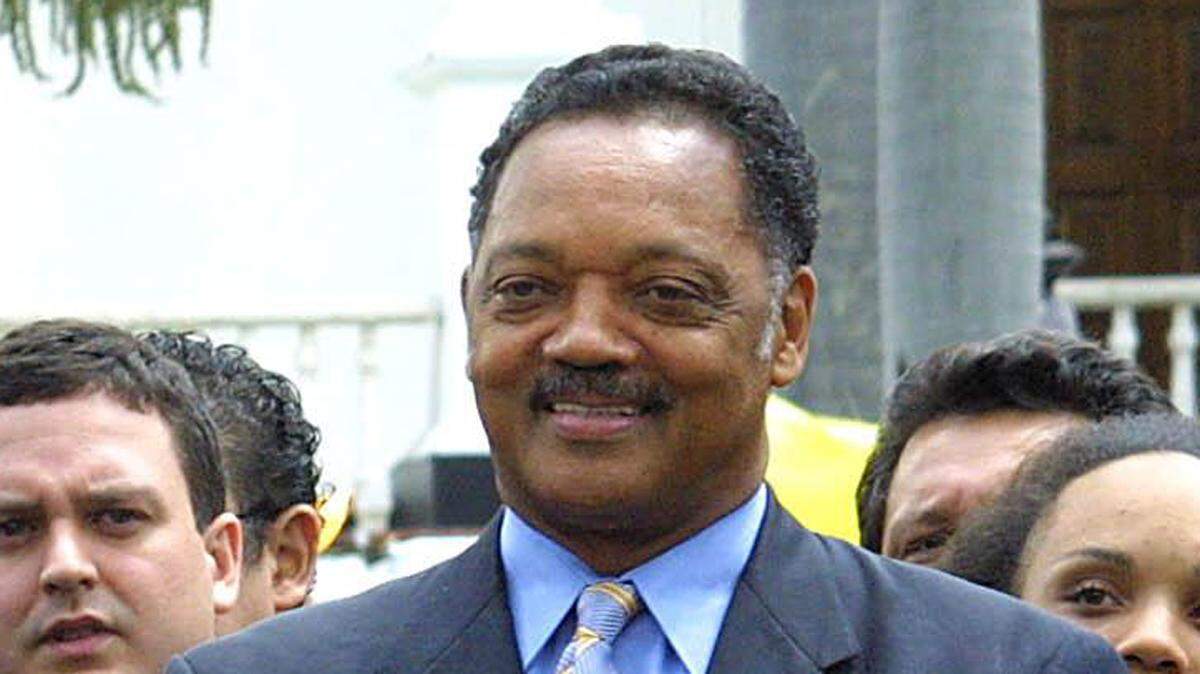
The world lost a true icon who never stopped fighting for racial equality and social justice when the Rev. Jesse Jackson died on Feb. 17 at age 84. Jackson marched with the Rev. Martin Luther King Jr., and took up his mantle of the civil rights movement after King was assassinated on April 4, 1968. Jackson left an enduring legacy, and we must continue to carry the torch.
America is under siege from a growing white nationalist movement and right-wing political extremists. While we elected a Black president in 2008 and 2012 with the great Barack Obama, we’ve gone dramatically backward in the pursuit of racial equality.
Just recently, President Donald Trump posted a despicable video of Barack and Michelle Obama as apes, which was left online for almost 12 hours. Tim Scott, the Senate’s lone Black Republican, said, “It’s the most racist thing I’ve seen out of this White House.”
With these recent events, I can’t help relive a traumatic moment in 1983 as a junior at Lawrence High School and the mountains I’ve climbed since then. It was gym class one morning as a classmate with whom I had never spoken before turned to me as a Black student entered the room.
“Don’t you hate n*****s?” he casually asked.
Deeply pained, I bowed my head cowardly and muttered: “No.” “Yeah, I guess some of them are all right,” said this son of a former professional athlete, who had obviously grown up around his dad’s Black teammates. Yet, he still cruelly said the word that Dick Gregory wrote in his 1964 autobiography is part of a system where “a white man can destroy a Black man with a single word.”
I actually heard the N-word frequently raised in progressive Lawrence from classmates, teammates and even friends. It sickened me, but I was so shy and rarely had the courage to reply. I was even more appalled hearing my friend’s sister say “n*****r lover” as she drove me home from high school.
Different reaction in a Waldo bar
I was raised to treat everyone equally by parents who were liberal social workers who believed fervently in racial equality and social justice. My late dad, Goody, was a legendary professor in the KU School of Social Welfare for 34 years. Previously, he fought for civil rights in New York and attended the March on Washington in 1963.
It was now 2008, and a friend and I were talking sports on a sweltering summer night at Lew’s Grill and Bar in Waldo. Suddenly, a young woman we didn’t know joined our conversation.
“I hate the NBA. They’re all” that slur, she said. In polar opposite to myself in 1983, I reacted angrily with passion as my heart raced like I’d just run a marathon.
“I’m deeply offended,” I blasted, before adding a white lie to make her feel more guilty: “My best friend is Black.”
She immediately apologized and tried to defend her vitriolic remark. “I like (then- presidential candidate) Obama,” she said. “He’s very articulate.”
I had enough and stormed out of that bar, out of her sight, out of the darkness. I had finally conquered my lifetime fears and spoken out. I became a mensch and had never felt so alive. It was simply one of the most fulfilling moments of my life.
No, I certainly didn’t make the heroic sacrifice that Martin Luther King Jr. or Jesse Jackson took during the civil rights movement, or been at the March on Washington like my forever hero father, but I was extremely proud of my huge statement and how far I’ve come in life.
It’s now more important than ever that everyone speak out against any kind of bigotry and slur. That’s what the Revs. King and Jackson would do. While February is Black History Month, it’s always the right time to make a stand.
As King famously said: “A man dies when he refuses to stand up for that which is right. A man dies when he refuses to stand up for justice. A man dies when he refuses to take a stand for that which is true.”
David Garfield is an international award-winning freelance writer based in Lawrence who’s written more than 20 magazine cover stories. He is a KU basketball historian specializing in the sociological concept of the intersection of race and Kansas basketball history.