Jesse Jackson marched with MLK, and I walked with Jesse, twice | Opinion
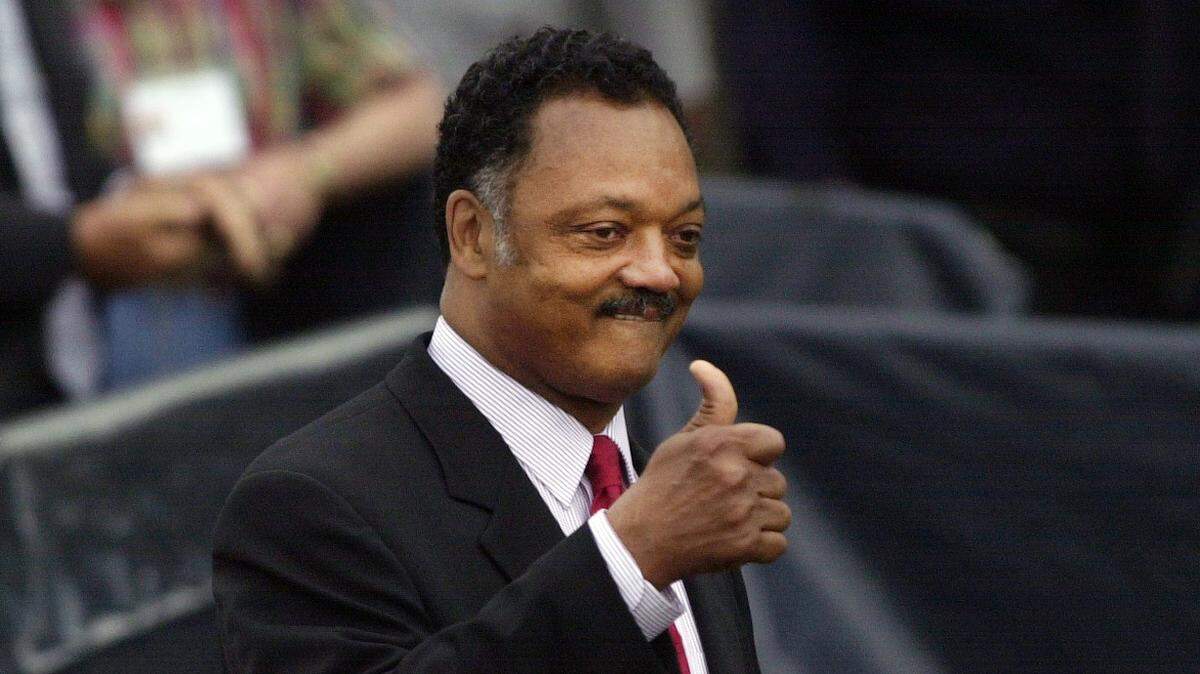
The Rev. Jesse Jackson died this morning. He was 84. The minute I heard the news, I stopped mid-step and stood still for a moment. Tears welled in my eyes, and then a slight smile crossed my face, remembering the last time I stood with him at the historic Monroe School in Topeka.
I’m going to share that story with you, but first, I simply must talk a bit about why this civil rights icon, and the moments I got to spend with him, meant so much to me.
I can remember when I was a child, my uncle Norman and my mother telling my siblings and me about Jackson and how this young man marched shoulder to shoulder with The Rev. Dr. Martin Luther King.
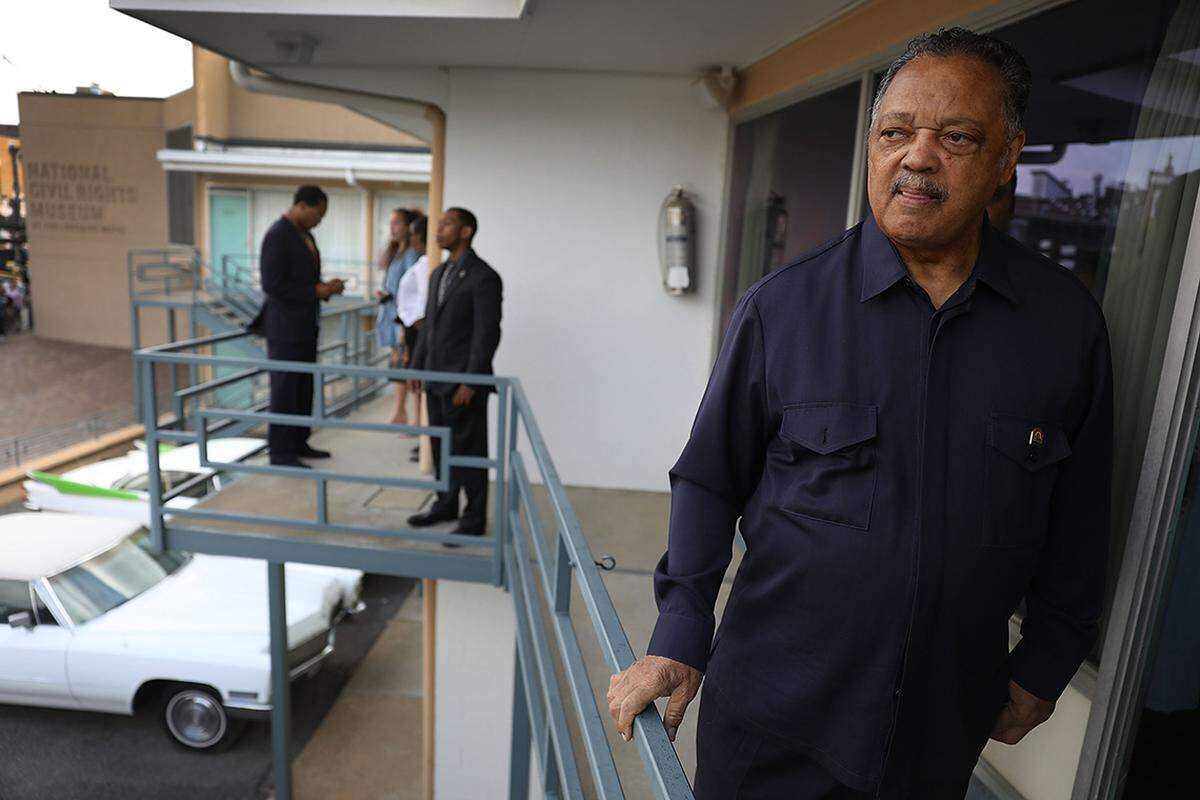
I remember the historic photo of Jesse standing, with others, on the balcony of the Lorraine Hotel in Memphis, Tennessee, and pointing upward, just moments after King had been assassinated and lay at their feet, in April 1968. And how years later Jackson wept visiting that very balcony where he witnessed King’s death.
Mom told us about “Jesse” — because when she talked about him, she used his first name as if they were old friends — starting Operation PUSH (People United to Save Humanity) in Chicago in 1971. I heard him speak in cadence with fervor: “I am Somebody.” I was in junior high, and this little Black girl was inspired. I ran for class president.
Joined Martin Luther King in Selma
Jackson was a towering figure in this nation and a key player in the decadeslong struggle for social justice and civil rights. He dedicated his life to those causes. He was born Jesse Louis Burns in Greenville, South Carolina, to a single mother, and later took the surname of his stepfather.
A graduate of North Carolina A&T State University, Jackson was only 23 years old in 1965 when he dropped out of the Chicago Theological Seminary to join King and participate in the Selma to Montgomery voting rights marches in Alabama. He ran for president of the United States twice and, in 1988, at the Democratic National Convention, uttered the phrase “Keep hope alive,’’ which 20 years later was said to have inspired Barack Obama’s victorious “Hope and Change” campaign.
I met Jackson in Atlanta in 1994 when he and the Rev. Al Sharpton led a massive 2-mile march along Ponce de Leon Avenue protesting the inclusion of the Confederate battle emblem in the Georgia state flag. That Avenue is known as a historic racial dividing line and is associated with systemic racial segregation in Atlanta.
I was a reporter at The Atlanta Journal-Constitution at the time and assigned to cover the march. I wanted an exclusive interview with Jackson, but knew that with all the press present, the hope was unlikely. I didn’t know Al Sharpton would be there. I had covered him many times as a reporter at Newsday in New York. We clicked.
I stood in front of the crowd that lined the street, as Jackson and Sharpton led marchers chanting and singing old gospels, a civil rights march staple. When Sharpton saw me he waved me to the front of the march, and of course, I went, notebook and pen in hand. This was my chance of a lifetime. He locked elbows with me and introduced me to Rev. Jackson, who also locked elbows with me.
I remember telling them — and this will sound familiar — “I can’t be out here marching with you — I’m a journalist. I’m working.” I remember Jesse saying — because who would forget this moment? — “You might be a journalist, but you marching today.”
We walked like that for about a block, and I used the time to get a few quotes from Jesse and convince him to let me meet him later with a photographer for a full recorded interview. We showed up at his hotel that evening, and he talked to us for about an hour. He later hired that photographer to take photos for him as he traveled the country.
Visits to Kansas CIty
Ten years later, I met Jackson again.
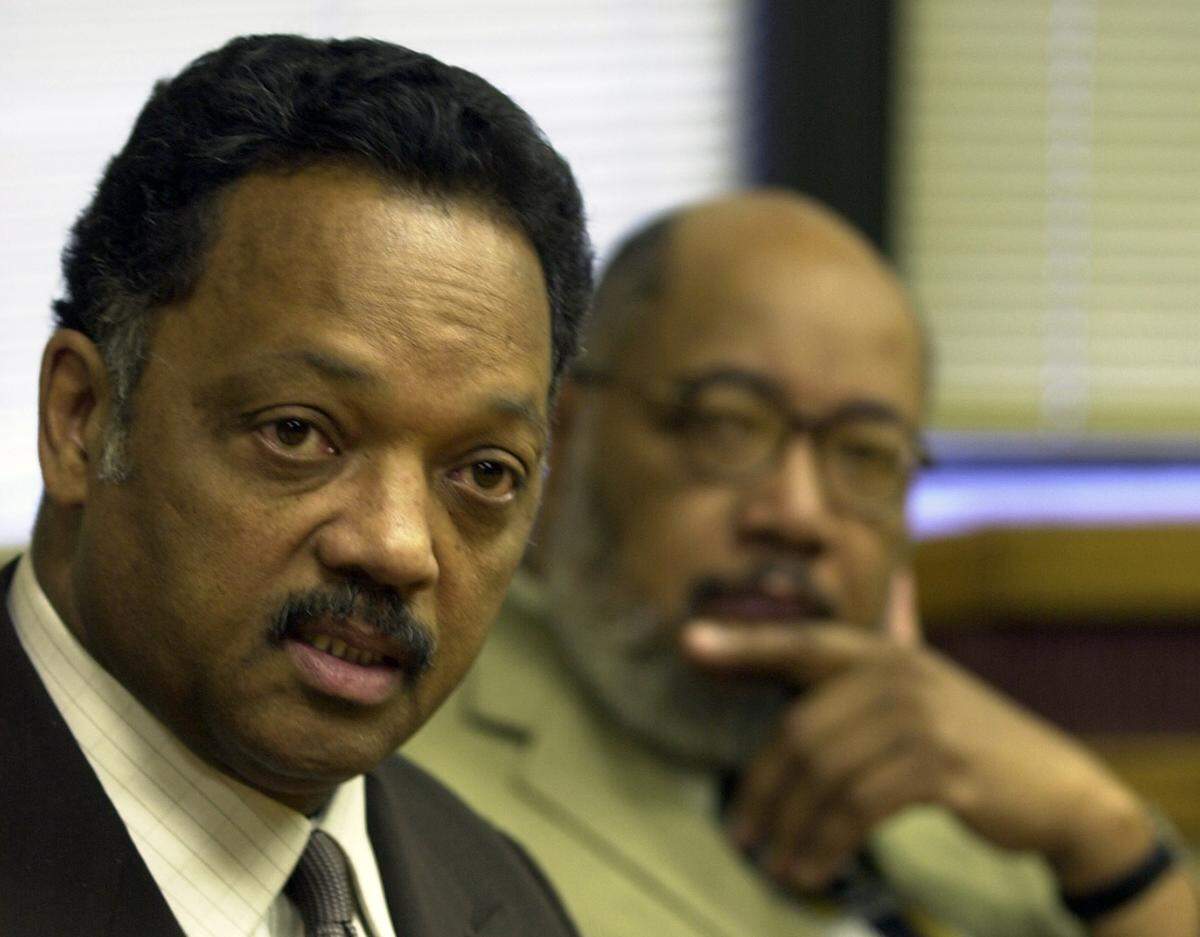
Over the years, Jackson visited the Kansas City area many times in the 1970s and especially during the mid-1980s with his cross-country Rainbow PUSH Coalition presidential campaigns when he was registering voters and trying to build a multiracial coalition. As recently as 2016, Jackson met with students at the Central Academy of Excellence (formerly Central High School) in Kansas City to promote nonviolence and the importance of education.
I saw him in Topeka in 2004 when I went to cover President George Bush speaking at a dedication of the historic Monroe Elementary School — established in 1868 for Black children — as a national historic site and part of the Brown v. Board of Education National Historical Park.
I crossed under the stone front archway and pulled open the heavy institutional doors to tour the old school converted into a museum. There, at the entrance, stood Jesse Jackson, physically a towering man, next to my 5-foot, 3-inch frame. I must have gasped because he smiled, chuckled, if I remember correctly. And who would forget that?
We chatted for a brief moment, and then he motioned for me to start the tour. He walked with me, side by side, both of us quiet, through room after room. I do recall thinking I was reading the history about 1954’s Brown v. Board, arguably one of the most important Supreme Court decisions of the 20th century, and standing next to one of the most famous men of the Civil Rights Movement.
At the end of the tour, all I could muster to say to Rev. Jackson was, “Thank you.” He put his left hand on my shoulder and shook my hand with his right and nodded his head forward.
No words were needed. I understood that I was where I was in life and career, in large part because of men and women like him and the fights they fought for fair and equal treatment, civil rights and social justice. It’s American history we can ill afford to allow anyone to try and erase because remembering the resilience of the Black American spirit is powerful.