
Schmitt says ‘this is our hemisphere.’ Then Trump takes Venezuela’s Maduro | Opinion
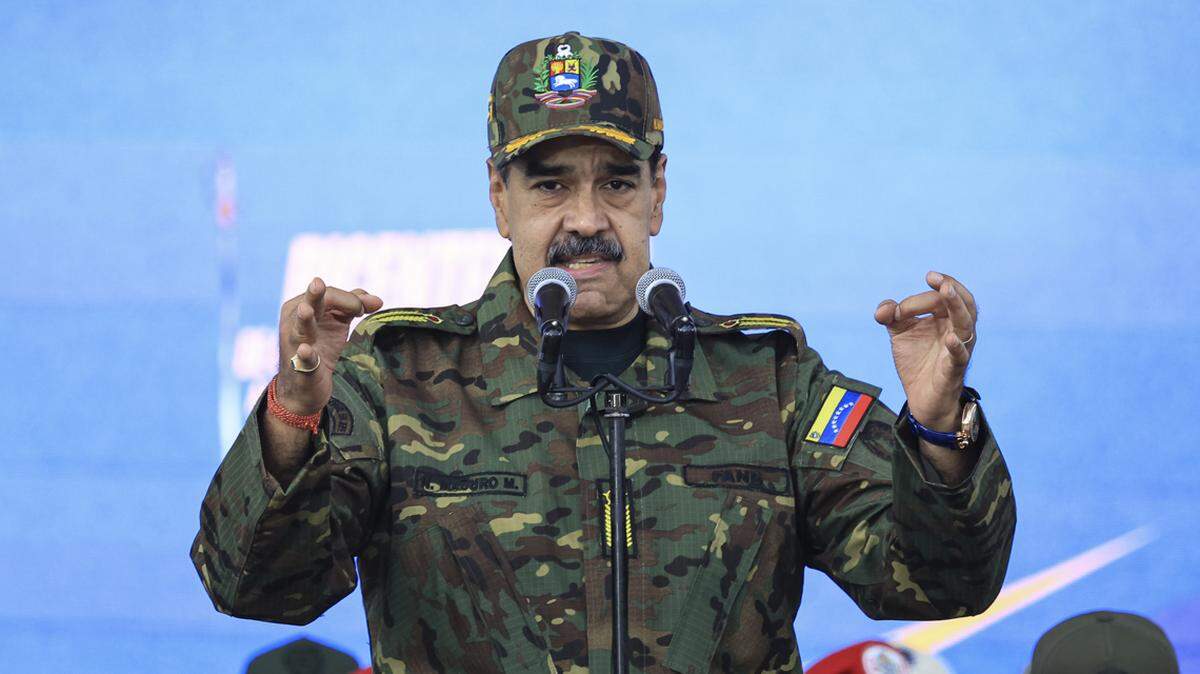
Let’s start with this: Nicolas Maduro isn’t a good guy.
The Venezuelan leader — abducted from his country overnight by American forces on the orders of President Donald Trump, amidst shock and awe attacks all over Caracas — stole an election, jailed dissenters and oversaw the ruin of his country’s economy. You would like to think Venezuela will be better off without him.
But.
Iraq’s Saddam Hussein was a bad guy.
Libya’s Moammar Gadhafi was a bad guy.
The United States toppled both of those dictators — though a full-scale invasion in the former case, less directly in the latter. You would have thought those countries would have been better off without their strongmen rulers.
That’s not what happened. American meddling produced disastrous eras of deadly chaos in both countries. And American voters seemingly decided they had had their fill of foreign adventurism. Trump even claimed — falsely — that he opposed the invasion of Iraq from the start.
Adventurism? It was over.
“My proudest legacy will be that of a peacemaker and unifier,” Trump said during his second inaugural address, less than a year ago. “That’s what I want to be: a peacemaker and a unifier.”
Sen. Eric Schmitt of Missouri — one of Trump’s most vigorous advocates in Congress — also seemed to learn the lesson.
Under Trump, he said at a Politico conference in May, “the days of us looking into the souls of foreign leaders and deciding if you’re a good person or a bad person and then trying to bomb the hell out of that country and the nation-build, those days are over.”
And, well, so much for all of that.
“I watched it literally like I was watching a television show,” Trump said Saturday morning on Fox News. “If you would have seen the speed, the violence — they say that, the speed, the violence, they use that term — it was an amazing thing, an amazing job that these people did.”
‘They took our oil rights’
There are three reasons to oppose the attack on Venezuela.
First, the rationale is hazy. Trump justified the recent deadly attacks on boats coming out of the country by citing fentanyl deaths in America. And Maduro will apparently stand trial on drug charges in America. But experts say the drug trade in Venezuela mainly involved shipping cocaine to Europe, not fentanyl to the United States.
Trump probably got a little closer to the heart of the matter when he complained about Venezuela’s nationalization of its oil industry, to the disadvantage of American companies that had operated there.
“They took our oil rights — we had a lot of oil there,” he told reporters last month. “As you know they threw our companies out, and we want it back.”
Do Americans really want to start wars for overseas oil rights?
The second reason: The Constitution gives Congress — not the president — the exclusive power to declare war. That clearly didn’t happen in this case, and you can argue that provision in our country’s founding documents has long been a dead letter thanks both to the power grabs of previous presidents and the long-term fecklessness of the legislative branch.
But it’s worth noting that President George W. Bush sought and received authorizations for the use of military force before invading Afghanistan and Iraq. Trump — who so clearly disdains Bush — apparently decided he had the right to make that decision on his own.
That’s not great news for American democracy, or our system of checks and balances.
Finally: We can’t really know what the fallout will be at this moment. We do know America’s wars in Afghanistan and Iraq were deadlier than we expected, longer-lasting than we expected and produced a flood of refugees.
Even if the overnight operation in Venezuela proves to be a simple in-and-out operation by American forces, the act of forcefully removing the country’s leader will of course be destabilizing. The United States in its recent history does not have a great record of restabilizing countries it has invaded, and Trump has not shown much patience for those kinds of tasks.
Venezuela is a lot closer to the United States than Iraq ever was. We are more likely to feel the consequences close at home.
The return of gunboat diplomacy
On Friday night, before the first reports of explosions in Venezuela, Schmitt went on Fox News to praise Trump’s increasing pressure on Maduro as a raw expression of American power.
“The days of narco-terrorist thugs and tinpot third-world dictators down south pushing us around is over,” Schmitt posted on X. “We are a superpower. This is our hemisphere. And we’re going to start acting like it again.”
That’s silly: Maduro wasn’t pushing us around. Taken together, though, Schmitt’s then-and-now comments on Trumpist foreign policy amount to a pivot away from the United States’ 21st century role as a “global cop” and back to ugly old-school 19th century “gunboat diplomacy” imperialism in which America gives itself the right to rule Latin America. “Our hemisphere,” indeed.
Only that’s not entirely true, either. Trump bombed Nigeria on Christmas Day, supposedly on behalf of that country’s persecuted Christians. This week he threatened military action against Iran’s government for its crackdown on domestic protesters.
Maybe Mexico is next.
Mexican President Claudia Sheinbaum is “a good woman, but the cartels are running Mexico,” Trump said Saturday morning on Fox News. He added: “Something’s going to have to be done with Mexico.”
There is no pivot. We’re a global cop and also, again, an aspiring hemispheric hegemon. The lessons of American history? Ignored once more. Military adventurism is alive and well.