
Kansas City’s new low-barrier homeless shelters won’t solve anything | Opinion
Homelessness is a deeply complex issue. Solving the problems that lead to individuals having no place to call home challenges communities all across America.
What steps can we take to solve homelessness here in Kansas City?
Over the past several years an idea called “Housing First” gained traction in the federal government. Those who had been given housing with no behavioral requirements wound up drinking and overdosing themselves to death. They were dying undercover instead of on the streets. It was an “out of sight, out of mind” solution. There is the idea of Housing First, and then the actual reality of what works and what does not, as noted in the Manhattan Institute’s 2020 Housing First and Homelessness Report.
Recently, our city has embraced the idea of low-barrier homeless shelters, designed to provide immediate refuge without program requirements. The hope is that this idea will solve the intractable problem of homelessness here. It is simply a first step, but nowhere near the whole journey.
This can, however, be the start of the long road toward sobriety and life change.
The compassionate intent behind overnight shelters is clear. Low-barrier shelters are needed to save lives during life-threatening cold and heat. But this temporary fix does not work as a stand-alone permanent solution to homelessness.
For broken people to find a pragmatic way to put their shattered lives back together, they need ongoing treatment and comprehensive support. It is essential that support includes dealing with crippling mental health and substance abuse issues.
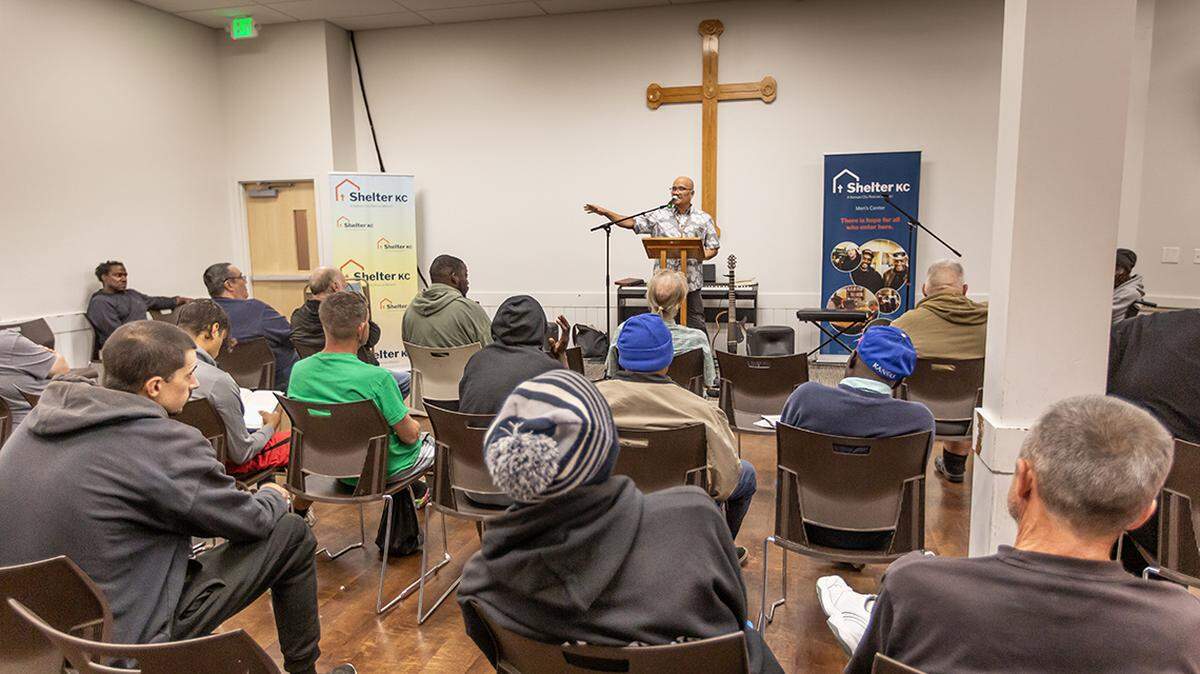
There are few barriers to entry at Shelter KC, for example. But there are next steps. Each person is engaged. Life coaches interact to find the best solutions to the problems that keep each individual homeless. They work hard to get everyone to commit to and complete a program of active recovery. To encourage and support each person so they can recover and rebuild their lives off the streets.
Organizations such as Shelter KC demonstrate the importance of expanding shelter stays with robust life-renewal support services. Shelter KC offers not only emergency housing but critical mental health counseling, substance abuse treatment and life skills training, in a Christian setting. Nearly 90% of our guests prefer the spiritual emphasis in our services.
Shelter KC is more than a shelter from the storm. People experiencing homelessness need more than a warehouse to get out of the weather. Shelter KC’s trauma-informed design is designed to provide a place where recovery can occur, and relationships can be built.
Men and women are given the opportunity to relearn the life skills necessary for long-term progress, and eventual self-sufficiency.
Low-barrier shelters in Kansas City respond to the urgent need for accessible shelter, and are a good first step. Many more steps are required if the homeless are going to escape a world of despair and danger. Shelter KC offers support and programs that can make that journey successful.
Kansas City must prioritize expanding such comprehensive programs. By working together, integrating treatment and recovery services, charitable agencies are better able to reduce chronic homelessness in the long term.