
Reps. Estes, Mann and Schmitt: Kansas’ middle class can’t afford gutting solar energy | Opinion
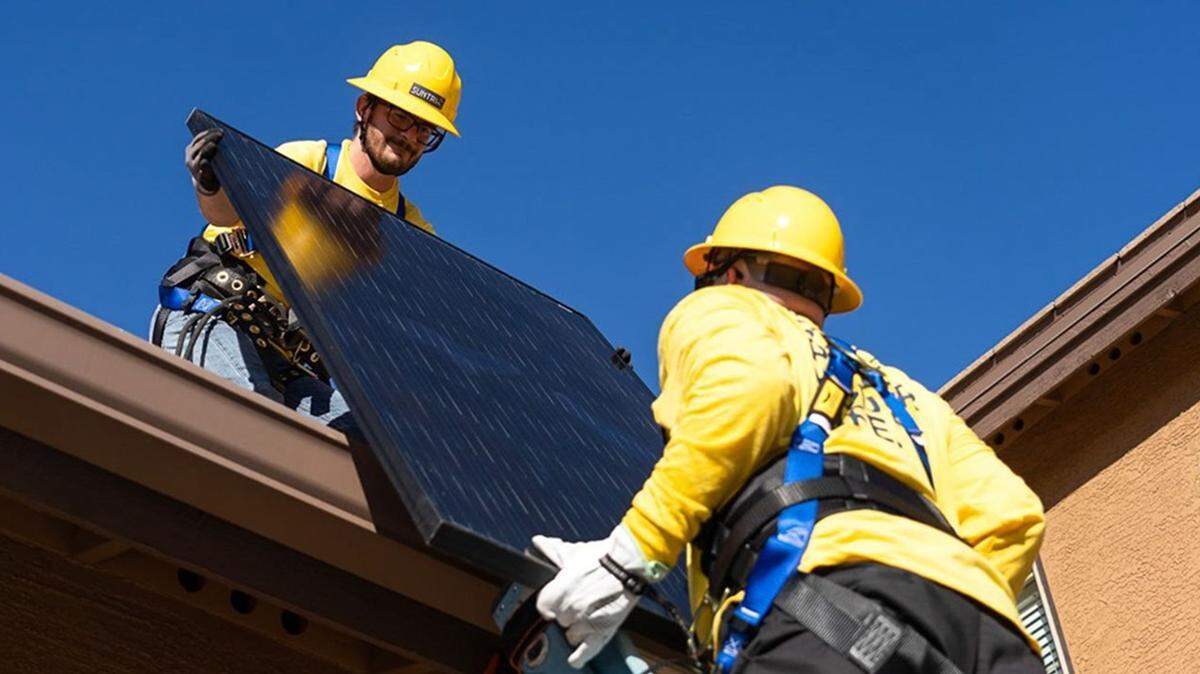
I’m lucky. Working in the solar industry, I get to interact every day with real people. They tell me what they care about. I know who roots for the Jayhawks, who roots for the Wildcats, and who wishes their spouse would turn off the TV and fix the dishwasher like they said they would. They tell me what they worry about. Even if they’re making well above the state’s median income, they’re still never more than a couple of missed paychecks away from falling behind on the mortgage and car payments. I know life in modern America lacks any breathing room for the middle class.
They have good jobs — good jobs that they cannot afford to lose. They’re proud of who they serve: middle-class, often older people on fixed incomes who can’t afford to pay more on their energy bills. If the rug gets pulled out from under the solar industry, those jobs go away. Those energy savings go away. A lot of people suffer needlessly.
Yet that is exactly what Congress is considering doing. The version of the One Big Beautiful Bill that passed the Senate guts the solar industry, terminating the 25D Residential Clean Energy Credit — which provides a tax credit for people who generate clean energy on their property — at the end of this year. No business could adjust to changes that quickly, least of one that regularly enters multiyear contracts with suppliers. Our industry could disappear in a matter of months.
Our Reps. Ron Estes, Tracey Mann and Derek Schmidt have the chance to save Kansas’ middle class. All they need to do is advocate for a phaseout of tax incentives, rather than an immediate shutoff, before they make their votes. Paycheck-to-paycheck Kansans are counting on them.
I admit I’m biased. The people who would lose their jobs are my company’s 65 or so employees in Kansas. These are people who work hard and earn good money. Our median annual income is about $60,000, about 20% above the median annual income for the state. That’s enough to raise a family, buy a house and buy a car. Yet if our industry disappeared, our employees would struggle to find anything that pays remotely as well. Most of our employees do not have a college degree, and, unfortunately, jobs for people without a college degree pay much less.
Of course, I care about our employees first and foremost, but this isn’t just about them. There are more than 1,000 solar jobs in our state.
I’m also worried about our customers. Contrary to the stereotype, solar customers are not wealthy elitists living in big homes in rich suburbs. They’re middle class and, like the people who installed their solar panels, are never more than a few missed paychecks from a financial cliff. Our median customer is 55 years old. A huge chunk are older people, living on fixed incomes, who need the $70 to $125 a month they save on their energy bills to afford the essentials.
Again, a lot of people are in this boat. My company Suntria alone has set up more than 500 households with solar power. Over 10,000 Kansas households rely on solar power to reduce their skyrocketing monthly energy bills.
As nearly any Kansan can tell you, the last decade has been hard on the middle class. For the wealthy, the stock market goes way up. But for the middle class, only prices seem to. Housing, insurance, medication, food and car payments eat up most of our paychecks. We have enough to live, but we are living on the razor’s edge.
The last thing we want is for our representatives in Congress to push us over the edge. Killing more than 1,000 Kansas jobs and making it far harder for households to meet their monthly bills would count as a giant shove toward the cliff. Reps. Estes, Mann and Schmidt care about the everyday people they represent — they wouldn’t have been elected if they didn’t. Kansans need them to demonstrate that they care about the middle class most of all. Kansans need them to push for a phaseout, rather than an industry-killing halt, to the 25D credit.