
Pardoning ex-KCPD officer Eric DeValkenaere for killing Cameron Lamb would mock justice | Opinion
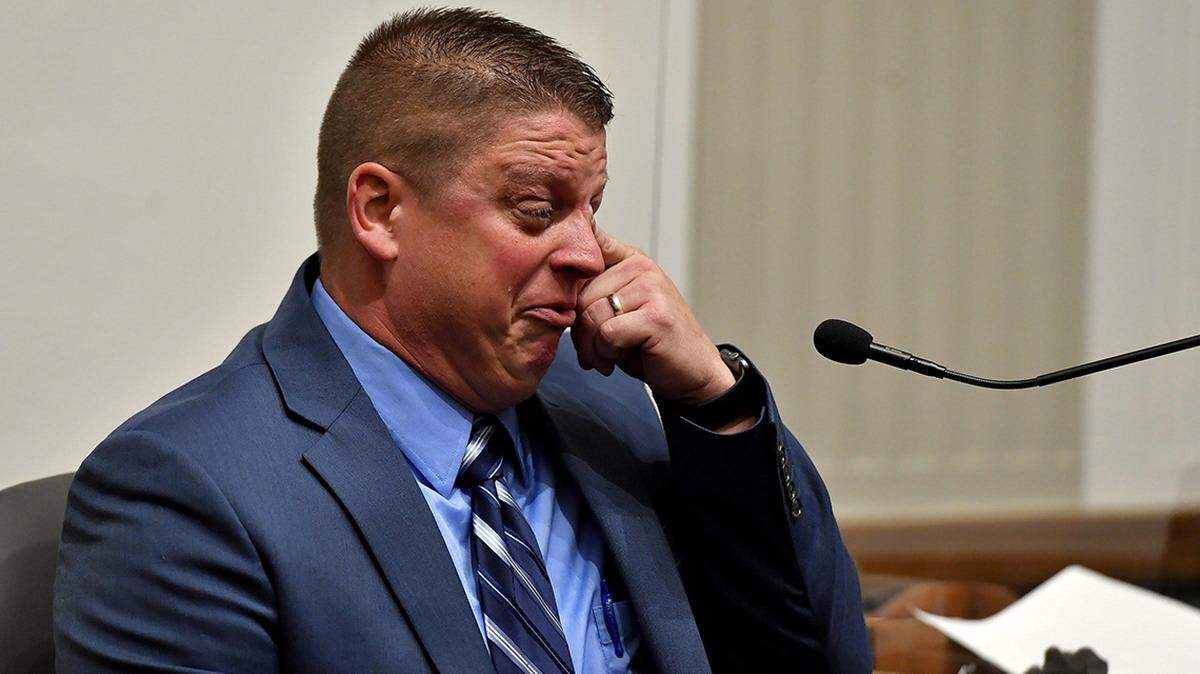
The recent calls for Missouri Gov. Mike Parson to pardon former Kansas City Police Department detective Eric DeValkenaere represent a critical juncture for our city — and a potential miscarriage of justice that resonates far beyond our state. DeValkenaere’s conviction for the fatal shooting of Cameron Lamb was more than a legal outcome. It was an affirmation that no individual, regardless of wearing a badge, is above the law.
Like many major cities across the United States, Kansas City grapples with a fraught relationship between law enforcement and the community — especially marginalized communities. With the Kansas City Police Department’s ranking among the five worst in the nation according to The Police Scorecard, and a federal investigation into allegations of racism and discrimination looming over it, the shooting of Lamb is symptomatic of the systemic problems plaguing the force.
Testimonies and evidence presented during DeValkenaere’s trial painted a damning picture: an officer aware he was on private property without legal grounds, a gun drawn without a warrant or probable cause, targeting an individual whose criminal history was limited to traffic violations. Lamb, who the evidence strongly suggests did not possess a gun, was met with fatal violence while his hand waved with an open palm — a gesture of non-aggression that was met with unfathomable violence.
The revelation that a firearm was very likely planted near Lamb’s body to concoct a narrative of self-defense is chilling and speaks volumes of the egregious conduct DeValkenaere engaged in — conduct that stands in stark contrast to the principles of justice and the rule of law. DeValkenaere’s behavior, far from heroic, deviated from his training and the very policies of the Kansas City Police Department he represented.
The call for a pardon in this context is profoundly troubling. Granting DeValkenaere clemency would send a message that the system not only tolerates such behavior, but also excuses it. It would undermine the judicial process that found him to be an initial aggressor, not entitled to use lethal force. It would negate the fundamental eligibility criteria for clemency and disregard the imperative that no one convicted of armed criminal action, such as DeValkenaere, should be eligible for early release within a certain period.
Moreover, the six-year sentence DeValkenaere received for armed criminal action is at the lower end of the sentencing spectrum, and even this has sparked a plea for pardon — a plea that threatens to unravel the fabric of community trust and the very concept of accountability.
In this pivotal moment, it’s essential to remember Cameron Lamb — not as a statistic, but as a man who was starting his own business, “Cam’s Gifted Hands,” and who was known for his willingness to help others. We must allow the memory of his life to guide us toward a just outcome, not only for him but for the very soul of Kansas City.
A pardon or clemency here would not only be inappropriate. Either would set a dangerous precedent. They would contradict the sustained efforts to instill fairness in our justice system and would disregard the trial court’s findings. This is a moment for our community to stand firm, demanding transparency, accountability and justice. This is a call to our governor to respect the integrity of our courts and the community’s call for justice.
We urge a decision that upholds the conviction, affirming that justice in Kansas City is indeed blind and that even those who wield power are not immune from its reach.