
Kansas City’s new bike lanes aren’t just for ‘serious’ cyclists. They help everyone | Opinion
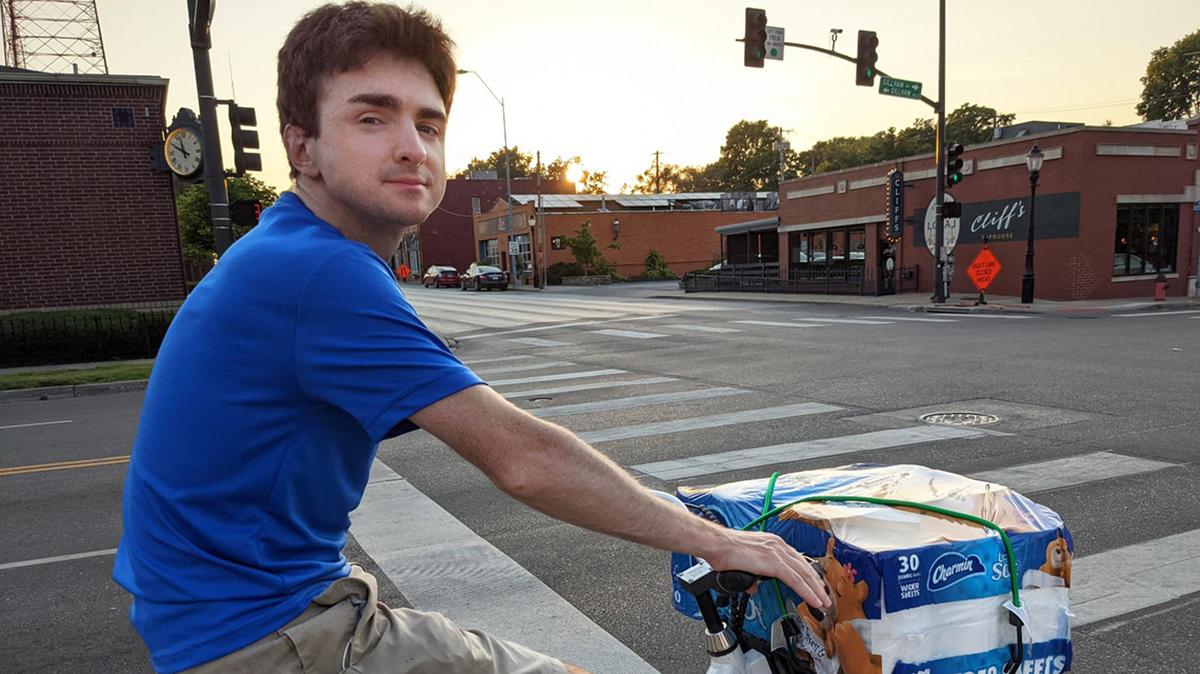
I use a bicycle to visit friends, buy groceries, commute to work and go for leisurely rides all around Kansas City. I’ve put thousands of miles on both my own bike and those from bike shares. I don’t call myself an avid cyclist. I don’t own any spandex — I usually bike in jeans. My bike has wide tires for durability, not top speed. My average velocity is 14 mph — that’s on an electric bike. I’m as much an avid cyclist as your average driver is a gearhead. A bike is just my preferred transportation method.
That’s why I was puzzled by a recent guest commentary in The Star from a self-described very active member of the local bicycling community characterizing the city’s ongoing bicycle infrastructure installations as an impediment to his fellow serious cyclists.
Riding or walking around Kansas City, you do see street debris. It’s heartening to see the Public Works department budgeting for machines for clearing bike lanes, but I’ve ridden the Gillham Road cycle track for a couple years, and it’s actually one of the cleanest routes I utilize regularly. Its substantial width allows trash to work its way to the curb where the street tapers and otherwise allows a wide berth for bikes. The two-way track also creates room to pass and has less potential for riders to end up in a narrow gutter.
Some people in cars don’t look right when turning right across the lanes, as the previous commentary noted, but what it leaves out is that they also don’t look left. Just observe how many automobile drivers pull into high-visibility crosswalks pedestrians are using. But whether bidirectional or unidirectional, protected lanes are proven to be the safest bike infrastructure. Their configuration is on a street-by-street basis, as determined by Public Works.
Motorists harassing cyclists is a problem, but it’s not the result of the new bike lanes. I biked Gillham before the track was installed and was routinely screamed at despite giving cars ample clearance. The difference now is, “Get in your lane!” prefixes the hurled epithet. The status quo remains, but the cycle track is now a haven from verbal assault.
The Holmes Street track is hardly “incomprehensible,” in the words of the commentary, considering its western lanes align with the 19th Street track. While imperfect heading northbound, it connects 19th Street to 18th without some convoluted multi-road scheme. Holmes had room to spare, and the path of least resistance was converting the westernmost driving lane instead of reconfiguring parking on the east. Don’t let perfect be the enemy of good.
There’s no reason to be puzzled by the Wyandotte Street lanes, or to be mystified by other aspects of the new infrastructure. Despite the commentary’s suggestion that city officials have not discussed plans with those who regularly bike, Public Works has hosted several community meetings, attended ride-alongs and posted a comprehensive five-year plan online. Attending any of these would have shown any cyclist overwhelming support of the plans from bike-riding attendees. Not only will the Wyandotte track eventually be networked, but installing it today improves the neighborhood’s quality of life now.
Anyone who lives near any of the new protected lanes realizes that crossings have become safer because of shorter distances and slowed traffic. Are the new tracks a waste of time and money? A common sentiment I’ve heard is that the lanes aren’t being built fast enough.
Some may envision bicycle infrastructure as a citywide racetrack for “serious cyclists” to fulfill Tour de France fantasies. But what we’re getting is safer streets and routes for all users — avenues for commuting, shopping and recreation — open to bikes, scooters, wheelchairs and skateboards and usable by young and old, beginner and expert.
And yes, serious cyclists are more than welcome. My regular bike-riding neighbors and I would be glad to see you.