
The logic behind Kansas City’s bike lanes is a mystery to the cyclists who use them
As a very active member of the Kansas City bicycling community, I read with interest Natalie Wallington’s Nov. 29 front-page story about commuting without an automobile in our city. We longtime cyclists are acutely aware of the city’s perplexing installation and maintenance of bike lanes.
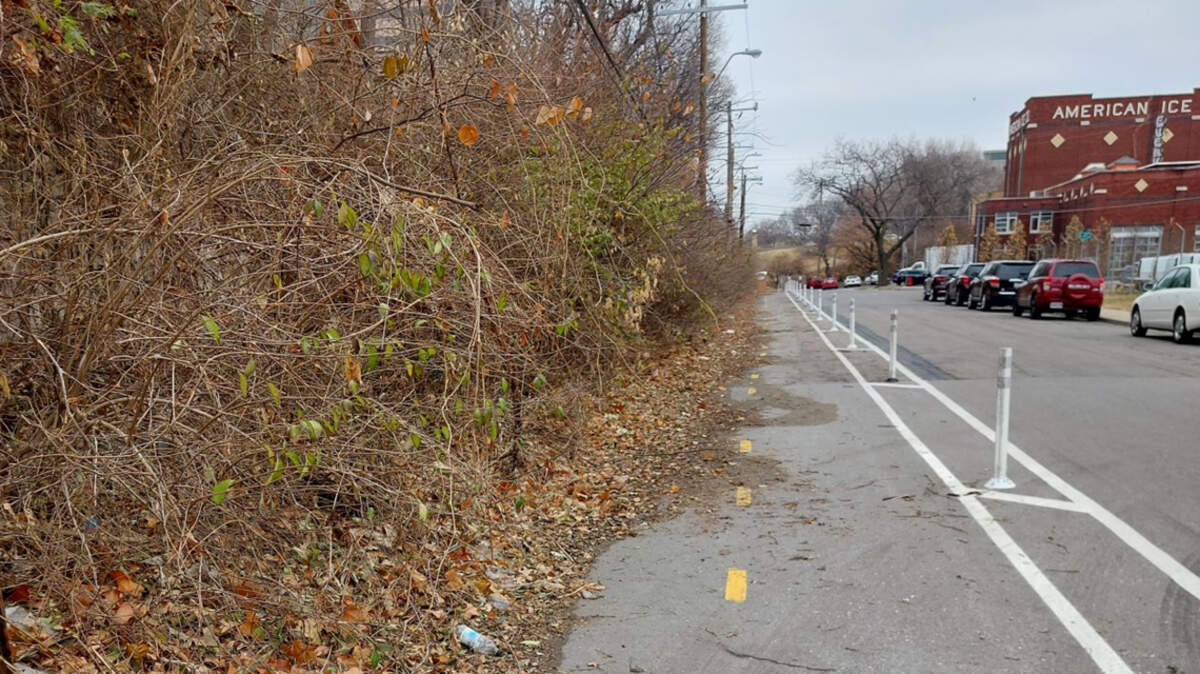
First, I most definitely agree with Abby Mueller, who was quoted in the story saying that if the city has equipment for clearing bike lanes, there is little effective use of it. Many bike lanes are often strewn with glass, leaves, sand and assorted other debris, both manufactured and natural.
Of particular concern are some of the dual-track bike lanes that have cyclists moving in both directions on narrow paths separated by bollards. Gillham Road has such a set of lanes going from 45th Street all the way downtown to north of 22nd Street. Serious cyclists now take pains to avoid that area.
There are far too many automotive crossings through bike lanes. Drivers are not conditioned to look to their right for oncoming non-motorized vehicles traveling in southbound lanes. Several riders I know have had accidents and near-crashes because of drivers routinely pulling through without checking to the right. Why the dual-track approach was adopted when there was ample space on either side of Gillham to accommodate both north- and southbound bike lanes going with car traffic is puzzling.
While there is no law requiring one to ride on the cycle track, many drivers assume that there is one. Having experienced harassment riding south on Gillham several times by drivers, I no longer use the street or the track. Most serious riders I know avoid it as well. Does the city have any plan to educate the public to reduce harassment of bikers?
There is an incomprehensible one-block dual bike lane on the west side of Holmes Street from 19th to 18th streets. Holmes is one-way going north. Why was a bike lane headed south even considered?
To compound the curiosity, after crossing north on 18th Street, the bike lane (one-lane, not dual-track) is now on the east side of the street, making it necessary for any cyclist using the west side track north from 19th Street to cross traffic to get to the east-side bike track. Continuing north on the west side of the street would put you on a collision course with the outdoor patio of the brewpub on that block.
Then there is the dual-track running from Wyandotte and Central streets south to Linwood Boulevard. More than half the southbound lane is overgrown with vegetation and is completely unrideable. Recently, there was a port-a-potty blocking the north entrance to both sides of the bike lane, and a backhoe parked in it a bit further up. The placement of a dual-track lane here is a mystery that has puzzled my fellow riders and me since it appeared.
I see ample reason for encouraging the sensible construction and use of bike lanes in the city. However, I have disquieting safety concerns about the current approach to the project. Kansas City has not been inclined to discuss it with people who ride bicycles on a regular basis, leading to what many of us see as a waste of monetary resources and time, as well as an affront to safety.
It is unclear who is actually driving this project, but It would seem that the city has embarked on an ill-considered path of putting down bike lanes in some places where they make little or no consideration of common sense or rider input.