
Black Missouri schools once set the highest academic standards. Here’s what changed
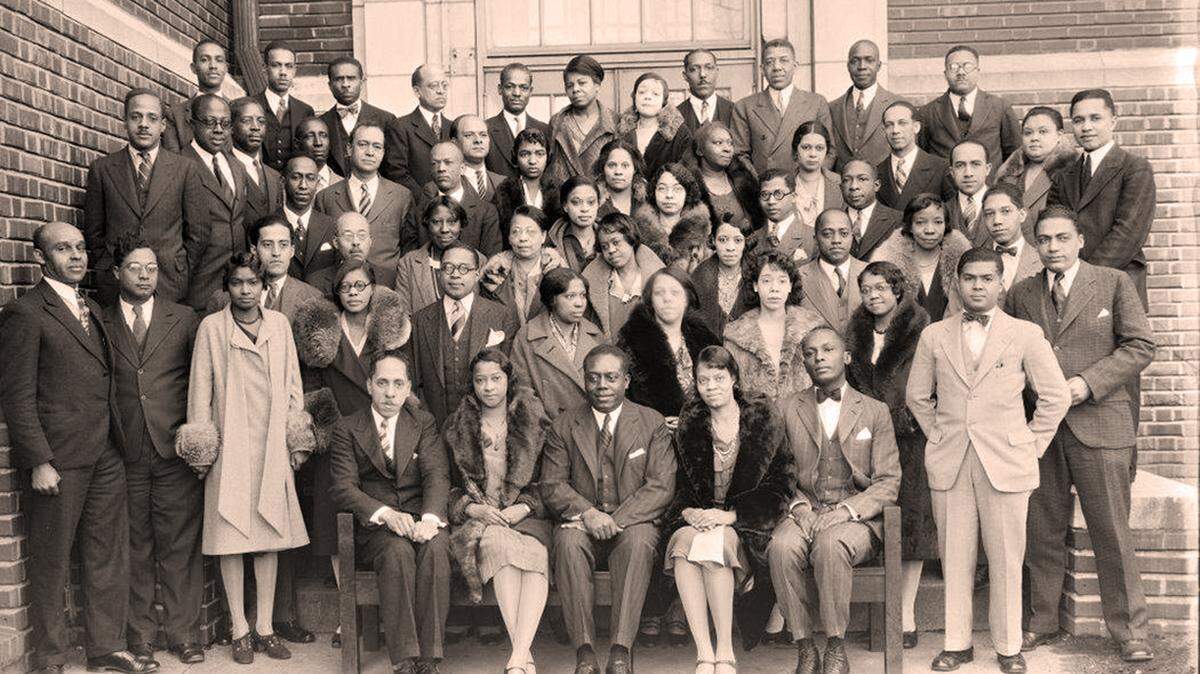
The dress and dignified expressions of educators in the picture might suggest faculty of a small Black college - but that would be wrong. The picture is of administrators and teachers of Sumner High School in St. Louis, Missouri, in 1930. They don’t fit the stereotype of Black high schools under segregation. Neither did the school’s high standards.
Founded in 1875, Sumner was the first Black high school West of the Mississippi River. Famous alumni include Arthur Ashe, Chuck Berry, noted opera singers Grace Bumbry and Robert McFerrin (McFerrin was the first male African American to sing at the New York Metropolitan Opera) and comedian and activist Dick Gregory. St. Louis was one of the few communities where African Americans are said to have actively opposed desegregation.
In a Star guest commentary last year, I described my shock when a University of Missouri-Kansas City chemistry professor and I made a discovery that countered widespread assumptions about the poor quality of Black schools. Long-buried data revealed that that segregated Lincoln and Sumner high schools dominated science awards for all schools in greater Kansas City in the 1950s and beyond. In the past two years, Shayla Nunnally, professor and chair of the Department of Africana Studies at the University of Tennessee, Knoxville, and I reported new results about Black education in the South and Civil War border states before desegregation. We confirmed that educational conditions for Black children were marginal in rural areas. However, in spite of discrimination and inferior resources, Black schools of high quality existed in more populated areas throughout the South and border states.
The internet uncovered buried history
Before the 1990s, there was little published information on Black high schools of high quality. Dunbar High School in Washington D.C. was an exception. Founded in 1870 as the first Black high school in the U.S., it had many Black firsts, such as PhD, senator, cabinet officer and general. The advent of the internet in the 1990s provided the means for alumni to create websites for cherished Black high schools, most of which were merged or closed in the 1960s during desegregation. Wikipedia articles on former Black high schools have flourished.
A compilation of 90 Black high schools of superior quality reveals that Black secondary education began much earlier in border states such as Maryland, Kentucky, Missouri and Virginia and in the District of Columbia than in the Deep South. An NAACP campaign established six Black schools in Atlanta, including Booker T. Washington High School, which was founded in 1924 and attended by Martin Luther King, Jr.. Though Alabama and Mississippi had the harshest discrimination, Black high schools there trained the largest number of civil rights leaders in the 1950s and 1960s.
One of the finest high schools in its time was Frederick Douglass High School in Baltimore, Maryland, founded in 1883. Between 1910 and 1934, its principal was Mason A. Hawkins, who had a PhD from the University of Pennsylvania and master’s degrees from Harvard and Columbia universities. Vice Principal Carrington L. Davis was a classmate of Theodore Roosevelt at Harvard, and Herbert Frisby, head of the science department, was the second African American to participate in research at the North Pole. The building had large science laboratories, commercial art and other vocational units, three study halls, a library, elevator and the first swimming pool in an African American school in the country. Its 1,600-seat auditorium hosted performances by significant musicians such as the internationally celebrated singer Marian Anderson and the Baltimore Symphony Orchestra.
Jim Crow injustice meant good job candidates
The most important reason for Black schools’ quality beyond expectations for the discrimination, poorer resources and other handicaps of the Jim Crow era was the ironic product of injustice. Black graduates of any university could not get jobs in the white establishment commensurate with their qualifications. This let Black primary and secondary schools hire the best and brightest in the African American community as administrators and teachers.
Living in the same segregated areas and subject to the same discrimination, Black educators felt a bond with their students. They not only set high standards, but mentored and often sacrificed for them. A former Sumner teacher in St. Louis reported: “One of the glories of the old Sumner was that it worked miracles not only with ‘the 10%,’ but with the brothers from the ‘hood.’” Gratitude and fondness for their earlier schools continues to emerge on the internet from former students.
Cities where Black secondary education began before 1900 produced large numbers of well-educated graduates. They helped mobilize pressure on authorities to fund school construction and hire school staff. This helps explain the high quality of school building design and construction for the previously named schools in Kansas City, St. Louis, and Baltimore. All three are on national or other registers for historic buildings.
KC-area Lincoln, Sumner still thrive
Kansas City’s Lincoln and Kansas City, Kansas’ Sumner high schools, as well as Sumner in St. Louis, were redesignated as preparatory academies during desegregation. The Kansas City schools are among rare Black high schools that have kept their former quality to the present. Both have ranked No.1 in their respective states in U.S. News & World Report ratings. Most other former high-quality Black high schools were either merged or closed, and tens of thousands of Black educators lost their jobs. Former elite Black high schools — Sumner, Dunbar, Frederick Douglas — essentially collapsed. Recent reports show Frederick Douglass and Sumner students’ proficiency ratings at or below 5% in reading and math.
There are multiple reasons for the decline in Black schools after desegregation, but a key factor is that after jobs in mainstream society opened for African American college and university graduates in the later 1960s, predominantly Black primary and secondary schools could no longer recruit the best teachers. Compounding the problem, the field of education acquired a stigma for African Americans. There is now a major shortage of Black teachers. Opening up the remarkable achievements of past Black educators offers other important insights for discussions of education policy today.
This story was originally published February 13, 2022 at 5:00 AM.