
Before desegregation, Black Kansas City high schools dominated in science awards
I’m a former federal ocean scientist who grew up in Kansas City during racial segregation. I attended Southwest High School (closed in 1998), which served the most affluent school district and was considered the elite public (white) high school in Kansas City. My father, Ernest Manheim, was chairman of the sociology department at the Kansas City University, now the University of Missouri-Kansas City, and holder of the Henry Haskell Chair in sociology for 53 years.
I mention this background so readers can better understand the shock I got in 2005 when a family friend, the late UMKC chemistry professor Eckhard Hellmuth, and I unexpectedly discovered achievements by Black high schools in Kansas City that had been buried for 50 years. The findings were that the former Lincoln High and Sumner High School in Kansas City, Kansas, dominated science awards for all high schools in greater Kansas City through the 1950s and up to 1965. Before desegregation, schools throughout the metropolitan area were more than 80% white. Lincoln and Sumner were 100% Black.
Lincoln, Sumner teachers’ high standards
Our story began in 1987 when I worked at the major ocean science center in Woods Hole, Massachusetts, but made regular visits to family in Kansas City. Hellmuth told me of rumors about special achievements in chemistry at Lincoln High School. Both of us were interested in science education. We located retired Lincoln science teacher Andrew Darton and interviewed him at his home. Darton amazed us with stories of science achievements at Lincoln, documented by a wall covered with clippings from Kansas City’s Black newspaper, The Kansas City Call.
After the interview, we tried to get more information on Lincoln but soon met difficulties. City Hall had no records for Lincoln High School prior to desegregation. Attempts to market a brief story based on Darton’s account found no takers. Given widespread assumptions that Black schools before desegregation were poor, we realized that we needed more documentation to support a story on Lincoln’s achievements.
Work responsibilities kept us from following up the story until 2005, when we launched a crash research project with the logistical help of a master’s student at UMKC, David Humphreys. This time, our quest led to unexpected discoveries. Records of the National Science Pioneers program at Union Station revealed that Lincoln and especially Sumner had dominated science awards for schools throughout greater Kansas City from the 1950s to 1965. We published our results in the journal U.S. Black Engineer in 2006.
Given racial discrimination and other handicaps in the Jim Crow era, how did Black schools achieve excellence in the prestigious national science competition? The answer is due in large part to a flip side of an injustice of the times. Black university graduates could not get jobs in the white establishment commensurate with their qualifications. A major fallback resource for jobs was Black primary and secondary school systems. So Black schools often got the cream of Black talent as teachers and administrators. For example, Lincoln yearbooks in the Kansas City Public Library showed that many Lincoln teachers had master’s degrees, while teachers at my Southwest High School had bachelor’s degrees. In 1963, two Lincoln teachers had PhDs.
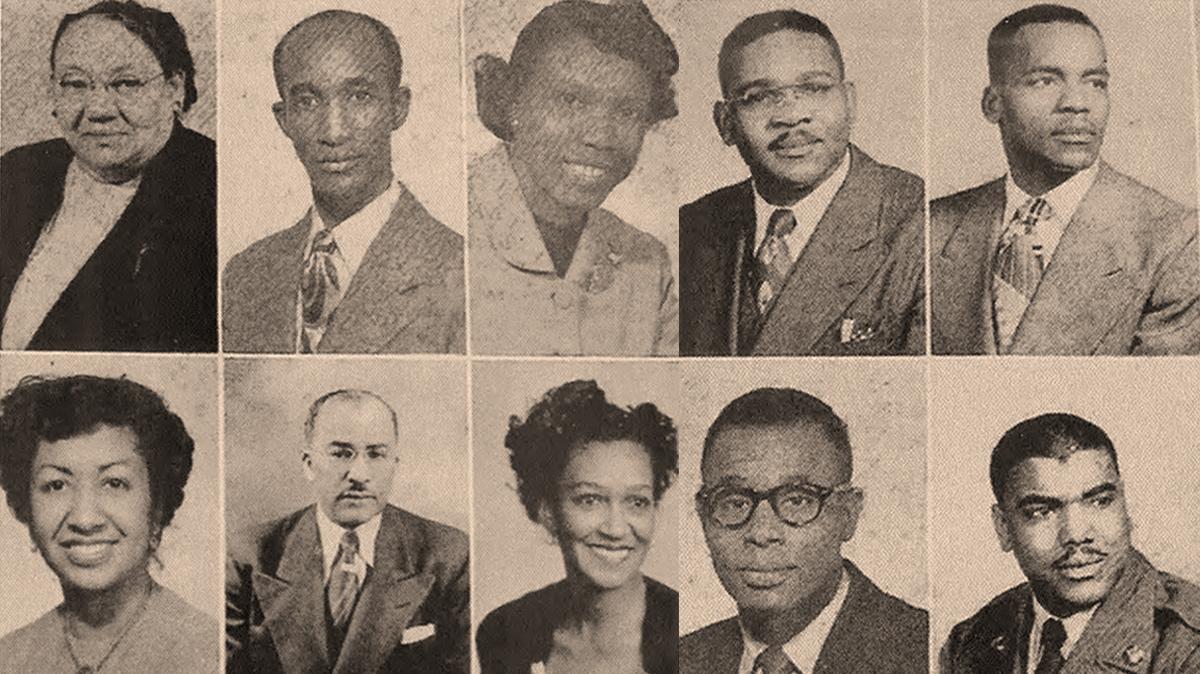
Teachers at Southwest High School did creditable jobs, but interviews with graduates of Lincoln, such as former Kansas City Councilman and Mayor Pro Tem Alvin Brooks, revealed that Lincoln teachers not only set high standards — they were also strongly motivated and mentored students. Students were warned about what they would face outside the Black community, but were encouraged to keep their sights high. Parents of kids who underperformed or showed wayward tendencies could get a visit from an administrator or teacher.
What we learned shocked me to my core. With the prejudice of the times, I remembered clearly assuming that Kansas City’s Black schools had to be inferior to the white schools. Now I could not avoid the conclusion that, in all probability, those Black students received an educational experience superior to mine — and mine got me into Harvard.
Science Pioneers champ from Kansas City
In its project “The Truth in Black and White,” The Kansas City Star admitted that the paper had earlier ignored affairs of the Black community. However, to its credit, The Star covered the expenses of Vernice Murray of Lincoln High School when she won the grand prize in the 1963 Kansas City Science Pioneers fair, and then traveled to the national convention. She became Kansas City’s first national winner for her project, “Experimental Methods of Verifying Force.” It demonstrated that the acceleration of gravity was independent of mass and confirmed Newton’s gravitational constant.
While our research began with Lincoln High School, it turned out that Sumner High School in Kansas City, Kansas, had a distinguished history and more prizewinners than Lincoln, a point underscored in interviews with Dr. Patricia Caruthers, a 1957 Sumner graduate. She won a grand prize in the Kansas City Science Pioneers competition and earned fourth place nationally. Sumner had exceptional educators such as chemistry teacher William Boone, who was referred to fondly in a book by a group of Sumner graduates.
Reporting our results during Black History Month at George Mason University (where I’m now a professor), I learned from Black faculty that excellence in Black high schools before desegregation was not limited to Kansas City. In recent years, a distinguished Black professor, Dr. Shayla Nunnally, director of the Africana Center at the University of Tennessee, Knoxville, and I have identified other Black high schools of high quality in the South and border states before desegregation.
These schools need to be researched while graduates and other knowledgeable people remain to offer their wisdom and experiences. Their legacy of excellence must not be forgotten.
Frank T. Manheim is a professor at the Schar School of Policy and Government at George Mason University in Fairfax County, Virginia.
This story was originally published May 28, 2021 at 9:35 AM with the headline "Before desegregation, Black Kansas City high schools dominated in science awards."