Why the Sun Fresh closing matters for Kansas City: It’s about our history | Opinion
Growing up on the economically depressed South Side of Chicago, my family was used to driving to other neighborhoods to get to a “good” grocery store.
Our definition of “good” applied to the full-service stores that white neighborhoods had access to, with a large variety of fresh meats and produce, sometimes up to 45 minutes away by car.
But my poorer community always had at least one neighborhood grocer that was decent, if not comparable to the preferred stores, and had the basic items that suited our needs. The fruits and meats usually were near the expiration date, but if you were out of milk, running a couple of blocks up the street was convenient.
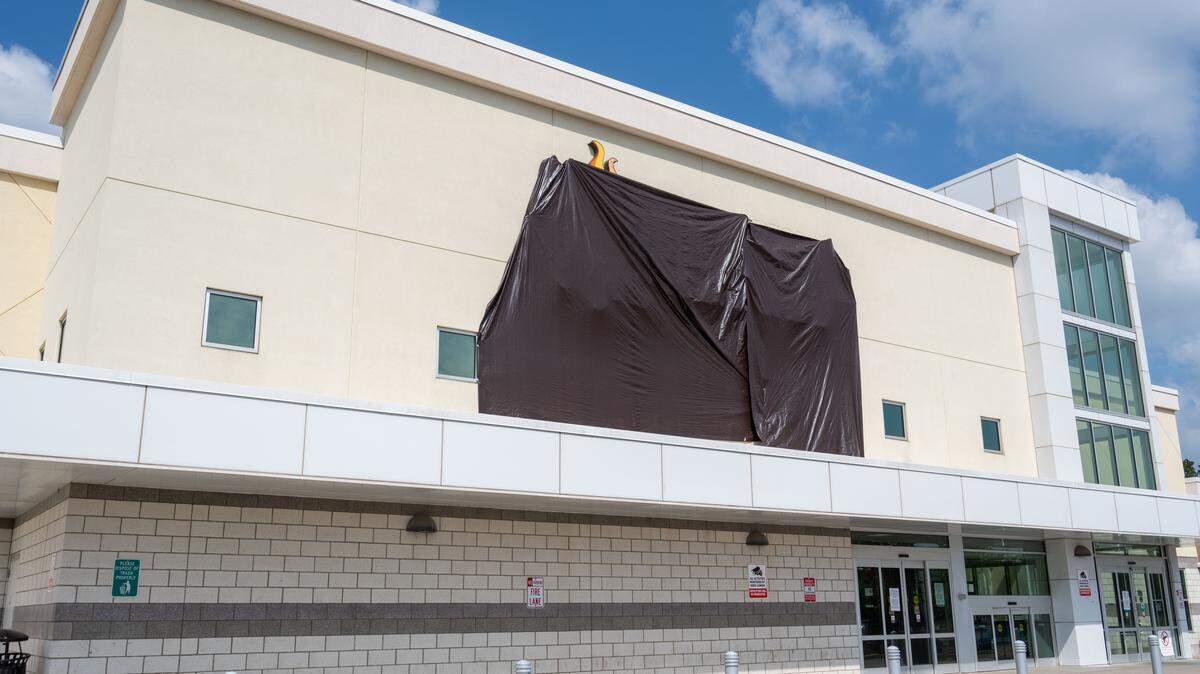
That’s the pity about what has happened with the closing of the Sun Fresh at 31st and Prospect Avenue in Kansas City. It was a “good” grocery store. The city purchased the Linwood Shopping Center in 2016 and spent about $17 million to revitalize it, including building Sun Fresh. Community Builders Kansas City have operated it.
So here’s the question that everyone involved is trying to answer. Why didn’t it work? There is a lot of blame cast around, from uncontrolled crime to improper management to a lack of services for unhoused and mentally ill people in the neighborhood — depending on whom you ask. It’s complicated. I’ve written about concerns surrounding the corner and the store when community members called for changes last year.
At an emergency video conference of the Urban Summit Friday morning, city and community leaders tried to get to the bottom of things. Not everyone went away in agreement, but I came to a better understanding of whom this group believes should be in control of the chaotic and unsanitary environment around the store (the city, as owner) and who is supposed to keep crime down (police). The management of the operations, Community Builders Kansas City, have their hands full with the aforementioned problems.
One more thing: There seems to be a misunderstanding that Community Builders has pocketed funds given by Kansas City. Its president and CEO Emmet Pierson and City Council Member Melissa Robinson both confirmed that the only money received from the city since the original investment to rebuild the store facility was $750,000, received just this May and went to pay bills. That was much less than the city originally promised.
The future for this economic corridor seems less than hopeful, but community leaders are committed to taking steps. Gwen Grant, President and CEO of Urban League of Greater Kansas City and presenter of Friday’s meeting, told the group that she and others have met with City Manager Mario Vasquez to work on the ongoing problems.
However, as I look at current state legislative work afoot to redraw Missouri District 5 in Kansas City (Sun Fresh’s former district, and the district for the rest of the Linwood Square Shopping Center) I think about the long history of the East Side’s historical disinvestment and disempowerment, how gerrymandering and redlining played a role, and how it historically affected this district, along with other Black and brown communities in Kansas City.
Could these longtime systematic problems be the real cause for 31st and Prospect’s problems, or at least part of it? Both practices contribute to racial and political inequality, and one sometimes reinforces the other.
Only one is legal.
What is gerrymandering and redlining?
Gerrymandering is a kind of redistricting, according to the Brennan Center for Justice, a nonpartisan law and policy institute. Redistricting often happens after every census, but partisan redistricting is done by those in control “to rig maps to favor certain candidates or political parties.” That is gerrymandering.
Where does the name come from? The Library of Congress blog explains it this way: “The term for the political tactic of manipulating boundaries of electoral districts for unfair political advantage derives its name from a prominent 19th-century political figure — and from a mythological salamander.”
The political figure was Gov. Elbridge Gerry of Massachusetts. The redistricting was requested by the Democratic-Republican Party in 1812. Gerry signed the bill.
It’s a legal practice, and one that’s going on right now in the Missouri legislature, as Gov. Mike Kehoe and the Republican majority consider whether to redraw District 5, Rep. Emmanuel Cleaver’s district, dividing the Kansas City area among several others to create a Republican-leaning constituency. It’s what is happening now in Texas.
Cleaver told St. Louis Public Radio: “We’re headed in a bad direction. We don’t have redistricting in the middle of the decade. It is something that we do after the census. I mean, what do we base it on?”
What, indeed?
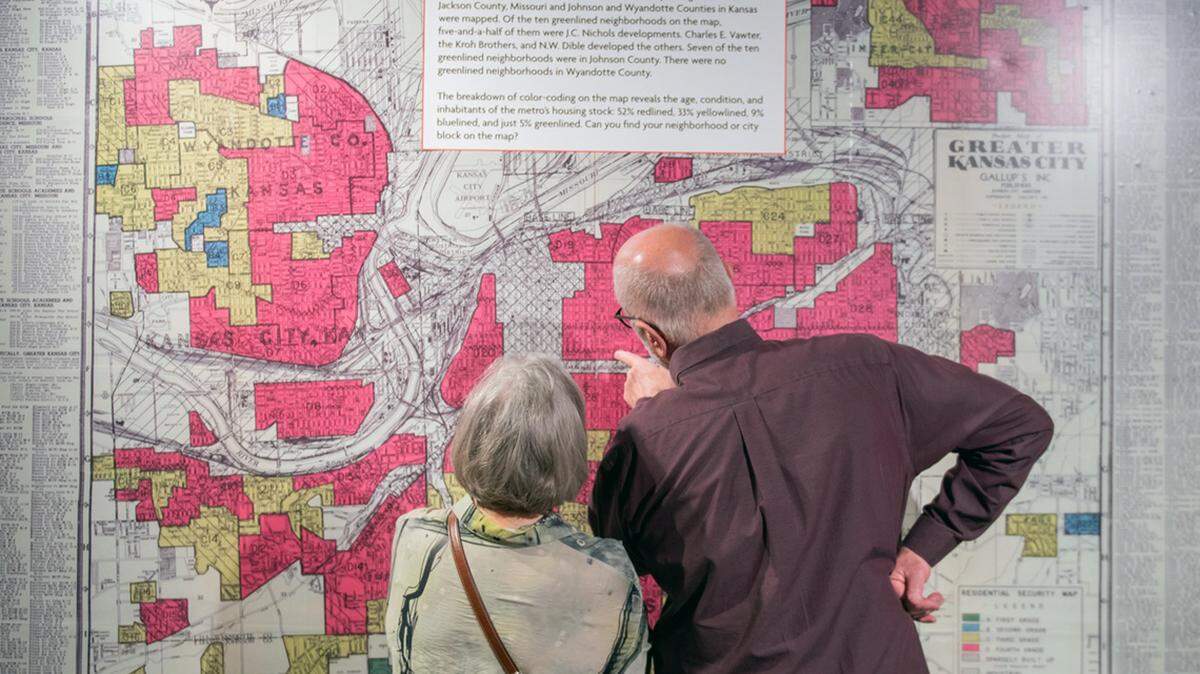
Redlining describes the historical practice of banks denying loans for home purchases and community improvements to Black and brown Americans, according to the Harvard Kennedy School.
Khalil Gibran Muhammad, Ford Foundation Professor of History, Race and Public Policy at Harvard Kennedy School and director of the Institutional Antiracism and Accountability Project, puts it plainly in this video:
“In every way imaginable, the consequences of redlining to many Black and brown communities across America meant that those communities had the least and the last of everything.”
Redlining began during the Great Depression, when the federal government aimed to increase homeownership by encouraging broader lending. However, many neighborhoods, particularly those with predominantly minority residents, were considered unworthy of these loans.
The term came from red lines drawn on maps to indicate the places not favored or deemed undesirable for investment, often based on race. Redlining also can be felt by homebuyers who are not shown certain properties.
I remember when I bought my first house in a Detroit suburb, I looked the real estate agent straight in the eye and asked him if he was showing me all the available homes. “No redlining,” I said.
Despite being outlawed by the federal Fair Housing Act, the long-lasting consequences of redlining continue to be felt today, the Harvard Kennedy School reports.
How do these practices work together?
Redlining creates racially segregated neighborhoods. Partisan gerrymandering can then exploit this inequality. By manipulating district lines, gerrymandering disempowers immigrant, minority and working-class communities and minimizes their political influence, causing further disadvantages.
For instance, gerrymandering could divide a city’s majority-Black community into several districts and make it more difficult for Black voters to elect their preferred candidate or issue.
Redlining fosters racial segregation and unequal resource distribution, while gerrymandering can entrench these disparities by restricting political power and representation.
Something similar has happened in Kansas City history — if not in actual legislation, certainly in spirit.
What’s the connection to 31st and Prospect?
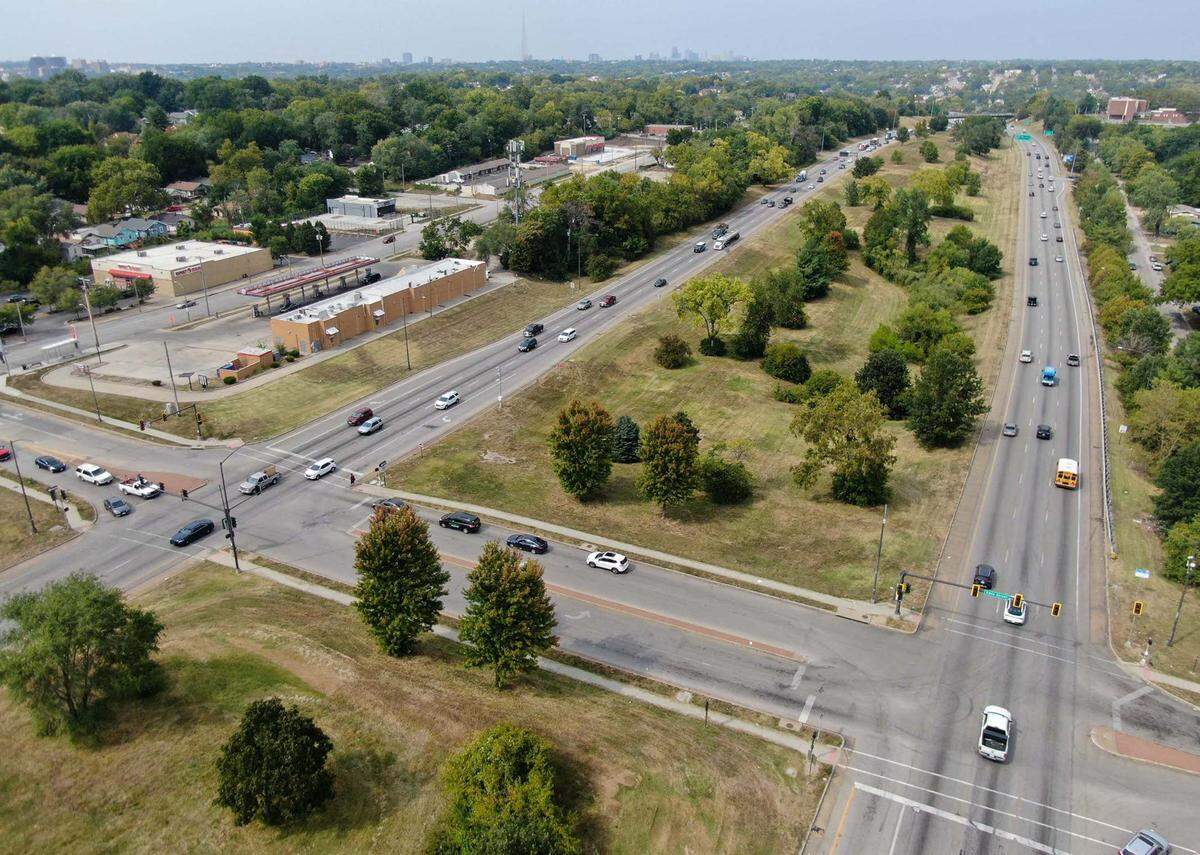
I asked Michael Wells, senior special collections librarian for the Kansas City Public Library, to help me understand this. Wells has researched and written on how ultimately the Bruce R. Watkins Drive project differently affected two neighborhoods — one west, one east — and how decisions made contributed to racial and economic disparities.
The idea to build a highway connecting downtown with rapidly growing communities south came as early as 1951, then called the “South Midtown Freeway.” Early plans show it passing through the Country Club Plaza and Westport area, and on to the southeast. That never happened because that community strenuously objected and was heard.
The final plans moved the highway east, and it became Bruce R. Watkins Drive. Wells believes that voices in the communities west of Troost Avenue were heard because “those communities had not been disinvested from, (their) political power had not been eroded, so they had access to City Hall. They had access to leaders. Their property values were still high. So was easier for them to make a case that a highway should not come through those neighborhoods.
“And you have the exact opposite on the East Side communities in Kansas City where they had suffered just years, decades of planned disinvestment and political power erosion. They were just not as well-placed at the time to fight that battle.”
Wells said Kansas City has purposely created a world with an east-west dividing line. He cites the highway as a catalyst for division, but that highway wouldn’t have happened without gerrymeandering and redlining.
“It’s just the East Side neighborhoods and then everything else,” he said, because Bruce R. Watkins Drive as it is built facilitates that discriminatory mindset. “It’s very easy to just drive straight through and just pass the city entirely. And so, I mean, consequently, it’s easy to not worry about the things that go on in the East Side. You can say, well, those are those East Side problems.”
Mind you, there are good things happening on the East Side, and the Sun Fresh problems at 31st and Prospect don’t represent the whole of the community. There are great stores and restaurants, parks, museums and events. The amazing Ethnic Enrichment Festival is this weekend at Swope Park Pavilion.
During the Urban Summit, members of the audience asked why the other Sun Fresh grocery store at Blue Parkway, also operated by Community Builders Kansas City, isn’t suffering from the same problems. As I said, it’s complicated and there are many factors at play, including the ones I mentioned earlier.
But even the city recognizes that mistakes have been made, on its Reconnecting the East Side history webpage.
And Wells said we should remember this: “It’s not as distant as you think. These things are still very much with us.” Wells emphasizes that it takes years and much work to undo planned disinvestment.
But he believes that we can, and should do it. “We have these little borders on maps, but I mean, honestly, if we want to think of ourselves as this healthy, thriving Kansas City metropolitan region, we have to start living up to that name and acting like it.”
The Central Library houses an exhibit, “Detoured: The Making of Bruce R. Watkins Drive.” It’s on the fifth floor and will continue through February 2026.
This story was originally published August 17, 2025 at 5:10 AM.