Politics from the pulpit: Could IRS ruling give clergy too much power? | Opinion
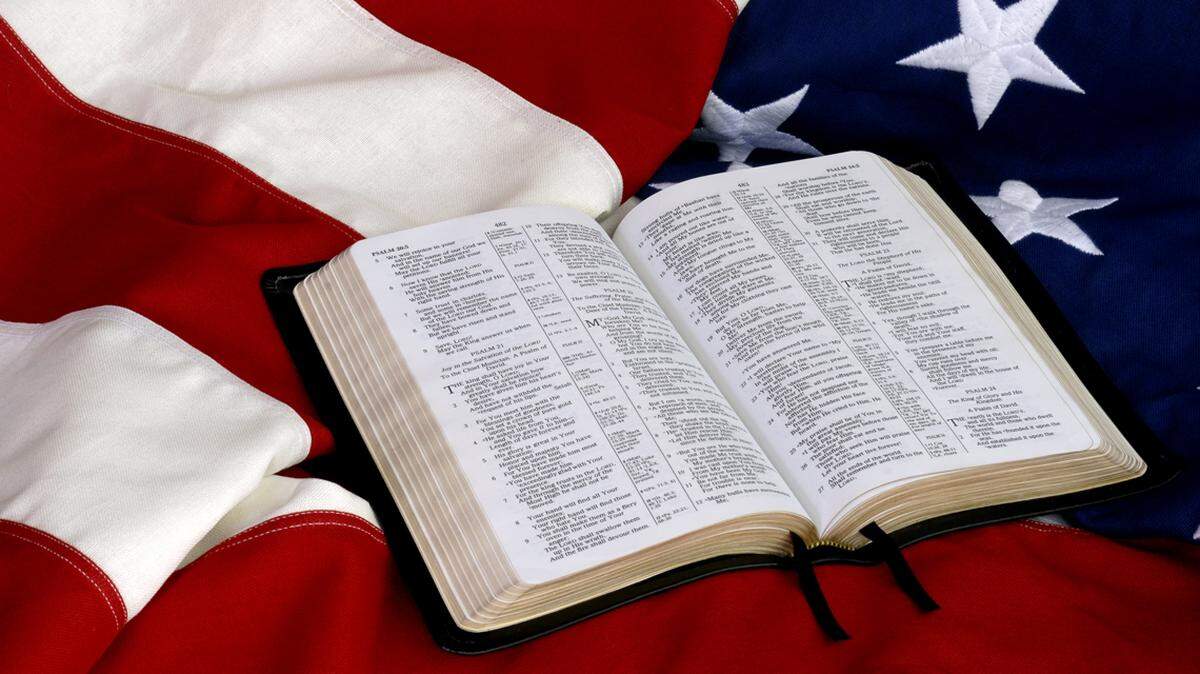
When you donate or pledge money to a religious institution, Uncle Sam does not take a bite of that cash. For years, the Internal Revenue Service has granted churches, synagogues, mosques and other religious organizations categorized as a house of worship tax-exempt status.
And they could keep that status — and all that coin — as long as they stayed out of politics. That means no endorsing of candidates from the pulpit or stage.
Until now. The IRS has reversed what was known as the Johnson Amendment and now will allow houses of worship the opportunity to endorse.
Just think, now voters could get another form of political pressure — from their faith leaders.
The change came in the form of a court document filed last week, in which the National Religious Broadcasters called the Johnson Amendment unconstitutional, infringing on First Amendment rights to freedom of speech and free exercise of religion.
Some will call this a gift from Donald Trump, who in his address to the National Prayer Breakfast in January, said he would “get rid of and totally destroy the Johnson Amendment and allow our representatives of faith to speak freely and without fear of retribution.”
Now, a lot of people — in a captive audience — might get a recommendation on how to fill out their ballot. More than a quarter of adults in Missouri and Kansas attend religious services at least once a month, according to U.S. Census Bureau data. That’s potentially millions of voters.
What’s next? Churches giving members a handout to take to the voting booth?
Maybe not. I spoke to several Kansas City area pastors and a rabbi who don’t think the change is a good idea.
They had lots of reasons to let things stay as they are, including preventing division in the congregation and allowing power to corrupt unchecked.
Rev. Nancy Tuma, Ward Parkway Presbyterian Church (Presbyterian)
“I still lean toward what I have always preached: Vote, go out and vote, but I’m not going to tell anyone how to vote, because I think that Jesus never asked people who they were for, if they were supportive of the Roman government or whatever he believed in. You know, render unto Caesar, what is Caesar’s and unto God what is God’s?”
Adam Hamilton, founding pastor of the Church of the Resurrection (United Methodist)
“Here at Resurrection we have policies that just say we will not recognize one candidate unless we’re going to recognize the other. So if there’s somebody who’s going to be in worship, we’re not going to recognize them while they’re running for office, unless both candidates are there, and a Sunday school class cannot have one candidate come and speak to their Sunday school without inviting the other candidate. It’s our aim is to try to be fair and not use the church as an instrument for politicking for the people running for office.”
Michael Zedek, rabbi emeritus of Congregation B’nai Jehuda, and rabbi-in-residence at Saint Paul School of Theology. (Judaism)
“Historically, in my view, it’s never good for religion and it’s never good for politics when the two get mixed too closely. The very notion that the spiritual leader would endorse particular candidates/parties is open to division. We are endlessly splintered, including in the world of religion, and I would expect that if this is embraced by clergy, it will only contribute once more to that trend. “
Is it a good idea?
Alan Edelman, former chair of the Greater Kansas City Interfaith Council, said he’s not surprised by the the new IRS guidelines, given today’s conservative court rulings. “Quite frankly, religious leaders have found ways of endorsing candidates without mentioning their names. There are certainly more important issues dealing with decisions being made that impact life, liberty and the pursuit of happiness.”
Here’s my question: If your spiritual leader tells you to vote for someone, what do you do?
I reached out to Abundant Life Church in Lee’s Summit and Pastor Phil Hopper because of his stand on the school board last year. Church representatives declined comment for this article.
In a sermon before that election, “Do you want godly outcomes or ungodly outcomes?” he asked. “There’s a chance to bring two more godly people on the board of education.” Today, Hopper could endorse those “godly people” by name, unfettered. Some people might think that’s perfectly fine.
But some won’t. I wouldn’t say that churchgoers owe blind loyalty to those on stage and behind pulpits, but how could you not at least lean toward that message, the same way you would any other message they give? And if that’s the case, does that leave too much power in the hands of one person?
And what about the other way around? Will religious leaders feel even more pressure from candidates to take advantage of this loophole?
“No, I think, I think the pressure will remain the same,” said Eric Williams, senior pastor of Calvary Temple Baptist Church and executive director of the Calvary Community Outreach Network. Of course, candidates visit churches already, hoping to make introductions and even to speak.
“I think the parade will continue, and we would have to make the decision of whom we will allow. And there’s some that would suggest that, because you’ve allowed them to make the appearance, then that is the endorsement. And so we’ll have to find ways to deal with that.”
Black churches and politics
People who attend African American churches historically have looked to their leaders for guidance in elections, said Williams, who is Black. Calling it “a wink and a nod,” churches have had sociopolitical discussions because it’s a “trusted place,” he said.
“I think our congregation knows where we lean, and they expect us to lead, whether we do it publicly or privately. I think our congregations expect us to stay informed about people and the policies that will hamper their growth or help them to grow.”
Another Black minister, the Rev. Ngozi T. Robinson, said there’s nuance in how leaders navigate politics, and that’s a challenge when nearly half of U.S. adults say they feel at least “some” tension between their religious beliefs and mainstream culture, according to the Pew Research Center. She is the founder of People of the Way online ministries and lives in Kansas City.
“Faith loses its soul when it becomes a political tool — but it also loses its power when it stays silent in the face of injustice. We live in the tension, on purpose,” said Robinson, who is the author of “Shameless Audacity: How Black Women Can Find Strength in the Teachings of Christ.” Part of the Fellowship of Affirming Ministries, her online community uplifts voices marginalized by the church and society.
Williams said he believes most leaders have followed the rules, but joked that he might have been a little more pro-Barack Obama during the years he was in office.
“Those that attend primarily white churches have always done it too. The only thing that makes this new is that the handcuffs have come off, which may make it a little bit more dangerous.”
Dangerous turf, indeed. I believe church members have brains and can determine the best candidate for themselves and their families. And I don’t mind religious leaders talking in a house of worship about the need for the best candidate to show ethical behavior, love, forgiveness and caring for others.
But let the congregations figure out just who that candidate is.
This story was originally published July 16, 2025 at 5:08 AM.