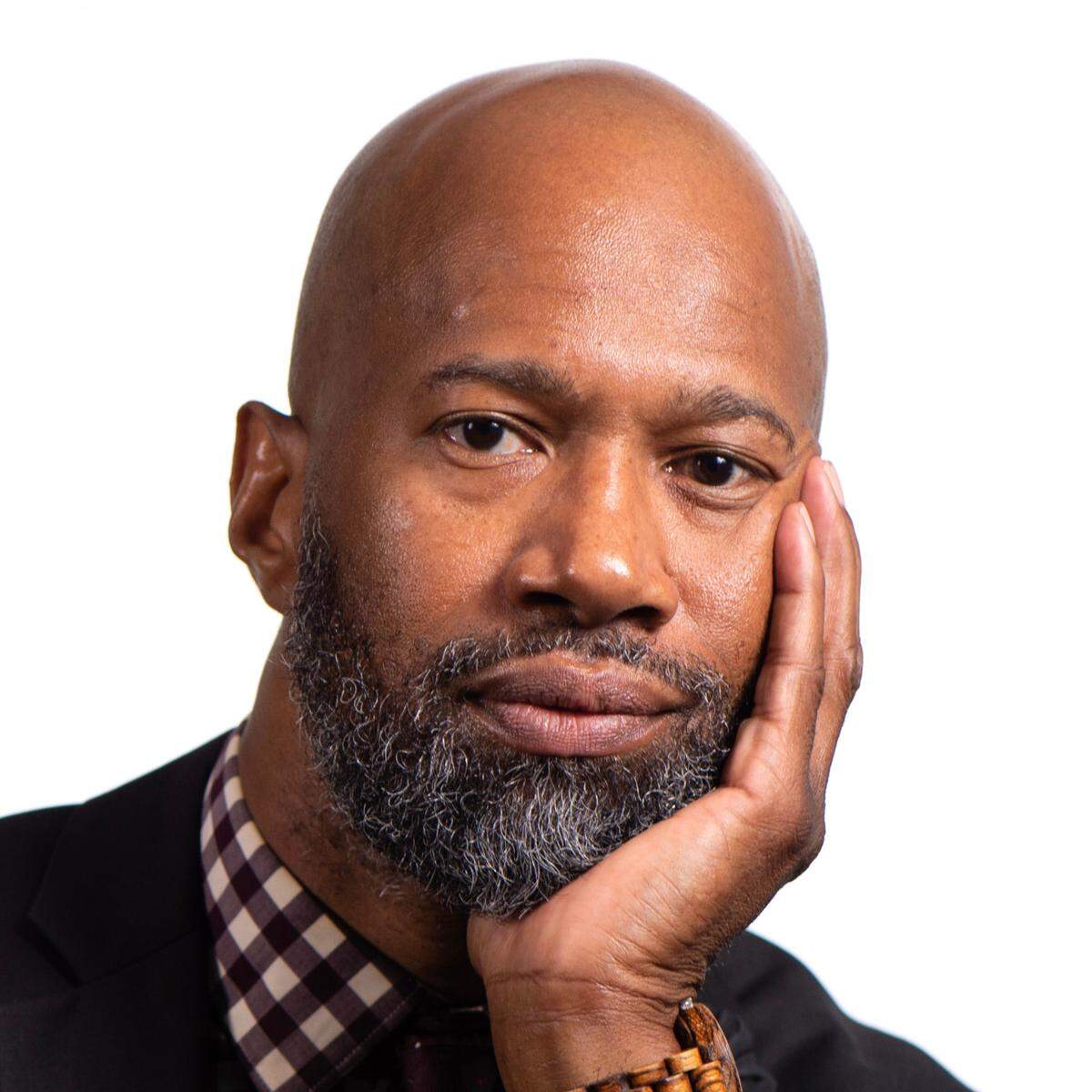
Kansas City man founded Not Guilty 48 after Trump commuted his sentence | Opinion
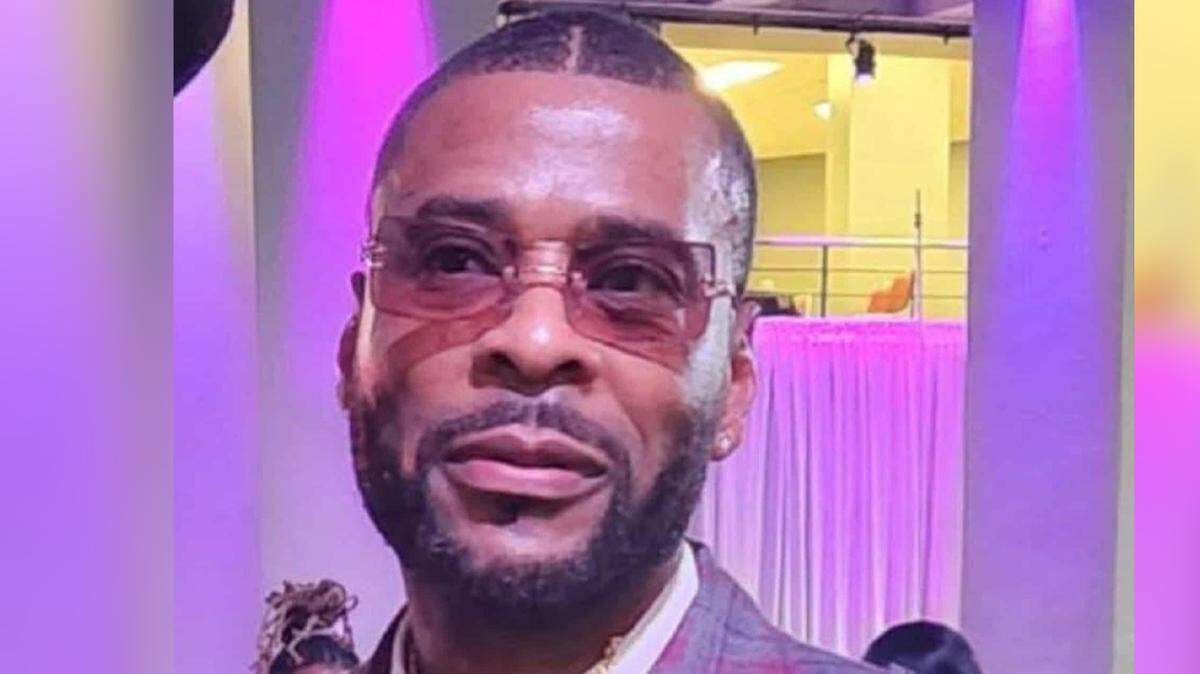
It’s not often that I agree with one of President Donald Trump’s policies, but the president and I see eye to eye on one issue: oversentencing of incarcerated individuals.
In the case of Derrick Smith, a Kansas City man who spent 21 years in federal prison for a nonviolent drug-related crime, it wasn’t all that difficult to find common ground with Trump, someone I generally find myself at odds with.
In 2021, Trump commuted Smith’s 340-month prison sentence and Smith has made it his mission to help others. In the four-plus years since his release, Smith has founded Not Guilty 48, a nonprofit organization he wants to use to advocate for other inmates unfairly or unjustly sentenced — and he would know a thing or two about lengthy prison sentences.
Smith, 58, was convicted of distribution of cocaine resulting in death, and possession of cocaine with intent to distribute in 2001. The following year, he was sentenced to a total of 48 years behind bars — 28 for the death case and 20 for possession with intent to distribute.
On appeal, Smith challenged the time he was given for possession and had 20 years shaved off his punishment. He was able to prove during the post-conviction process that he did not possess enough cocaine to support the government’s argument that he trafficked drugs.
In 2009, the sentence for possession with intent to distribute was thrown out, Smith said.
“There should have never been a federal case on that count,” he said.
However, in the government’s eyes, Smith was still criminally responsible for providing cocaine to a friend who died by accidental overdose Still, a near 30-year prison bid seemed a bit excessive, Smith said.
The friend, Smith said, passed away with other drugs in her system but “the court system was dragging me about the death,” he said. “So I chose to do public awareness about my case. I wrote lawyers, innocent projects, paralegals just trying to bring these things to the forefront.”
Apparently, Smith’s persistence paid off. Both the University of Minnesota Law School’s Clemency Project and the National Association of Criminal Defense Lawyers’ Trial Penalty Clemency Project took on Smith’s case and argued in favor of a reduced sentence.
Then Trump stepped in, granting clemency to Smith, who had already spent more than two decades of his life locked up.
“Mr. Smith … has served more than 20 years of a nearly 30 year sentence for distribution of drugs to a companion who passed away,” a White House statement read then. “Mr. Smith is deeply remorseful for his role in this tragic death and has had an exemplary record while incarcerated.”
Attempts to reach Minnesota law professor JaneAnne Murray and Stacy Kalpathy, the former UM law student that worked on Smith’s case, were unsuccessful. The university did release a statement after UM’s Clemency Project helped Smith and 13 others receive clemency from Trump.
“All of these clients were serving excessive sentences that devastated their lives and the lives of their families,” Murray said in the statement. “President Trump’s clemency grants reinforce that the cause of criminal justice reform is a bipartisan issue. We are filled with joy that these clients are reuniting with their loved ones. We will continue to represent similarly-situated prisoners and seek to redress the systemic inequities driving their disproportionate sentences.”
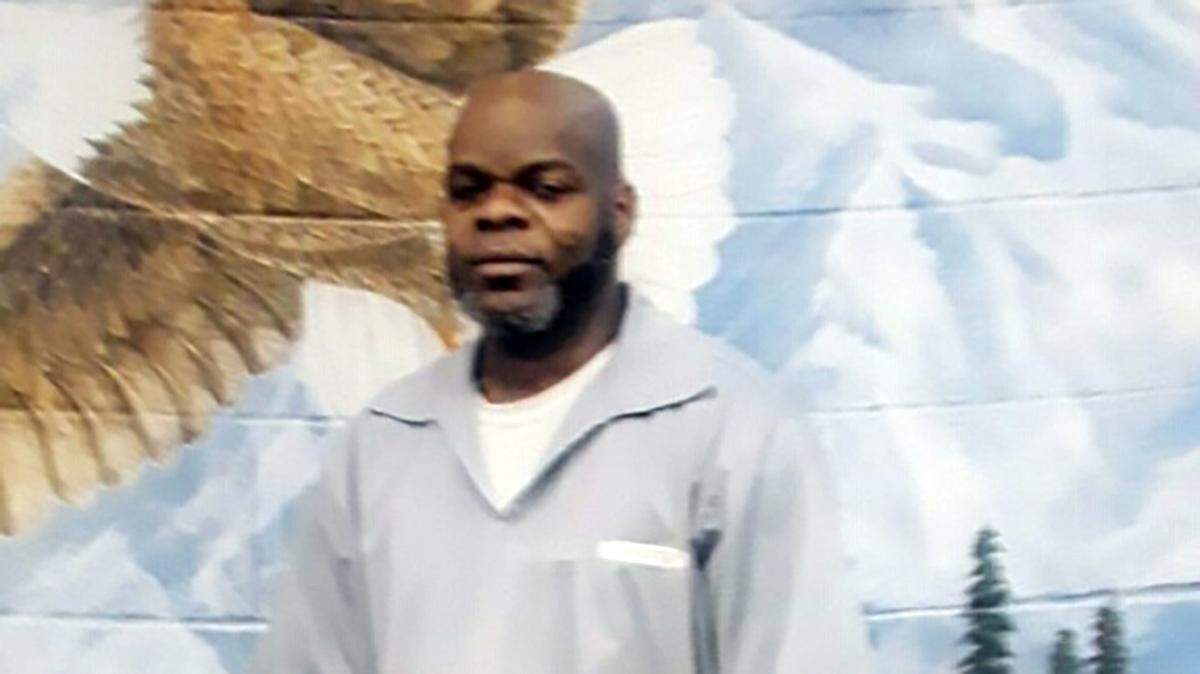
Not Guilty 48’s first case
I’ve met with and spoken to Smith several times in the past. He told me he spent many hours studying case law while locked up.
“I was denied on a lot of issues by the court,” Smith said.
Because of those experiences, he has chosen to fight for others in the federal and state prison systems. One such individual is Michael Silas, a Kansas City man serving life in prison for a murder witnesses have said he didn’t commit.
In 1991, Silas and two other men — John Davis Jr. and Ernest Collins — were indicted on first-degree murder and armed criminal action charges in the shooting death of Raymond Thomas of Kansas City.
All three were either found guilty of or pleaded guilty to charges related to Thomas’ death.
“Michael Silas was there but did not pull the trigger,” Smith said. “The one that actually committed the murder they let out.”
I’ve written about Silas’ case before. He was 19 when the fatal shooting occurred. He was the only one of the three suspects who was given life in prison without the possibility of parole.
According to Smith, Silas’ case illustrates how sentencing can sometimes be unjust when a defendant decides to take his chances at trial and is found guilty. He said he’s written Missouri Gov. Mike Kehoe’s office through Not Guilty 48 asking for clemency on Silas’ behalf.
A mutual acquaintance introduced Silas and Smith. The sentencing disparity between Silas and his co-defendants caught Smith’s attention, he said, adding that he would like to see Kehoe commute Silas’ sentence to time served.
“He’s done enough time for his crime,” Smith said. “If the conviction stands in place, so be it. The main thing is to get him out.”
In an email statement sent to me, Kehoe spokeswoman Gabby Picard wouldn’t confirm or deny if a clemency request for Silas is under review.
“Per state statute and Governor’s Office policy, we do not comment on the status of clemency applications,” Picard wrote.
Petition for clemency
Davis and Collins were either convicted of or pleaded guilty to lesser charges and were given significantly less serious penalties than Silas, according to court records. Both have already served time in prison.
Of the three, Silas is the only one still locked up despite a sworn affidavit signed by Davis, who confessed to being the actual shooter.
Silas, 54, has never denied he was present during the deadly encounter, but argued in court documents that he wasn’t the shooter.
Davis admitted he killed Thomas, according to a sworn affidavit he signed in 2016. Neither Collins nor Silas had knowledge of his intention to shoot Thomas, Davis wrote in the signed affidavit.
In a videotaped statement from 1991, Collins made a similar claim to investigators exonerating Silas as the triggerman, according to court records.
Davis was convicted of second-degree murder and sentenced to 30 years in prison. He was released on parole about nine years after 25 years in prison.
At Davis’ 1992 trial, he pointed to Silas as the shooter. In the affidavit, Davis admitted he lied.
“I lied to the police during my video statement and I also lied when I testified at my trial that it was Michael Silas who shot and killed Mr. Thomas with a shotgun,” he wrote in the affidavit. “The truth is that I am the one who decided on my own to shoot Mr. Thomas and neither Mr. Silas nor Mr. Collins had any idea I was going to do this before it happened.”
A previous request for clemency for Silas was denied by former Missouri Gov. Mike Parson, according to Silas. His petition to former Jackson County Prosecutor Jean Peters Baker was denied, too, Silas said.
He’s thankful Smith agreed to bring awareness to his case. He said he is also optimistic that some of the behavioral changes he’s made in prison will help Kehoe’s office see he’s a different person from who he was more than 30 years ago.
“I understand we all make mistakes when we are young,” Silas said. “I just hope my case ends up in the hands of the right people.”