Johnson County’s Negro Creek kept its derogatory name but where are the new signs? | Opinion
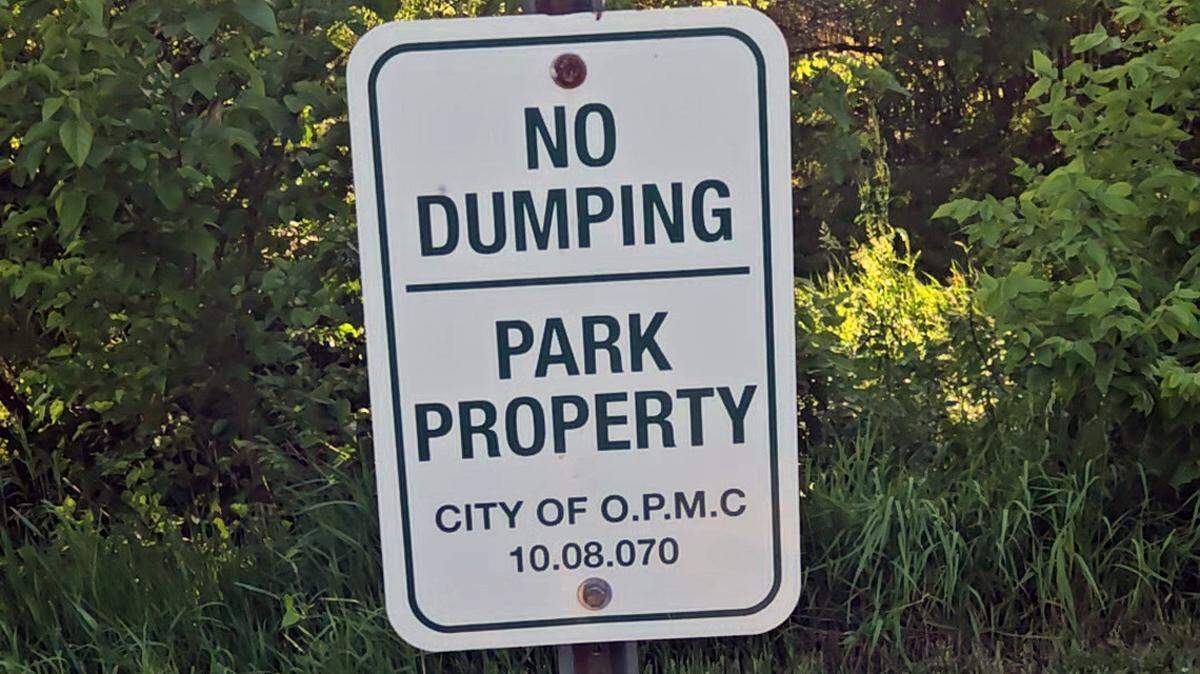
At the end of a cul-de-sac in the 7700 block of West 154th Terrace in Overland Park is a white sign with green lettering that reads in all caps: No dumping. Park property. About 25 feet from this sign is Negro Creek, a roughly 8-mile stream that flows from southern Overland Park through Leawood to the Blue River in Missouri where it ends.
The waterway is part of the Blue River Watershed.
When I first encountered the sign on a recent visit to nearby Brittany Park, I thought nothing of it and casually strolled by it. It’s safe to assume I wasn’t the first person to pay little attention to this unassuming marker put there by city officials to keep litterbugs from dumping trash and debris in the area.
Wouldn’t it be a great public service to all Johnson Countians if there were signs along Negro Creek identifying this small body of water? Exhibits that explained the history of how the tributary got its derogatory name and the painstaking process the county undertook to keep it would be ideal.
Like Stacey B. Knoell, executive director of the Kansas African American Affairs Commission, said to me: When we don’t know our history, we are doomed to repeat it.
“The issue and controversy surrounding the renaming of the creek in Johnson County bring to the surface a part of history that some would rather we forget entirely,” Knoell wrote in an email. “It is important, especially now, to learn our entire history, even the undesirable parts.”
Despite a decision two years ago to place signs in Overland Park and Leawood, there’s nothing to indicate the creek’s name at that site or anywhere else.
When I asked a Johnson County spokesperson about this, I was told there were plans to erect a display with educational language at Kingston Lake Park at 153rd Street and Lowell Avenue in Overland Park. Negro Creek runs through this small lake just west of Antioch Road in Overland Park.
‘Will be placing a sign’
“We will be placing a sign in the Kingston Lake area along the creek in Overland Park,” Jody Hanson, Johnson County director of public affairs and communication, wrote in an email. “It will explain the history of the creek as we know from our research, highlight the committee and include the name change considerations. It will include maps and photos.”
According to Meg Ralph, Overland Park’s strategic communications director, no timetable has been set for a dedication ceremony. In a text message, Ralph added that Overland Park and Johnson County will coordinate with the Negro Creek Renaming Committee regarding any future dedication events.
“We will keep you posted on those if they are scheduled,” Ralph wrote.
In Leawood, officials there said they are collaborating with Johnson County and Overland Park to do the same.
In an email, Leawood Strategic Communications Director Beth Breitenstein wrote: “We are coordinating with Johnson County and Overland Park on the appropriate historical language, and we are prepared to install educational signage along the creek that runs through Leawood.”
After two years of inactivity, I am encouraged by these developments. When there is a coordinated effort to wipe out — or whitewash, as I wrote in a previous column — American history, Johnson County, Overland Park and Leawood owe their residents more truth, not less.
And the truth about Negro Creek — known by a more offensive racial slur until the N-word was ordered removed from all federal maps in the 1960s — isn’t pretty. As The Star reported in 2023, historians believe the creek got its name after an enslaved man ran away from his oppressors in neighboring Missouri and was captured in Kansas.
“The man was tracked along the Blue River as he fled toward Kansas and made it to a tributary across the state line,” The Star said.
“The story goes that he chose to die by suicide there rather than be recaptured and return to a life of slavery.”
According to reports, legend has it that the man slit his throat from ear to ear to keep from being returned to bondage.
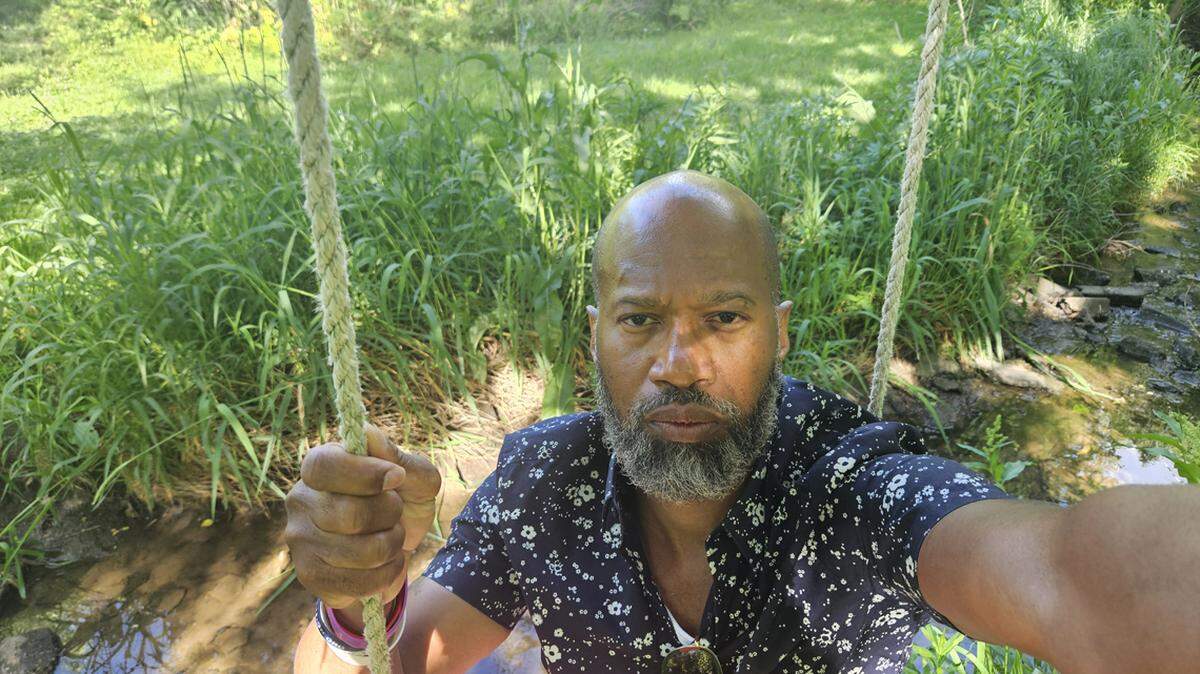
A swing at Negro Creek
I took a trip to Overland Park to put eyes for the first time on a creek that has a name rooted in racial terror. A movement that began in 2020 to change the name of Negro Creek ended with the citizen-led renaming committee’s recommendation to keep the term on the books — or in this case, U.S. Geological Survey maps.
My trip began at 151st and Antioch — near where the creek begins, according to Johnson County’s website — but I could not find the waterhead. My next stop took me to Brittany Park near 154th Terrace and Metcalf Avenue. I walked through the small park in both directions and could see small ripples from Negro Creek along the way.
I was about to leave for my next stop at 151st and Kenneth Road near the state line when I decided to venture behind the no dumping sign. Within a few steps I saw something that at first startled me: a rope dangling from a tree mere steps from the creek. Knowing the creek’s history, I couldn’t shake this imagery from my head until I looked closer.
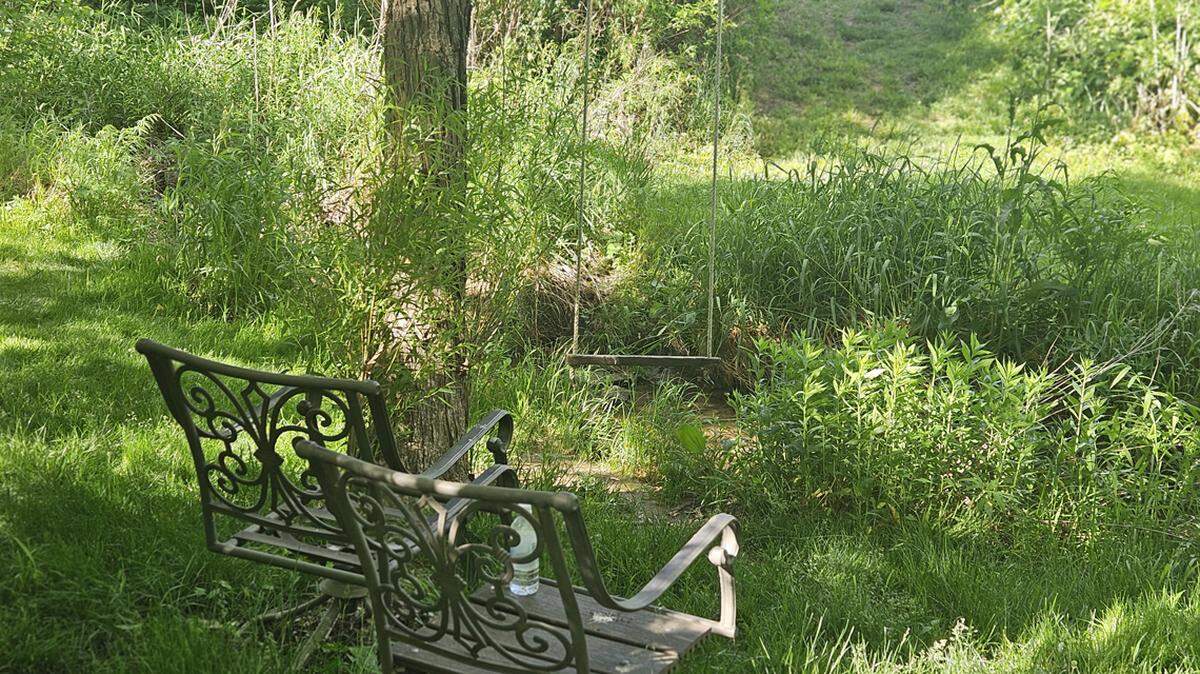
Upon further examination — and much to my relief — the rope was actually a swing erected from a tree branch. Close by were two vintage wooden chairs. A half-empty water bottle sat on one of them. A family spent time here, I thought. I wonder if they know the name of this creek and its history.
I approached the creek and snapped a couple of photos. I thought of jumping across Negro Creek to get to the other side, but noticed a small metal bridge nearby. I walked across that and headed for the swing. I hopped on and pushed myself forward, see-sawing back and forth as if I was a young child.
There’s nothing like being one with nature, I thought. But I needed to find out who built this swing and set out a mission to do so.
QR codes at Negro Creek?
Brian Vincik, 47, of Overland Park, and his family live on 154th Terrace in the Country Oaks subdivision. Vincik said he used an old rope to build the swing on a tree near Negro Creek, which flows directly behind the family’s home.
Vincik said his three kids and other young children in the area use the swing regularly to enjoy nature. He said he placed the metal bridge there as well so his family could easily access Brittany Park.
And Johnson County officials placed the no dumping sign there at Vincik’s request, too, he said. Vincik said he maintains the area behind the home by mowing and clearing debris “to keep the ticks away,” he said.
Vincik and I talked for about a half-hour about Negro Creek. He said he found out the name of the creek by visiting the Johnson County stormwater management website after a storm a few ago to report damage to the family’s residence. He was not aware of how Negro Creek came to be or the renaming process Johnson County started in 2020.
When I told Vincik that a diverse citizen-led coalition recommended keeping the name in 2023 and placing signs along the creek, he said he thought that outcome was fair. It was Vincik who suggested to me that Johnson County put up a Negro Creek placard next to the no dumping signage near Brittany Park.
“Maybe add a QR code so people could find out more about its history,” Vincik said.
In this digital age, that is something I never thought of but an idea Overland Park officials and the Negro Creek Renaming Committee should strongly consider.