‘They can’t erase us’: Is the federal government’s DEI purge rooted in fascism ? | Opinion
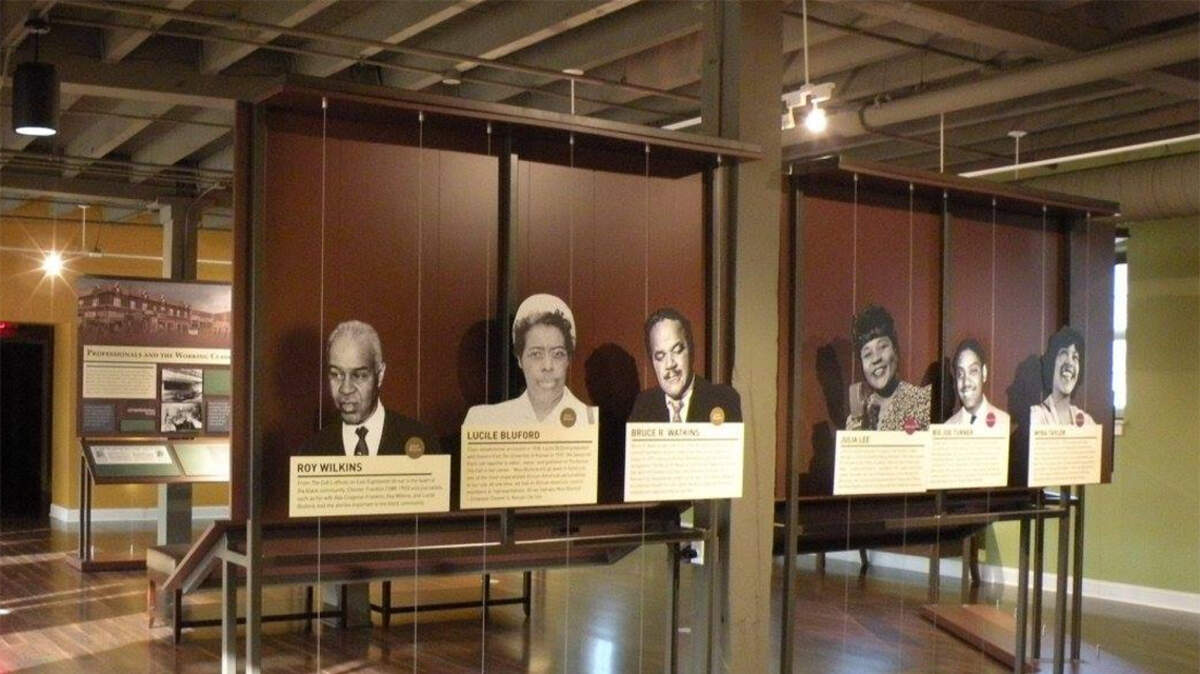
As a literary historian and executive director of Kansas City’s Black Archives of Mid-Missouri, Carmaletta Williams knows a thing or two about Black history both locally and nationwide. And make no mistake: She is certain of one thing despite President Donald Trump’s push to end diversity, equity and inclusion in the federal government.
“They can’t erase us,” Williams, an African American woman, said.
No, Black history can’t be whitewashed, a term Oxford defines as a deliberate attempt to conceal unpleasant or incriminating facts — slavery comes to mind — about someone or something. If you believe Trump and his followers, teaching the varied accomplishments, achievements and obstacles faced by Black people in the United States is divisive.
Sure, Mr. President, sure.
As if the Civil Rights Act of 1964 and the 14th Amendment were pulled out of thin air. They guarantee equal protection under the law, a cornerstone of civil rights in this country. These unalienable rights and others were enacted for a reason: Black folks and other minorities were denied access to public accommodations, the right to vote and other atrocities perpetrated by the white establishment and upheld by laws and customs.
I won’t mince words here: The federal government’s DEI purge is rooted in falsehoods — this insidious belief that the mere mention of race somehow divides us is utterly ridiculous, and would be laughable if not for the seriousness of what’s at stake.
At the Black Archives, Williams said the nonprofit doesn’t get direct funding from the federal government. But, she said, at least four of its funding sources have already been impacted by these cuts and that should concern any of us who cares about this local institution dedicated to the history of African Americans in Kansas City. Admission is free.
“Just in the last two weeks, we had four organizations that usually send us funding say, ‘Sorry, our funding was cut and we don’t have the money to send to you,’” she said. “Because we depend on funding sources to keep us going, it affects us. We are trying to keep the museum open and free.”
Trump’s war against DEI
Under executive orders from Trump, literature and artifacts related to such topics as race, feminism and the Holocaust have been removed from federal institutions, including branches of the U.S. military.
Last month, Kansas City author Leonard Zeskind’s “Blood and Politics: The History of the White Nationalist Movement from the Margins to the Mainstream,” was among hundreds of books removed from bookshelves at the Naval Academy Library, The Star’s Judy Thomas reported this week. Sadly, the 75-year-old human rights advocate died earlier this week at his Kansas City home.
Here’s an alarming sidenote: Two copies of Adolf Hitler’s manifesto “Mein Kampf” were not removed from the Naval Academy’s library, according to The New York Times.
And who could forget the initial scrubbing and restoration of historical passages dedicated to influential civil rights icons Jackie Robinson and Harriett Tubman from government websites?
These pervasive acts are akin to fascism, African American history scholar Augustus Wood told me. Wood, an assistant professor at the University of Illinois’ school of labor and employment relations in Champaign, sits on the executive council of the Association for the Study of African American Life and History, a group established in 1915 by Black History Month founder Carter G. Woodson.
Wood described this attempt to erase history as fascism with elements of white supremacy, a concept defined by the Oxford English Dictionary as the belief that white people constitute a superior race and should dominate society and exclude racial and other ethnic groups.
I find it difficult to disagree with Wood’s assertion. How else to explain this administration’s attempt to eliminate books and monuments acknowledging the centuries-long achievements of Black and Native Americans, women, members of the LGBTQ community and other marginalized groups?
“At the end of the day, this is how fascism works,” Woods said. “You have to erase the agency and the people from the narrative. If they have no identity they rely on the oppressor to survive. It makes it less likely to rebel. This is a tactic of a fascism.”
There is a healthy fear that some of these tactics, which include Trump’s dismantling of the U.S. Department of Education, could also target schoolchildren with special needs. Other than straight, white able-bodied males, it seems no group is safe from Trump’s ethnocentric wrath.
Just this last week, a Florida man born in the U.S. was detained by immigration officials before being released after a judge there observed his birth certificate.
Other U.S. citizens have been threatened with deportation by this administration, too. And if you think Trump is only kidding about sending American citizens to prisons in El Salvador, you’d be foolish to think he’s joking.
Diversity is not racist
Shawn Alexander, a professor of African American studies at the University of Kansas, said defining DEI as racist is wrong. If I could scream that at the top of my lungs, I would.
“It’s a problem that people think because it’s DEI, it’s a Black thing,” Alexander said. “It shows the intent behind eliminating DEI. It’s a buzzword.”
Alexander added that removing content from the federal government related to race is stripping away history.
“So we have to pay attention to the rewriting of history,” he said.
Each scholar I spoke to for this column summarily agreed that the best way to counter these attacks on African American history is to use facts.
“You use government studies and documents,” Alexander said. “It’s all about the facts. You use details and facts.”
Wood said: “First thing we have to do is educate each other. The number one thing they fear is education. That is why they are trying to dismantle these institutions. We have to take back ownership of information. We do whatever we can to have these discussions.”
Williams added: “And that is the significance of what we do at the Black Archives — we tell the truth. You can’t ignore it and you can’t erase it.”
I’ve thought long and hard about the federal government’s recent purge — to me, these actions are disappointing and distasteful. Black history is American history.
This story was originally published April 18, 2025 at 11:57 AM.