Why isn’t Mizzou’s first Black scholarship athlete in Missouri Sports Hall of Fame? | Opinion
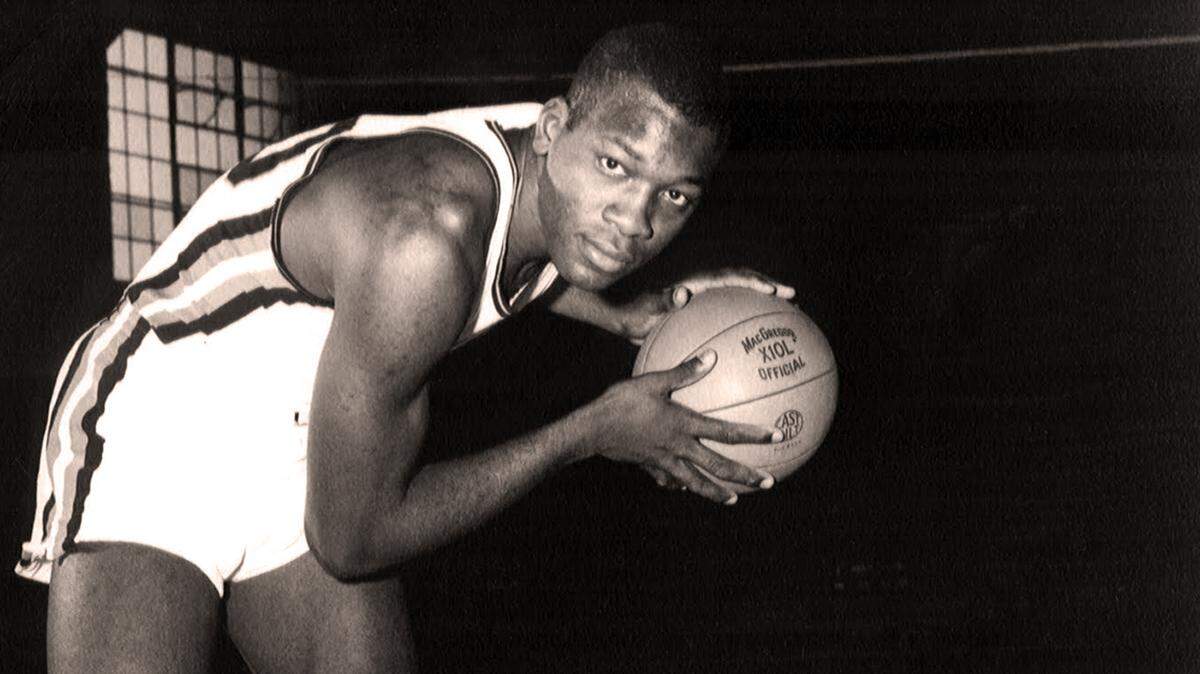
Al Abram, the first African American athlete to accept a scholarship at Mizzou in any sport, is not in the Missouri Sports Hall of Fame. Why he isn’t among the inductees is beyond comprehension.
There could be a plausible reason for this glaring omission: He’s never been nominated, according to Kary Booher, a spokesman for the hall in Springfield.
“Al has not yet been inducted, and I do not see an official nomination form in our records,” Booher wrote in an email.
Full stop: Why hasn’t anyone in Columbia thought to nominate Abram for induction? Time to get to work, Ol’ Mizzou.
But shouldn’t Abram’s selection be automatic? In 1956, he became the first Black scholarship athlete at the state’s flagship university. And he led Mizzou in scoring, rebounding and field goal percentage in the 1958-1959 season.
Any accomplished trailblazer with ball skills like Abram should be a shoo-in for the hall. Otherwise, what’s the point in honoring standout athletes, coaches and teams from around the state?
“We don’t always get the recognition we deserve,” said Jennifer Thomas, Abram’s second cousin. “We shouldn’t have to push. That’s the part that gets me knowing someone is supposed to be there and he is not there. He deserves to be in the Missouri Sports Hall of Fame.”
In 2004, Abram was inducted into the University of Missouri Athletics Hall of Fame. It boggles my mind that this pioneer hasn’t been considered for statewide recognition. Norris Stevenson, Mizzou’s first Black scholarship football player, is in both halls of fame. Abrams should be too.
I must point out that Abram and I are related through marriage — one of his sisters, Augustine, married my grandfather, Raymond Porter Sr., before I was born.
I don’t recall ever meeting Abram — I was 8 when he died in 1982 at 44 of an apparent heart attack. But his recognition at the highest level in this state is well deserved and long overdue.
‘Great husband and father’
Not only was Abram a skilled basketball player at Mizzou, but he was also a loving husband and doting father to daughter, Gayle, according to widow Glenda Abram.
“Al was a great husband and father,” Glenda said.
Glenda, 84, of Creve Coeur, added Al died on Gayle’s 10th birthday.
“She remembers everything about her dad,” Glenda said. “He was very strict about education. His thing with Gayle was by the time she was in the second grade she knew her multiplication table. Al made her memorize it.”
When Al was honored at Mizzou in 2004, Glenda recalled speaking to then-basketball coach Quin Snyder about getting Al into the Missouri Sports Hall of Fame.
“We talked about that but nothing came of it,” she said.
Glenda said she met Al because she was friends with his sister, Dorothy. They were two years apart in age, but Glenda would often ride with a family friend to watch Al play at Mizzou, she said. On one trip, Glenda said she discovered Al didn’t have a roommate.
“All of his teammates were white so they couldn’t share a room,” she said.
I asked Glenda if Al was deserving of induction into the Missouri Sports Hall of Fame. Of course, she said. Not only was he a talented basketball player — he was a scholar as well, she said.
“He received a scholarship for basketball and academics,” Glenda said. “That’s what got him there. He was a scholar to begin with.”
The man family called ‘Brother’
Al Abram was the only son among Alfred Sr. and Marie Abram’s four children. According to Thomas, 56, of Ferguson, he was affectionately known to family as Brother.
“I think it was because he was the only boy,” Thomas said. Glenda Abram confirmed this.
Thomas said she attended Mizzou in the 1990s but had no idea Al was a pioneer at the school.
“I knew he played basketball at Mizzou and that he did my mother’s taxes,” Thomas said.
After leaving Mizzou, Al played professionally for the National Industrial Basketball League’s Seattle franchise before the league folded in 1961.
According to his Mizzou hall of fame bio, Al later worked for the City of St. Louis and the Internal Revenue Service. When he died, Al was self-employed as a business consultant, according to his obituary. He held undergraduate and graduate degrees from Washington University in St. Louis.
In his Mizzou Athletics Hall of Fame bio, Al was described as an unassuming man that dealt with racism with dignity and class.
“One such situation occurred as a junior in December 1958, when the team traveled to Houston, Texas to play Rice,” the bio reads. “As the team checked into the hotel the night before the game, the hotel refused to let Abram stay there. Unable to make last-minute accommodations for the entire team, Stalcup arranged for Abram to stay in a dorm room at nearby Texas Southern University. The next night, Abram scored 23 points to lead MU to a 68-62 victory.”
A ‘True Son’
Al Abram’s journey to Mizzou is chronicled in the book “True Sons: A Century of Missouri Tigers Basketball,” by author Michael Atchison. In the book, Atchison described Al as the best candidate to break Mizzou’s color barrier.
“At six-foot-five and 198 pounds, Al Abram was a model athlete and citizen,” Atchison wrote. “An exemplary student, Abram was president of his senior class, yearbook editor, choir member, and National Honor Society inductee, and he compiled a perfect attendance record through all his years in high school. Abram even earned his diploma a semester early and enrolled at Mizzou in January 1956.”
Al was 17 when he arrived on campus from Sumner High School in St. Louis, according to Atchison. He spent a year in basketball purgatory until his debut the following February.
“Because of freshman ineligibility, Abram had to bide his time on coach Clay Cooper’s freshman team,” Atchison wrote. “His varsity career would have to wait until the second semester of the 1956–57 school year.”
According to Atchison, Al chose Mizzou over offers from Purdue, St. Louis University, among other schools, and made history.
“He did not make his choice to be a pioneer, but he did not shrink from that role either,” Atchison wrote.
According to a passage in Atchison’s book, Al said this about becoming Mizzou’s first Black scholarship athlete: “The chance to be the first of my race ever to be awarded an athletic scholarship at Missouri didn’t sway me one way or the other but now that I’m here, I’m going to try my best to be worthy of the honor.”
Tell me again why Al Abram is not in the Missouri Sports Hall of Fame?
More than two years ago, current Tigers basketball coach Dennis Gates highlighted Al in a post on X.
“Today help me honor Tiger trailblazer Mr. Al Abram,” Gates wrote on Sept. 27, 2022. “He was the 1st Black scholarship athlete at Mizzou in any sport. He led our team in scoring (16.1) & rebounding (9.3) during the 1958-59 season. Mr. Abram was inducted into the @MizzouAthletics HOF.”
Gates understood the significance of Al’s contribution to Missouri sports. And so do I.
What say you, Ol’ Mizzou faithful?
To nominate Al Abram
According to Missouri Sports Hall of Fame’s bylaws, all information and letters of recommendation must be submitted at one time so organizing a letter writing campaign would work better over individuals sending in letters. Nomination forms must include:
- A few letters of recommendation, including from teammates, coaches, administrators as well as any business leaders who have known him.
- Contact information.
- High school alma mater and year graduated.
- High school sports played.
- High school awards.
- College and high school stats and other accolades.
- College awards.