Black man killed in Kansas City as assailant hurled n-word. That’s not a hate crime? | Opinion
Many of us would agree the n-word is one of the most offensive terms around. A case could be made that the racial epithet is the “the filthiest, dirtiest, nastiest word in the English language,” as Arizona State University English professor Neal Lester notes in his 2014 scholarly essay, “The N-word: Lessons Taught, Lessons Learned.”
In the paper, Lester, based on observations and feedback from a 15-week course he teaches at ASU on the subject, argues the racial slur is “a word thusly described like no other.”
“That word stops people in their tracks,” Lester told me in a recent interview. He’s got that right.
Almost a month has passed since Sean Tonkin fatally stabbed Jon “Mike” Rone Jr. of Kansas City, during an altercation between the two at Liquor Land, a gas station and liquor store at 14306 East U.S. 40 in Kansas City. Was the Independence Day stabbing a racially-motivated attack?
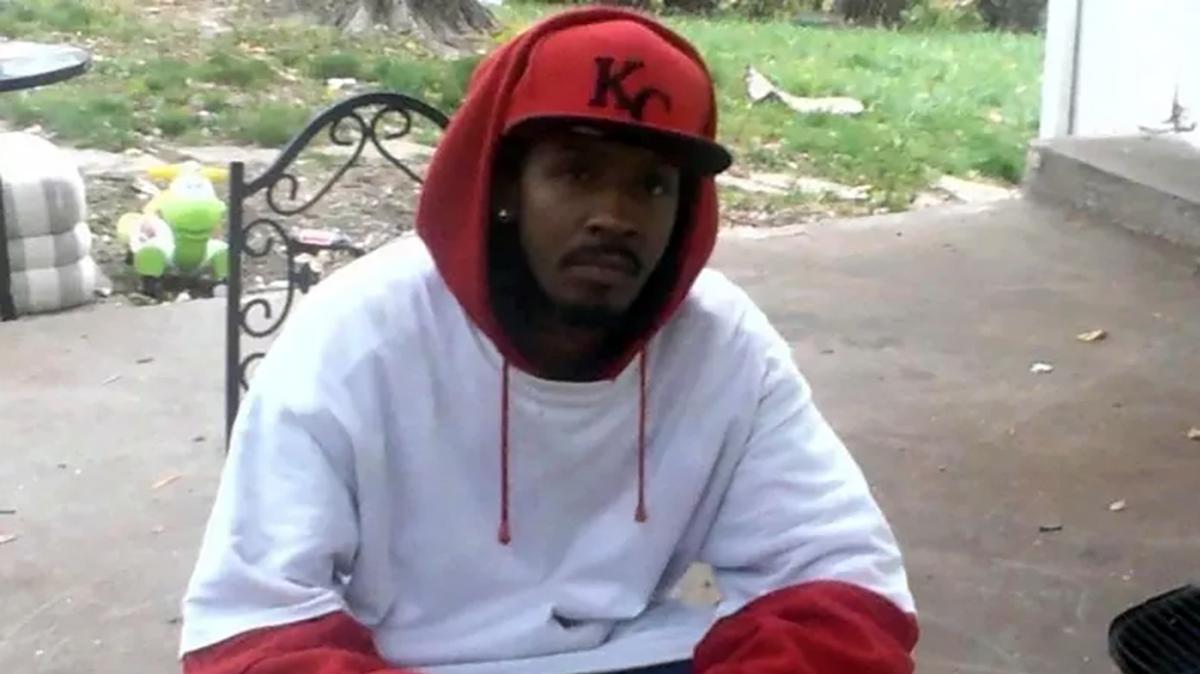
Rone’s family and community activists believe Tonkin, a 36-year-old white man, wanted to harm a Black person that day, according to witnesses. Tonkin repeatedly used the n-word “in a hateful and racially-motivated tone” with strangers, authorities alleged in court documents.
He zeroed in on Rone, a Black man, and called the 42-year-old the n-word. A verbal spat ensued. With a club in hand, Rone followed Tonkin to the side of the store, according to a warrant application seeking Tonkin’s arrest. Surveillance video did not capture the fatal stabbing, authorities said.
Racial epithets to incite violence show intent
Weeks after provoking a fight by using a racial slur to address Rone and fatally stabbing him, the only charges Tonkin faces are peace disturbance and a low-level drug possession offense.
But shouldn’t statements from witnesses that Tonkin wanted to “f*** up a n*****” be enough to bring more serious charges against Tonkin? Context is important, Lester, the ASU professor, told me. He asked: What led to this violent encounter? A white man called a Black man the n-word, I said.
We must examine the context and not make assumptions, Lester said.
“But we can’t predict someone’s lived experience,” he said. “There are ways people can be provoked.”
Rone’s reaction to being called the n-word almost could be expected. By most accounts from witnesses, Tonkin was clearly the aggressor.
Under Missouri law, no hate crime statute exists. Disturbing the peace is the only state law applicable when a white person calls a Black person a racial epithet, according to Jackson County Prosecutor Jean Peters Baker’s office. I’m left to wonder: Shouldn’t instigating a fight by hurling racial slurs invalidate any self-defense claim? Not according to state law, prosecutors said. In some instances, even the initial aggressor is protected by stand your ground self-defense laws.
Some would say, even if Tonkin said the most vile things to Rone, that doesn’t give Rone permission to attack him with a club. I am not one of those people. A white person calling a Black man a racial epithet to incite violence shouldn’t excuse the instigator from the consequences of their actions.
Tonkin is being held at the Jackson County Detention Center on a $2,500 bond. As of Monday, he was still locked up, according to authorities. But for how long? He started a fight and, based on statements from witnesses, got what he wanted: to harm a Black person. If that doesn’t clearly show intent, I don’t know what would.
The FBI is aware of the incident and has been in communication with local law enforcement officials since the July 4 altercation, a spokesperson for the agency said.
Stand your ground laws apply to Black men?
At times I’ve wondered: Does the stand your ground law apply equally to Black Kansas Citians? In states such as Missouri with stand your ground laws, the answer is no. A huge racial disparity exists, according to an Urban Institute study. More than any other race, white Americans were much more likely to benefit from self-defense claims, particularly when they kill Black people, the study concluded.
Years ago, I wrote about Terrance Blanks, a Kansas City man sentenced to 30 years in prison for fatally shooting Rocky Bradley in 2016 after an altercation at a convenience store near East 27th Street and Indiana Avenue.
Much like Tonkin and Rone, Blanks and Bradley were strangers to each other. Both walked into a Kansas City gas station, exchanged words, and a verbal beef ensued. In this case, before Bradley left the store, he alluded to a weapon he had in his vehicle, Blanks claimed, according to court documents.
Blanks was already armed — his legal right — but never brandished the weapon inside the store, according to the surveillance video I watched. After leaving the store with the gun at his side, he and Bradley fired at each at nearly the same time, according to video footage. Blanks was hit multiple times but survived. Bradley died on the scene from his gunshot wounds. About one month later, Baker’s office charged Blanks with second-degree murder and armed criminal action. He was convicted by a Jackson County jury.
In 2018, Blanks, citing ineffective counsel — his overworked public defender abandoned his defense, he claimed — appealed the murder conviction that sent him to prison for decades. Not surprisingly, it was denied.
Slur conveys ‘centuries of pain, evil and contempt’
In this space, I’ve reminded Jackson County prosecutors of their duty to apply the law equally and fairly. And more often than not, Baker’s office gets it right.
But in the case of the stabbing death of Rone, I’m puzzled. Why was no murder charge brought against Tonkin? He set off the violent encounter by using a racial epithet used to incite violence against Black people.
As Lester, the ASU English professor notes, the n-word is “the most explosive of racial epithets” and “our cruelest word.”
“Six simple letters that convey centuries of pain, evil and contempt” for Black people, Lester wrote in his essay, citing one of several sources he used to drive home his point. The slur is “an almost universally known word of contempt,” and “occupies a place in the soul where logic and reason never go,” Lester continued.
The slur is the most toxic, troubling word in the English language, Lester argues. Its use is “almost magical in its negative power,” Lester writes.
“That word has been used historically by white people against Black people,” Lester told me. “It didn’t just come out of nowhere.”
He isn’t wrong.
This story was originally published August 2, 2023 at 5:06 AM.