Is Kansas City world-class or second-class? Decision on this project will be telltale
What’s the difference between a world-class city and a second-class one?
It might very well be decisions such as this.
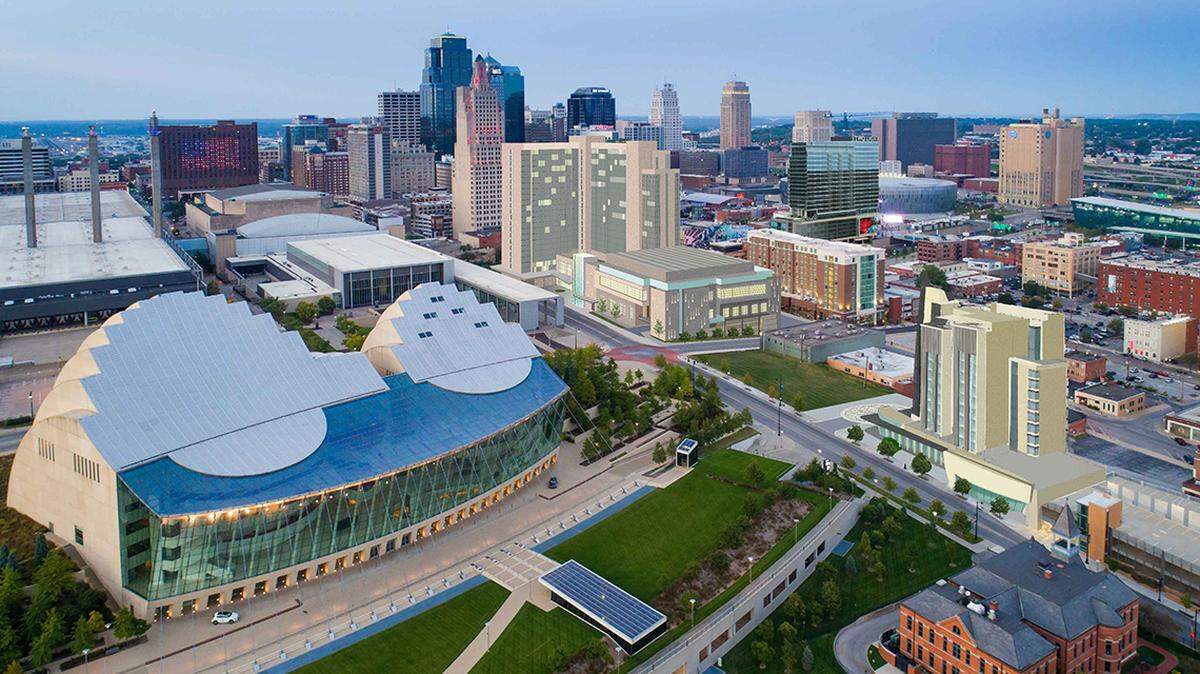
On the cusp of hosting the mammoth 2023 NFL draft, bidding to be a host city for the 2026 World Cup, and boasting one of the biggest sports superstars on the planet in Patrick Mahomes, Kansas City now has an opportunity see Hotel Bravo built adjacent to the Kauffman Center for the Performing Arts — which developers intend to become the city’s only five-star hotel.
And without spending or risking a dime of taxpayer money.
Let me repeat that for my incentives-weary friends: without spending or risking a dime of taxpayer money. I’ll explain momentarily.
In the end, of course, Kansas City Council members, who must approve the project’s tax increment financing vehicle, should ask a few questions first. Such as: Where do we sign? When can we break ground? And what should we wear at the ribbon-cutting?
Four former mayors have heartily endorsed the Hotel Bravo project: Kay Barnes, Emanuel Cleaver, Richard Berkley and Charles Wheeler. It has the support of such City Council opposites as Brandon Ellington on the left and Heather Hall on the right, and Teresa Loar up north and Katheryn Shields down south.
Just as remarkably, Kansas City’s The Call, an African-American weekly newspaper, enthusiastically supported the luxury hotel proposal in an editorial last summer. “I joined a diverse group of City Council members and looked at the numbers and found it made all kinds of sense,” the editor wrote.
Wheeler — who as mayor from 1971 to 1979 presided over the construction of Kansas City International Airport, Kemper Arena and Bartle Hall — wrote in a Star op-ed in December 2019 that Hotel Bravo “is a new project under consideration right now that is as worthy as any I’ve ever seen.”
Besides costing the city not a penny, nor putting the city at any financial risk, the hotel would utilize the existing and often-desolate Arts District Garage — adding $400,000 or so in parking fees to the city’s coffers annually. And that doesn’t include millions in future taxes on the facility.
Paid for with a different kind of TIF deal
So, how does this happen without risk or expense to the city — and, in fact, with the potential for millions in revenues for city coffers?
In a different kind of tax increment financing deal than before, the city agrees to the use of $20 million in TIF bonds, paid for by bond purchasers, to help finance the $63 million project — with local developers Eric Holtze, Whitney E. Kerr Sr. and others chipping in $16 million on top of a $27 million mortgage.
In order to hold down the borrowing and make the project feasible, the TIF financing allows the bondholders to capture 75% of future increases in tax revenues the hotel generates for 23 years. By contrast, past projects have been allowed to capture up to 100% of new taxes. This deal is a better one for the city from the get-go, and only gets better. After the TIF period, the city rakes in some $4 million a year in taxes, for an estimated 60-year take of $305 million.
So what’s the argument against such a windfall, and such a gleaming addition to the city skyline? It’s twofold: For one thing, it’s taking money away from local taxing entities, such as schools. For another, it’s “bad optics” just to be paving the way for a luxury hotel.
Regarding the supposed taking of tax money out of the mouths of babes: Um, no. The grassy lot that Hotel Bravo will be built on currently generates a whopping $3,000 in tax revenue a year. In contrast, local taxing entities will, for the first 23 years, receive 25% of the taxes generated by the hotel — money they’re not now getting. Local taxing entities would come out ahead, even during the TIF period, and certainly afterward when they begin receiving 100% of taxes.
And if the project underperforms, the city is out nothing. The bondholders and developers take all the risk.
Meanwhile, the project creates 100-plus construction jobs and nearly as many permanent ones.
It also promises to infuse new cash into a couple funds that fuel 18th & Vine development and affordable housing.
Bravo needs nine of the 13 votes from the council and mayor, since the TIF Commission broke with its staff recommendation and voted against the project.
That’s a shame, but the council and mayor have a chance to get it over the finish line in the coming weeks. They should. I say that, not because I know and love one of the people publicizing the project, though I do, but because either way, it will be a reflection of what council members, the mayor, and by extension their constituents, think Kansas City is capable of and worthy of.