
Morehead convicted 15-year-old with ‘complete lie,’ Golubski’s coerced testimony | Opinion
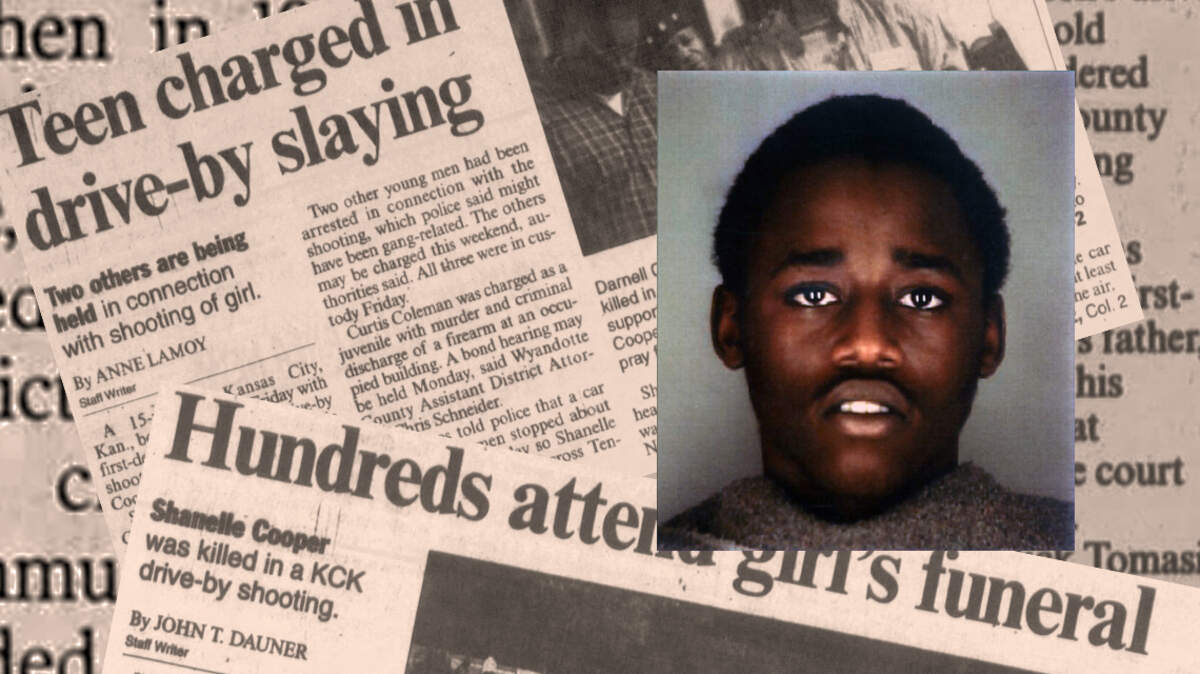
Curtis Coleman has spent the last 27 years in prison for the not only awful but asinine 1998 Kansas City, Kansas, murder of a 10-year-old girl, Shanelle Cooper, who had just run across the street to play some Nintendo with her cousin when she was hit in a drive-by shooting.
Teenagers who sold drugs and fought over girls ended a child’s life that night. But the way authorities responded was criminal, too.
The Chelsea Elementary fifth-grader was never supposed to die. And I don’t believe Coleman, who was 15 at the time, killed her. He was supposed to take the blame, though, and that he did.
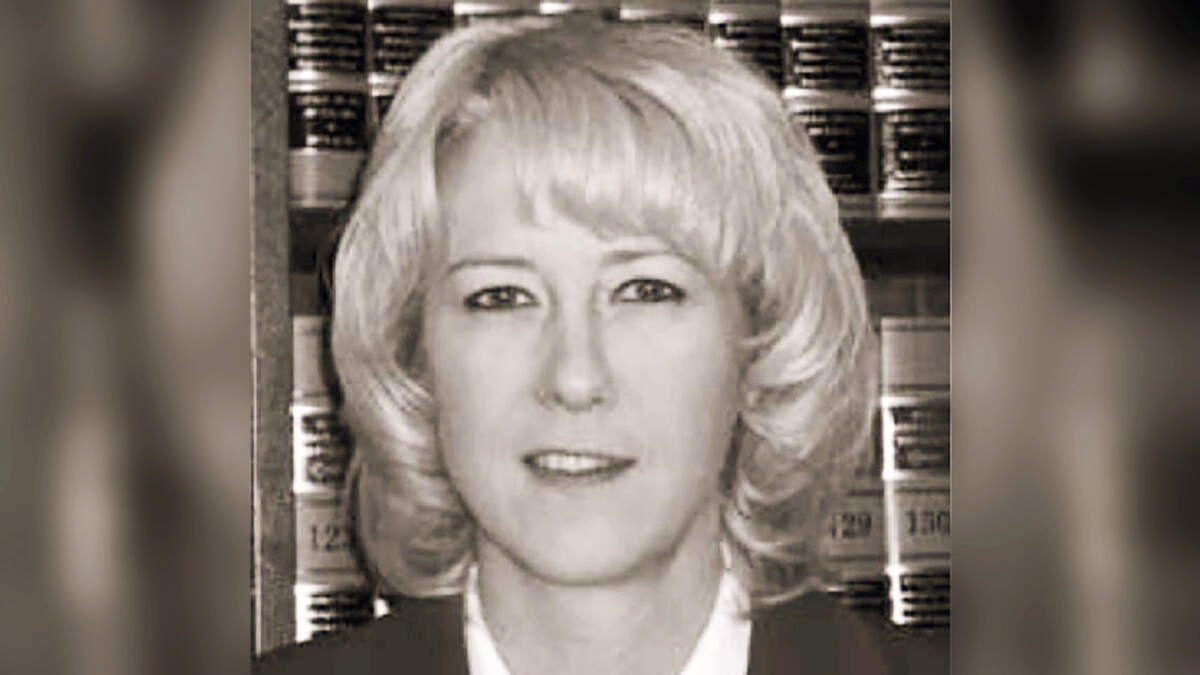
Only, new information from two women who were with Coleman the night that little girl bled out on her mom Tracy Mays’ front steps really should get him the new trial that he deserves. In an interview, one of them, Tiffany Harris, told me that the now-disbarred prosecutor Terra Morehead lied in court when she said that Harris just couldn’t be located — Harris was sitting in the courthouse, waiting to be called to the stand. Yet Morehead said that because Harris was MIA, her statements favorable to Coleman couldn’t be heard or even mentioned.
The other woman, Krystle Lavender, told me that the lead homicide investigator on this case, KCKPD Detective Roger Golubski, who killed himself last December, on what would have been the first morning of his first federal trial, threatened to jail her if she didn’t implicate Coleman.
Both Harris and Lavender said they are willing to testify under oath, and I’m willing to hope that Wyandotte County District Attorney Mark Dupree will give them that chance. But the question that this case could finally answer is the why — what did it matter to Golubski? This is a case that connects a lot of dots.
‘It does not make sense’
Harris said she was right there in the Wyandotte County Courthouse even as Morehead told the court that she couldn’t be located, so her pre-trial testimony couldn’t be alluded to in any way by Coleman’s defense attorney. Unable to locate her? “That’s a freaking lie — a complete lie,” Harris said. “I was subpoenaed and my mom and I were in the courthouse. I was sitting there in the room waiting for them to call my name,” but that never happened. She guesses that’s “because they didn’t like what I said.”
Until I read to her from the trial transcript, Harris didn’t know that Morehead had said in court all those years ago that she was nowhere to be found. “That’s an insult to my mama,” Harris said, when every other day back then she’d been readily available at Wyandotte High School. She just knew she’d waited, had never been called, and then finally had been told she could go.
Coleman, now 42, paid for this subterfuge with a hard 40 — a minimum of 40 years in prison without possibility of parole. This was in a sentence handed down by Dexter Burdette, with whom Morehead had previously had an affair. So surely this wrongdoing should be addressed, both with an innocence hearing for Coleman and a criminal investigation of Morehead, whose many documented ethical lapses did so much harm.
Harris told me that Coleman couldn’t have shot the girl, because he’d just been with her, 10 blocks away from where Shanelle died, in front of Anthony Quinn’s place. “No way. Once I was headed home, we seen the police lights” responding to the shooting “and we had just left from over there. It happened too fast. It does not make sense.” Morehead did not respond to my messages about this case and in particular her claim that Harris couldn’t be found.
Coleman said he went inside Anthony’s place, where he stayed a lot of the time, and spent the rest of the evening there. Sadie Quinn, Anthony’s mother, who’s no longer alive, was there, too, he said, after she got back from driving the girls home.
‘I said no, I did not see no gun’
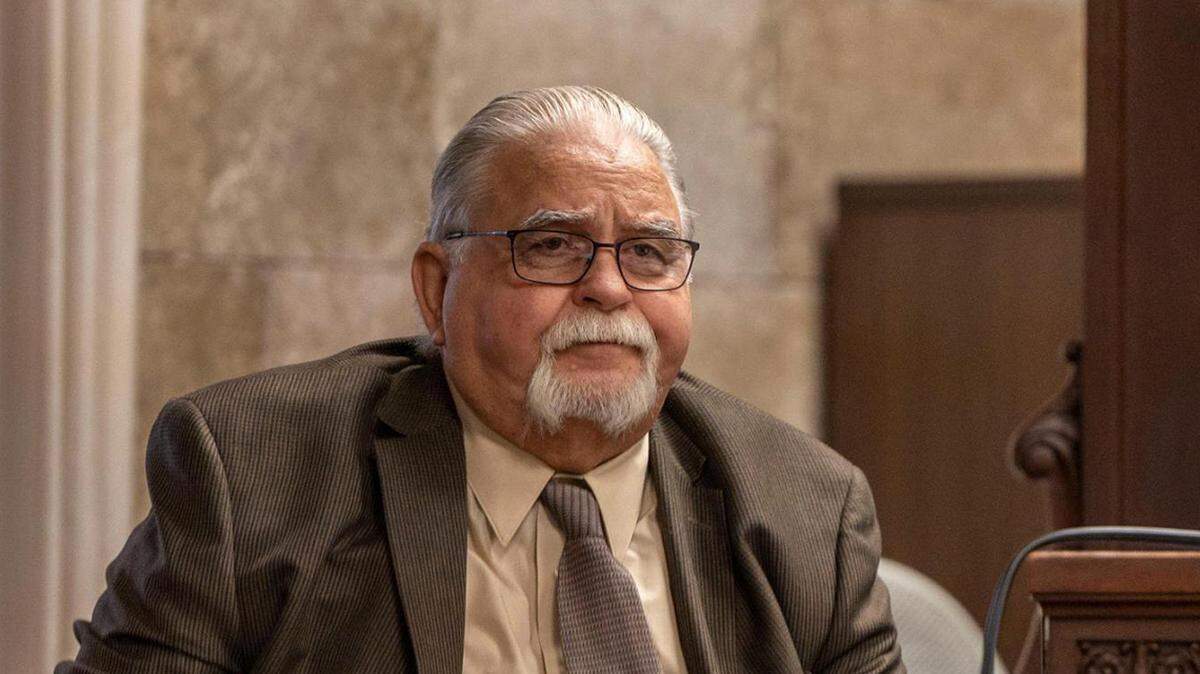
It proves nothing, of course, that the prosecutor was Morehead, the lead investigator was Golubski and the sentencing judge was Burdette, whose affair with Morehead only made news years later, during Lamonte McIntyre’s innocence case. McIntyre was wrongfully convicted of a double murder in 1994 by this same trio, and Golubski went on to be indicted on sex trafficking conspiracy and other federal charges involving rape and kidnapping.
But the issue isn’t just the cast of characters involved in this case, which according to court testimony by police was investigated for less than four full days. It’s what they did and did not do here.
Coleman was also squeezed and sacrificed, more than he knew, by the “friends” he’d worked for selling drugs since he was 10 years old. And there is some evidence that those friends worked for Golubski.
Morehead certainly went out of her way in court to emphasize that nobody but Coleman could be held accountable for Shanelle’s death. Which was only true because the investigation was so determinedly slapdash that it couldn’t have been otherwise.
Krystle Lavender, another woman who was with Coleman the night that little girl died, told me that Golubski threatened to throw her in jail unless she said she’d seen Coleman with a gun that evening, and unless she said she had heard him promise that “somebody was going to get shot.”
Lavender did not see or hear any such thing, she says, and insists “I didn’t put that down in my statement,” either. Golubski “kept saying, ‘Did you see a gun?’ and I said no, I did not see no gun. I was scared and didn’t know what to do,” but “I did not say nothing like that.”
The trial transcript indicates that in court, Lavender did answer yes when asked about seeing Coleman with a gun and hearing him say “on his mama, somebody was going to get shot.” Yet she’s sure that “I told them no, and they said, ‘Miss Lavender, that’s perjury.’’’ Which scared her into hiding for years, she said. “It put a damper on my whole life. I just stayed silent and stayed away from everybody.”
Even in the transcript, she pushes back in several places, so much so that the defense attorney remarked that she seemed whipped around by the prosecutor: “I think if Krystle was intimidated enough she would probably look out the window and say the sky was blood red. She’s young.”
She certainly was intimidated. But that she is willing to stand up now and say under oath that she was coerced should be of interest to current DA Dupree’s revivified Conviction Integrity Unit.
Golubski is dead but Coleman is not, and neither is Morehead, who used to represent his office. That Coleman has been left to rot on such disputed and shaky grounds should be reason enough to look again at this case. But what happened to him, and how and why, also explains a lot.
‘Loyalty to the wrong things’
In one of several interviews I’ve had with Coleman over the last couple of years, he said he’s been behind bars all this time because of “my loyalty to the wrong things.” Also true: Almost every adult involved in this case had that same problem.
Coleman told me in a phone interview this week that he’d already been selling dope for five years when he was arrested at age 15. “I see my little sister, she’s hungry and I feel like I had to take the responsibility. That’s not excuses, it was just the situation.”
The situation around 8:30 on the evening of Oct. 14, 1998, was that a blue Chevy Malibu inching down the 1900 block of Tennyson stopped to let Shanelle and her 14-year-old cousin Janel White cross in front of the car. “Wait up!” Shanelle had just called to Janel.
Then someone in the backseat of the Chevy, behind the driver, fired at the boys sitting on the porch and instead left a girl — a child Coleman says he had held in his arms as a baby — crumpled on the first step up to the house.
Did Coleman once again take responsibility that should not have been his? He told me that everyone in the neighborhood knew that it was his friend Anthony Quinn who owned the Malibu, which Curtis had been driving around earlier in the evening. In court, KCKPD Detective Michael Shomin testified that it was Anthony Quinn who told police that Coleman had confessed to him that he was the shooter, and that seemed to settle the matter.
It suited everyone but Coleman, a very junior member of the Quinn drug operation — which was later busted in a sprawling federal case known as Operation Camera Shy — that he was the only one found responsible in any way.
‘No reason to pursue this particular matter’
Shomin also testified that the investigation was over as of Oct. 18, so less than four days after the night of the shooting. Would anything have prevented you, the defense attorney asked, from looking into this further — from, say, searching the homes of some of those connected to the two feuding families involved here, the Quinns and the Mays, or from ordering ballistics on the 12 shell casings found at the scene of the shooting, or on the bullet fragment found inside the home of Tracy Mays?
Well no, Shomin said. But “ma’am, as I stated, I didn’t — my supervisor and the other investigators didn’t see no reason to pursue this particular matter.”
“It was nobody’s idea except (Coleman’s) to shoot at this house there on Tennyson,” Morehead said in court. “Nobody put him up to it, nobody told him to do it, he did it of his own free will.” She also emphasized over and over that this tragedy “occurred on October 14th, 1998 because of one individual’s actions.”
“Who else was in that car back on October 14th of 1998 when this happened? I don’t know,” Morehead said. “And I don’t know if we will ever know.”
Especially if we don’t want to ever know, and why was that?
Operation Camera Shy
More than a decade later, the federal indictments in Operation Camera Shy said the Quinn operation sold millions of dollars worth of crack from six KCK houses, one of them within 1,000 feet of Northwest Middle School.
In his 25-year plea deal in that case, Antonio Quinn admitted, according to the 2011 news release issued by the U.S. Attorney’s Office, that he was “the leader of a drug trafficking ring that tried to take over the neighborhood around 20th and Longwood in Kansas City, Kan.”
If anyone in law enforcement had been a little more curious about what happened on October 14th of 1998, or a little less in a hurry to pin everything on a 15-year-old, then maybe it wouldn’t have taken 13 more years and who knows how many more lives before this operation was shut down. But instead, as Shomin said, they saw no reason to pursue this particular matter, and that they didn’t had enormous consequences.
Again, it was Antonio Quinn’s brother Anthony Quinn — yes, a different person — who owned the blue Chevy Malibu used in the shooting. When police went to talk to him, it was Anthony who told them, according to witness statements, that Coleman had confessed to killing the girl, and that no one else knew anything about it. Anthony’s only role in the thing, he said, had been getting rid of the car, just as Coleman had asked him to do.
A crucial problem with what Anthony Quinn told police, beyond the self-serving tidiness of it all, is that he also said Coleman had told him he’d fired his fatal shots from the front passenger seat. That would have been impossible, because the girl and the house were on the other side of the street. The shots were fired by someone in the rear seat, behind the driver.
The gun was never found. The car was found burned out three days later. But despite the holes in Anthony’s story, that really was that.
Eyewitness: Shooter had braids
At 2:46 p.m. the day after the shooting, police picked Coleman up at his school, and by 3:50, he was under arrest. No parent or lawyer was ever called to the police station. During his unrecorded 29-minute “pre-interview,” Coleman says Golubski told him that if he did not confess, his brother Durand Carson would be held solely accountable. He did confess, and Carson was charged anyway. That case was eventually dropped.
The only person who ever said they’d seen the shooter was Shanelle’s cousin, Janel White. In her first interview with police, she said the man with the gun had dark skin and braids. Coleman never had braids. But Janel picked his picture out of a lineup of pictures shown to her by Golubski, and by the time she testified in court, there was no mention of braids.
Speaking of pictures, members of little Shanelle’s family were allowed to testify while holding photos of her until the defense attorney finally objected.
Here’s at least part of what did happen that night: Anthony Quinn wanted to have sex with his girlfriend Dorothy Simmons — or as Morehead told the jury, he “wanted to get it on with Dorothy” — so he asked Coleman to drive Harris, Lavender, and Dorothy’s 2-year-old nephew, Darryl Bagley Jr., around in his Malibu for a while.
They were doing that, Coleman says, when Jason Clark, with whom Coleman had been fighting over a girl, came running out of a house in the 1900 block of Tennyson with a gun and fired shots at his car. This was supposedly why Coleman later shot at the home of Tracy Mays — Clark’s mom as well as Shanelle’s. Marcus Haywood and Shawndell Mays were sitting on the porch when the shooting happened.
In his confession, Coleman says Clark was there, too, and had raised his gun to shoot him, so he shot first. All of the prosecution witnesses who took the stand said the earlier incident involving Clark never happened.
Tiffany Harris says it did happen just that way, and that “Curtis was scared.” Krystle Lavender says she was terrified, and ducked when she saw their car being chased by a Mays family member with a gun, though she heard no shots. It was after this that Coleman says he brought Anthony Quinn’s car back. They stood around talking about what had just happened, and then Coleman says he went in the house and talked on the phone to his girlfriend, who had been paging him all evening, while Mrs. Quinn drove the girls home.
A question beyond who actually did shoot Shanelle Cooper is why would Golubski have even attempted to coerce testimony in this case. What was it to him that this boy and this boy alone be held responsible?
Golubski victim saw him take money from Quinns
One of the Golubski rape victims, who would have testified in court had he lived, may have answered that question in a deposition in which she described some of the business Golubski had with drug dealers she saw him interact with when she was in his car. Did she remember any of these dealers’ names?
“I remember a guy named Anthony Quinn,” said the woman, whose name has never been made public. “I remember we went to him a couple times on — around 18th through something off of Quindaro. Longwood is the street name that I — that I recall. It was actually, like, three of the guys with the same last name; it was a Marcus guy. And I don’t remember the third one’s name.”
But there were three Quinns?
“Yes. That I personally saw him interact with, yes.”
And what was he doing? “Picking up money.”
“First he was a little upset with one of them, the Anthony guy, and — because he — the Anthony guy didn’t want to talk to him in front of people, so he told him to go around the corner. Then I remember him saying he didn’t have it all, but he’ll have the rest later, the Anthony guy, and Golubski was saying, like, “don’t f*** with me,” like, “I’m not playing with you,” and you know, “you don’t get any more passes with me” or something, like, basically he’s not letting him off the hook.”
And how many times did she see something like this between Golubski and the Quinns?
“A few times because I was able to remember them and remember their faces and stuff. So quite a few. Under 10 maybe.”
Message to mom: A rat with its throat slit
Right after Coleman’s arrest, someone left a message for his mother, Sheila Carson, on her doorstep, she told me. “I came home from work and it was a rat with its neck cut. It said if my son talked, that would be me. I got out of Kansas for my safety” after that, and didn’t come back until 2017.
Even now, Coleman says that taking the blame that wasn’t his “was never about my personal safety. I’ve got other people to think about.” Which was “not the brightest, maybe, but the most responsible.”
Would somebody whose job it is to be responsible please step up and look at this case? There was never any physical evidence tying Curtis Coleman to the shooting.
In court, Morehead repeatedly emphasized that Coleman and Coleman alone was responsible for the girl’s death, and that we’d probably never know who else was in the car. And though I say that worked out well for everyone but him, that wasn’t true for long.
On the day of his sister Shanelle’s funeral, Golubski arrested Jason Clark at the funeral home for a different shooting. Clark died in a shooting in 2003 and Anthony Quinn died in a shooting in 2006. Shawndell Mays, who was sitting up on the porch the night Shanelle died right in front of him, was convicted of first-degree murder in 2001 and is serving his sentence in the same prison as Coleman, Hutchinson.
“I see him every day,” Coleman said. In fact, “we work together” at Seat King, making lawn mower seats.
DA Mark Dupree said on KCUR-FM recently that he is the enemy of all the corruption that went on before. If that’s so, he has the chance through this one case to save not only this one innocent man but to investigate the actions of someone I do not see as innocent, former prosecutor Terra Morehead, when she was representing his office.
“I wish I had done a lot of things differently,” Coleman told me. But this one terrible thing he can’t undo, because he never did it in the first place.
This story was originally published August 28, 2025 at 5:08 AM.