Go ahead and subpoena disgraced former prosecutor Morehead, state mocks | Opinion
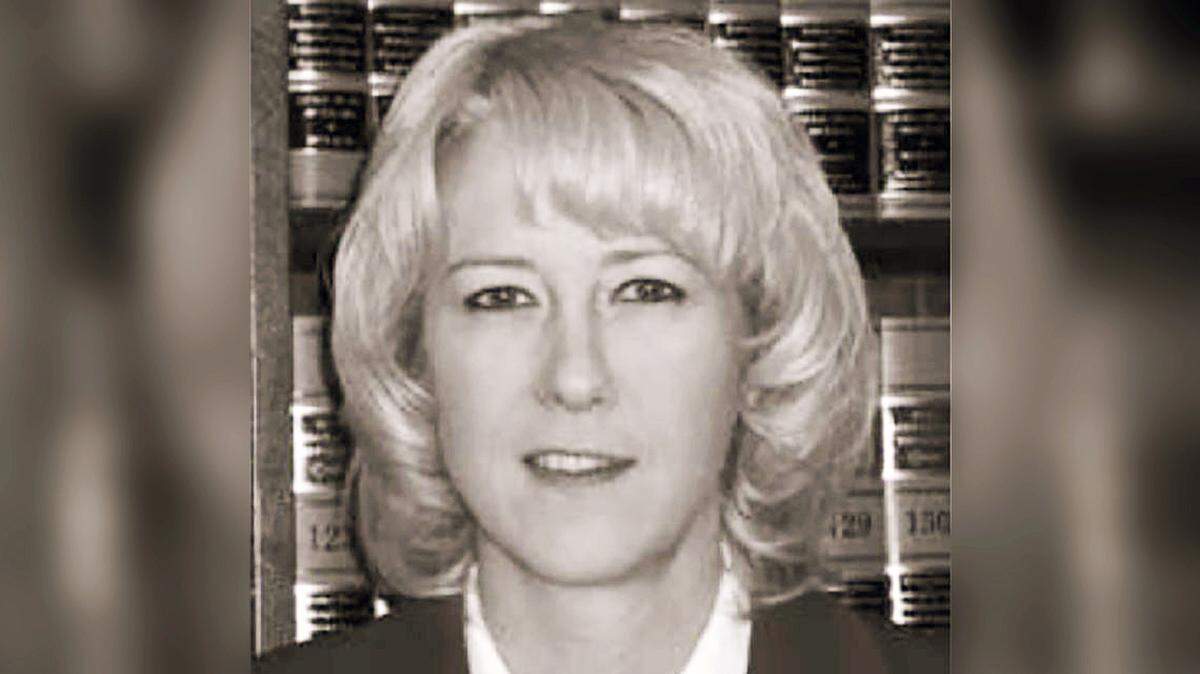
Defendants in the federal sex trafficking conspiracy case that would have included former KCKPD detective Roger Golubski, too, if he hadn’t decided to shoot himself, should by all means feel free to call former prosecutor Terra Morehead to testify for them, the state suggested mockingly in a motion filed last Friday.
This was in response to an April defense motion that said the case should be dismissed because it was not brought years earlier. That is, it said, when defendants could have called Morehead to testify that she never saw any women being held against their will at the Delavan Apartments near the Quindaro Ruins in KCK.
And why would they think she’d say that? Defendant LeMark Roberson alleged that the FBI was told in a taped interview in 2020 that now former Wyandotte County and federal prosecutor Morehead, who was disbarred last year, was on a number of occasions seen buying cocaine from Aaron Robinson, who sold drugs for another of the defendants, Cecil Brooks, and was his cousin. Brooks owned the apartments at Delavan Avenue and 26th Street.
Brooks and the other men charged in the conspiracy, Roberson and Richard Robinson, say in their own defense that they were running a straightforward, out-in-the-open drug operation, as their multiple friends in high places were well aware, but they were not trafficking anybody.
The government basically answered that the witness who talked about seeing Morehead buy and take drugs made a number of claims about various officials, and so what?
“Although the witness did not place Ms. Morehead at the Delavan apartments, the defense speculates that Ms. Morehead would have testified that she did not happen to see any involuntary sexual servitude” there.
“To call this rendering of Ms. Morehead’s potential testimony speculative would be generous. … Moreover, to the government’s knowledge, neither Ms. Morehead nor the witness who made such allegations are deceased or otherwise beyond the reach of a subpoena. Contrary to the defendant’s suggestion, the fact that this witness is now a former, rather than a current prosecutor does not render her testimony unavailable.”
In other words, y’all go for it.
We should only be so lucky.
Time makes prosecution harder
The motion also said that although a woman did allege being sexually assaulted at Delavan more than 20 years ago, a single accusation is hardly evidence that the alleged sex trafficking conspiracy could and should have been acted on long ago.
“A report from a single victim in 2001 about a single defendant does not trigger an obligation to indict. … This is especially true where a law enforcement officer was a member of the conspiracy and actively sought to cover up” what was going on.
The same state motion confirmed what I wrote last month about Brooks becoming a DEA informant in 1992, just as former federal public defender Mike Harris told me he had. But that didn’t mean the state waited to bring charges, either.
“According to the DEA,” the state’s motion said, “Brooks was activated as a DEA informant in 1992 and deactivated in 1993; per DEA policy, his file was destroyed in 2018, 25 years after his deactivation. There is no indication that whatever DEA agent worked with Defendant Brooks in 1992 and 1993 would offer any testimony that is relevant, let alone helpful, to the defense.”
And neither the allegation that Morehead bought drugs from Aaron Robinson, who was murdered years ago, nor the fact that Brooks was an informant comes close to proving that authorities strategically delayed prosecuting this case.
“In a complex case such as this one, with multiple defendants, numerous sexual assault victims, and a years-long conspiracy,” the state’s motion argues, “the age of the case makes it more — not less — difficult to prosecute.”
The passage of time always makes prosecution more difficult.
The motion said that it was the FBI investigation into Golubski, which started in January of 2019, that led authorities to charge him and three others with “conspiring to hold young women … in a condition of involuntary sexual servitude.”
‘Clean the house’
In another motion filed on Friday, the state once again described its overall case: It involved, it said, an operation that started in the early 1990s and went on for a decade. The defendants are accused of forcing minors from 13 to 17 years old, sometimes straight out of foster care, “through beatings and threats of force, to provide sexual services.”
“One of the youngest girls that defendant Brooks … repeatedly sexually assaulted at Delavan apartments was 9 years old.”
Golubski, the motion said, provided protection “from law enforcement investigation and intervention into their criminal activities. For example, Golubski would call defendant Brooks and tell him to ‘clean the house,’ meaning to get rid of all of the drugs because the police were about to arrive.”
One one occasion, a cop arrived at Delavan to check out a report that girls were being held in a certain room there against their will. He was told to call Golubski, and did.
“Golubski then responded to the scene and told the officer that everything was under control and that the officer needed to leave and go back on patrol,” the state’s motion said. “In return for Golubski’s participation in the conspiracy, Defendant Brooks allowed and encouraged Golubski to sexually assault the girls” held there.
The trial is expected to start in November, though no date has yet been set.
We’ll see then if the house where witnesses say Golubski was regularly seen taking money and taking meetings will really be cleaned.
This story was originally published May 27, 2025 at 5:08 AM.