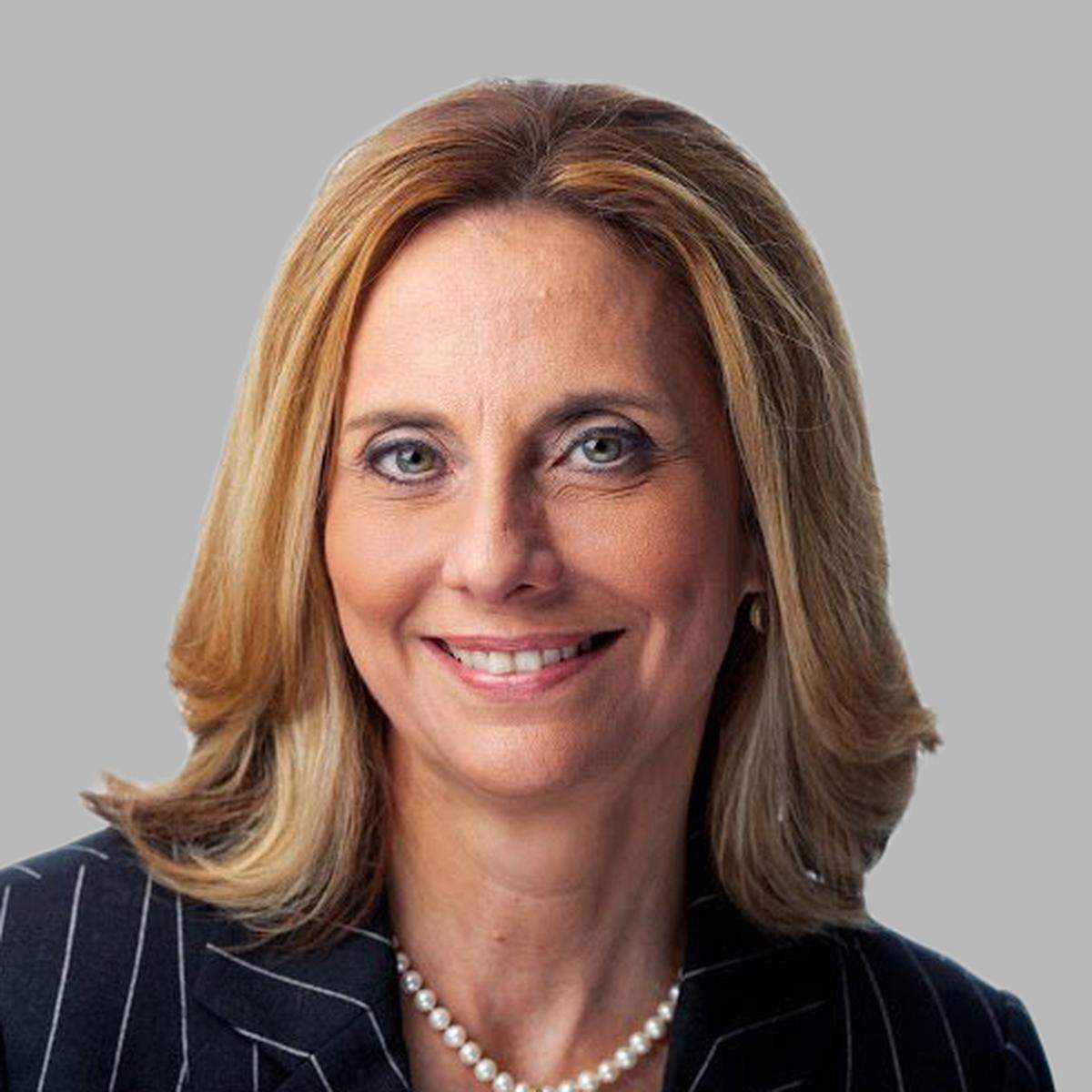
Nicole Galloway, invisible candidate for Missouri governor, can’t win from her basement
On a Zoom virtual town hall with Kansas Citians the other day, Missouri Auditor Nicole Galloway and state Sen. Lauren Arthur joked about all of the people who mistake them for one another.
I’ve on several occasions been mistaken for my editor, Colleen Nelson, and vice versa, though like Galloway and Arthur, we look nothing alike. (Is blondeness really that blinding?) But then, unlike Galloway, neither of us is running for governor.
During this coronavirus pandemic, the presumptive Democratic nominee for governor, who will be up against incumbent but unelected Gov. Mike Parson in November, hasn’t really been able to do much about her low name (and face) ID. At this point, she’s nearly invisible.
Democrats I asked about Galloway generally want to see more bite, more fight, more let’s-do-this from their candidate, a polite and pleasant accountant and self-described “nerdy math person” who is not really not very political at all.
I find her competence reassuring rather than dull, and even see a smidge of California freshman Rep. Katie Porter in her hyper-professional presentation, though Galloway is far less intimidating. But in a state this red, Democrats are right to worry that she can’t expect even a bumbler like Parson to defeat himself, though his hands-off handling of this pandemic has been downright dangerous.
“She’s missing the moment,” said Kansas City Mayor Quinton Lucas, and “needs to be more engaged with this sh*t show” of coronavirus chaos. Republicans don’t want to die of COVID-19 either, he argued, but “Nicole is so scared of seeming like” she’s politicizing anything. “It’s astonishing. There’s so much gain she could make in the exurbs and suburbs” with a more pointed approach.
Joe Biden might (or might not) be able to defeat Donald Trump from his basement, because everybody knows him and because this presidential election will be a referendum on the president. But Galloway won’t have even the possibility of pulling that off.
No one knew the ambling former Sheriff Parson, either, when he succeeded flashy, ethically-challenged Eric Greitens, who we should have seen coming when he ran on an exaggerated version of his experience as a Navy SEAL — in complete contravention of the SEAL ethos.
But that “R” after Parson’s name on the ballot this year will be enough for many voters, almost no matter how poorly the health of the economy and of Missourians themselves are faring come November.
So what’s Galloway going to do about it?
Right now, she’s Zooming up a storm with potential backers while homeschooling her three sons, ages 8, 6 and 3, the youngest of whom recently told her, “You know, you’re a better mom than you are a kindergarten teacher.”
She insists that “people do not want a big dose of partisan politics right now,” and that the governor’s race is the last thing on Missourians’ minds. That last part is definitely true.
Her criticism of Parson has been gentle: “Some Republican and Democratic governors are getting high marks” for leadership in this pandemic, “and Parson is not enjoying that bipartisan support,” she says mildly. “I hope he finds his footing … I don’t want to come off as ‘Oh my gosh, I told you so.’ He needs to succeed.”
Galloway has said what she would do differently and has argued that a hard stop sooner would have been far better for Missouri’s economy in the long run. “He wasn’t proactive.”
But can you win by throwing such pebbles at an opponent?
Her most convincing defender is former Kansas City Councilwoman Alissia Canady, who is running for lieutenant governor. “She’s sharp and solution-oriented,” Canady says of her fellow Democrat. “Her personality is a little more reserved, but I don’t know that it helps her to be hostile to Parson when he’s digging a ditch for himself” with his late and only half-in response to COVID-19.
She also argues that a younger generation of civic leaders — Galloway is 37 and Canady herself is 40 — is more likely to reject the idea that politicians have to be combative to be effective.
“Leadership under 40 looks different,” she said. “It’s not fists; it’s more data-driven and measured. We kind of crave that persona” of the tough guy, “but it’s toxic. That’s how we got Trump.”
And speaking of guys, Canady is right to point out that there’s always an added element of difficulty for female candidates, who even now have to be seen as forceful but not off-puttingly so.
“Some very influential people,” Canady said, have told her that Galloway “needs to wear lipstick and she needs to smile more. It’s very different, what the expectations are.”
Galloway has also been criticized for failing so far to reach out to the African American voters she’ll have to turn out in large numbers to carry St. Louis and Kansas City convincingly.
The flip side of that weakness is that her moderate manner may help keep her numbers within shouting distance of Parson’s outside the cities.
Her strengths include the fact that she’s done well in her current job, which is taking on local officials in both parties by identifying and doing away with waste, fraud and abuse.
And no one can say she’s trying to be someone she’s not. “I’m sure she has political advisers telling her to take up space, be assertive, and she won’t,” says Missouri Democratic Chair Jean Peters Baker. “But she is fierce” in a quiet way.
She’s also a genuine political outsider. When I asked her which politicians had aspects of the official she wants to be, one of the three she mentioned, along with former Sen. Claire McCaskill and Wendy Noren, a “fearless” longtime clerk in Boone County, where Galloway is from, was a surprise.
“There were some aspects of Eric Greitens that I did like,” she said. “His thirst for power took him down, but his willingness to say the system is broken” struck a chord with her. “He didn’t approach it the right way, and I hate dark money with a passion, but he was willing to take on the system, and I’m willing to shake it up.”
Soon, her fellow Democrats hope.