Missouri cut Dolly Parton’s book program because lawmakers don’t know its value | Opinion
Do Missouri lawmakers even care about the education of our children, their future — or the future of this state, for that matter?
If they do, then why would they cut funds for a program designed to ensure our most vulnerable children are prepared to learn when they enter school — one that puts free books in the hands of thousands of young children? You’re probably also scratching your head on this one.
Between 10,000 and 20,000 children in Jackson County alone are enrolled in country singer Dolly Parton’s Imagination Library program, a statewide initiative that mails age-appropriate books every month to children from birth to age 5.
What kind of people snatch books from kids?
Missouri lawmakers cut more than half the budget of the book-gifting program for the upcoming fiscal year, down from about $6 million to $2 million. It’s a move that could end the program in this state. Why? The cost is a minimal percentage of Missouri’s $8 billion-plus education budget for fiscal year 2027. This book-gifting program is cheap, a loosely estimated $2 a book.
After next month, the Missouri Department of Elementary and Secondary Education, which administers the program, won’t be able to afford to let any more children sign up for books. Kids who are already enrolled in the program will continue receiving books, at least for as long as the money lasts, and that’s not long.
I can hear those who support Missouri’s Republican-led legislature saying that lawmakers are just being fiscally conservative. I get that we want lawmakers to curb spending when it’s necessary. But not willy-nilly. And at what cost?
Cutting $4 million from a program that provides free books to poor children does not help the state — it hurts it, not to mention the optics.
I argue that while it might appear to save state money in the immediate, it will likely lead to a heftier price tag down the road, should the state end up slapped with the cost of having to boost school literacy programs to educate children who might have been up to par in their reading had they had more access to books growing up. Or worse, those children simply get left behind.
Encourage reading, strengthen literacy
“Books directly in the home encourage family reading and strengthen home literacy,” officials from Missouri’s education department said in an email response to my questions about why this book giveaway is worth funding.
“According to research from Imagination Library, just 10 books at home can spark measurable gains in early literacy, vocabulary, and family reading routines—and the greatest impact appears in communities facing the highest barriers,” they wrote.
Parton launched her monthly children’s book gifting program in 1995 as a way to get good books to impoverished areas of Tennessee, where she grew up. Tennessee quickly made it a statewide program, and since then, Parton’s nonprofit has expanded to five countries, including Canada, the United Kingdom, Australia and the Republic of Ireland.
Why books? I wasn’t able to reach Parton, but on the Imagination Library website she said this: “When I was growing up in the hills of East Tennessee, I knew my dreams would come true. I know there are children in your community with their own dreams. They dream of becoming a doctor or an inventor or a minister. Who knows, maybe there is a little girl whose dream is to be a writer and singer. The seeds of these dreams are often found in books and the seeds you help plant in your community can grow across the world.”
It wasn’t until 2023 that Imagination Library became a state-funded program for all children in Missouri.
The recently announced cuts come just two years after Imagination Library was launched with much fanfare in Kansas City.
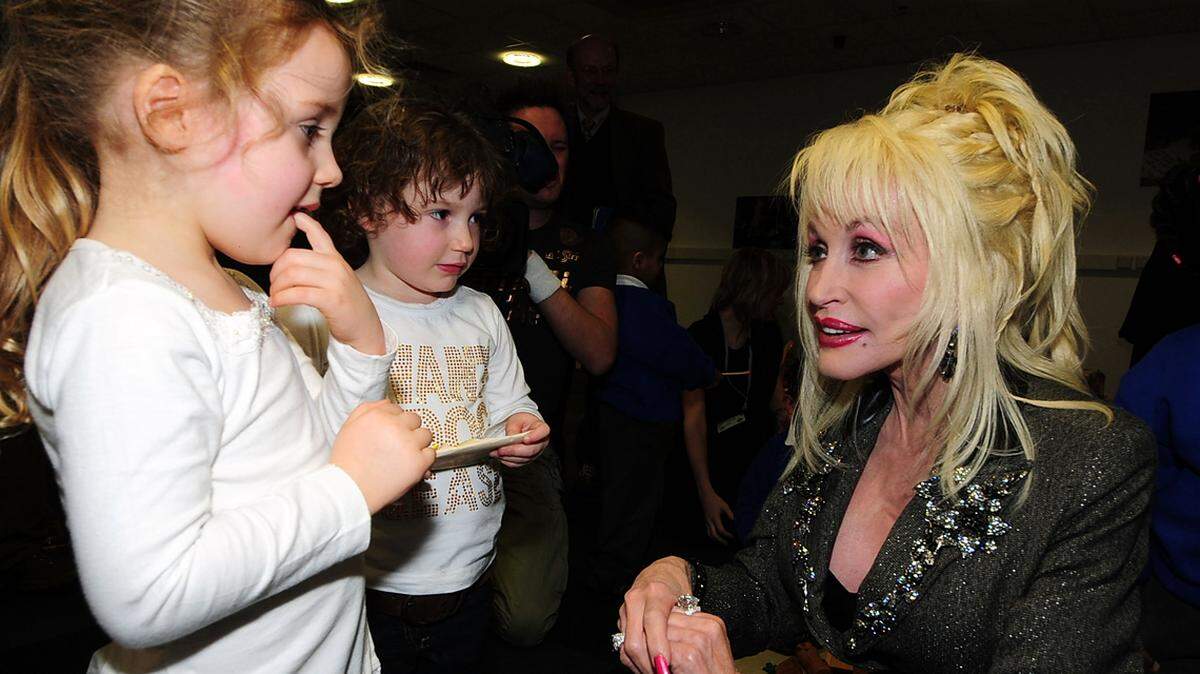
Dolly Parton came to Missouri in 2024 and met with former Gov. Mike Parson and his wife to celebrate Missouri funding the program for its kids. If free books for kids were important when the former governor was getting to meet the iconic country singer, why is it that now our lawmakers don’t seem to think it’s worth the expense?
Since the program’s start, the state has donated more than 4.3 million books. And as of March, more than 169,000 kids in Missouri were signed up to receive free books.
Like the state’s department of education, Turn the Page KC, a local nonprofit promoting literacy, knows the importance of the free book program for kids in Kansas City.
“Children are walking in the door to kindergarten, not ready, and this was a way to bring that focus into the home and to give parents a consistent and reliable tool for weaving reading into their daily life from birth,” Turn the Page KC Executive Director Kristin Droege told The Star.
Critical third grade reading
Research tells us that when a child has access to books and language at home, well before they are school age, they are more apt to start school ready to learn, and will more likely be reading at grade level by third grade.
Third grade is a critical academic point when a child is expected to transition from learning to read to reading to learn. Children who fall behind struggle academically, not only in English language studies but also in other subjects.
Missouri is facing a significant literacy challenge, and that has recently been documented and discussed at the state level. So it seems to me that cutting a reading program is the last thing our legislators should want to do in response.
Recent statewide data shows that more that 40% of fourth-graders in Missouri read below the basic proficiency level. In Kansas City, the percentages of students reading at grade level are much lower, with only 23% of Kansas City’s third-graders proficient in language arts, according to a study commissioned by SchoolSmart KC.
I think it is a shortsighted mistake to force the elimination of any program that is a boost to the education of children in Missouri. If our lawmakers can’t see that investing in the education of children is one of the most important things we can do, then let’s hope there are some full-pursed philanthropists in the state with much better vision who will step in to pick up the slack.