Debating Kansas City’s conversion therapy ban repeal: Inevitable or fixable? Opinion
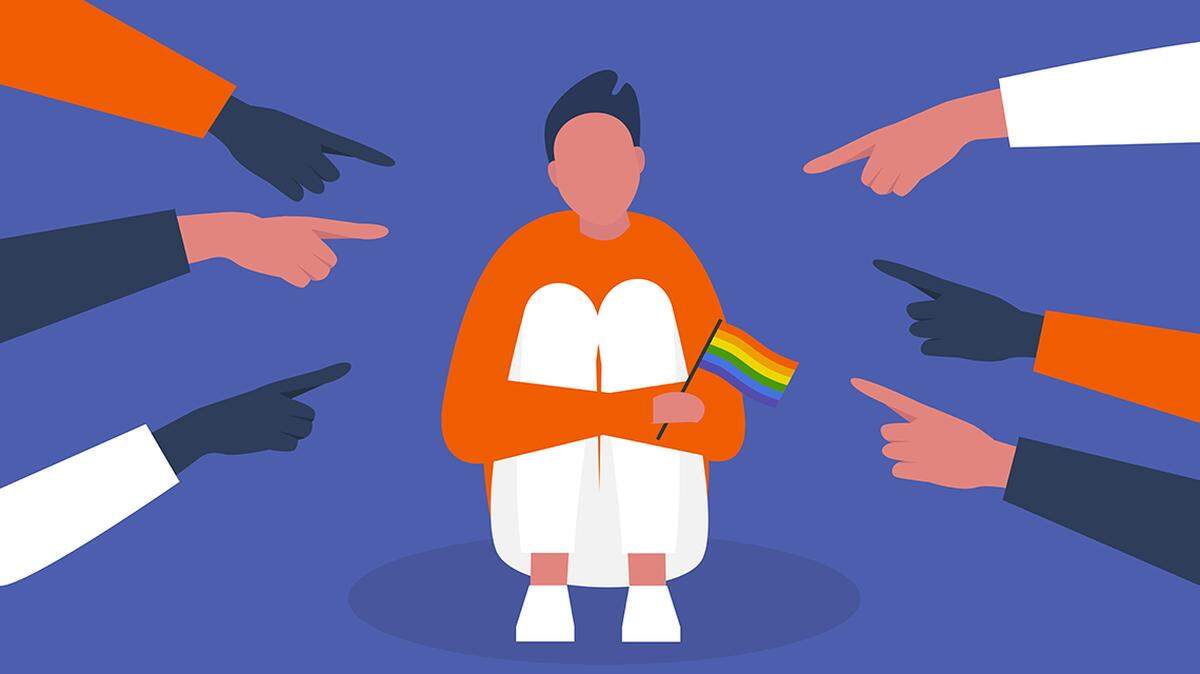
Editor’s note: Welcome to Double Take, a conversation in Star Opinion that tackles news with differing perspectives and respectful debate. Today, opinion columnists David Hudnall and Mará Rose Williams discuss the Kansas City repeal of the conversion therapy ban.
David Hudnall: Just before the holiday weekend, when perhaps its members thought people wouldn’t be paying attention, the Kansas City Council voted 7-5 to repeal its ban on conversion therapy, which it had enacted back in 2019.
Conversion therapy is, I think we both probably agree, a vile practice. The American Medical Association, the American Psychological Association and basic common sense tell us that attempts to change a child’s sexual orientation or gender identity are psychologically harmful, not to mention ineffective. It should be banned.
Also, almost every single member of the Kansas City Council is liberal. You would assume they would want to preserve a ban, not repeal it. So what happened?
The short version is that a few months ago, the U.S. Supreme Court ruled that laws like this likely violate the First Amendment because they regulate conversations between counselors and clients. Once that happened, Kansas City’s ordinance became a legal liability. The city is already in the middle of a lawsuit over the ban, and after the Supreme Court ruling, it appears very likely the city would lose.
So, on the advice of city attorneys, the majority of the council voted to repeal it.
I think the City Council made the right decision. You don’t.
Mará Rose Williams: I’m with you on most of this until you get to the part about the city ban becoming a legal liability. I’m with the five council members who voted against the repeal, holding on to their integrity and morality. This is a moral issue to me. It is wrong to condone practices that have been proven to harm the mental health of young people.
As you so eloquently stated here, “attempts to change a child’s sexual orientation or gender identity” through the misnomer of conversion therapy — actually, there is no such thing, really, because it doesn’t work and only hurts — is wrong. I would go so far as to say it’s downright evil, and no way I could support any part of this junk practice, litigation or no litigation.
The Supreme Court, in its ruling, never said conversion therapy is safe, a good thing, or that it’s legal or illegal. It ruled that such bans are a First Amendment violation. That does not tell me the city should repeal the ban and walk away, saying, “Oh well, we tried.” But rather, it says they should tweak the language — amend it — keep the ban.
Hudnall: I hear you, but what about the legal issue? What else can the city do?
Williams: I think the city should follow the lead of Colorado, which refused to repeal its ban and instead reworded its legislation so that it sits nicely on the right side of First Amendment restrictions.
Colorado’s amendment to its ban prohibits licensed therapists from trying to impose a predetermined outcome on a minor patient, relating to sexual orientation or gender identity — and here’s the smart part — regardless of the direction of the outcome.
Hudnall: I think Colorado and Kansas City are operating in very different political realities. Colorado is a state government with a Democratic trifecta choosing to continue this fight. Kansas City is a city in Missouri, where the attorney general is always looking for opportunities to challenge progressive local ordinances.
Also, this isn’t some hypothetical legal threat hanging out there in the distance. The city is already involved in litigation over the ban, and the Supreme Court ruling essentially guarantees we will lose that lawsuit.
Could Kansas City rewrite the ordinance more narrowly the way Colorado did? Maybe. But I think everybody understands what happens next: another lawsuit, more years of litigation and more taxpayer money spent defending an ordinance the courts have already cast serious doubt on.
At some point, local governments have to decide whether they are governing or just staging symbolic resistance. I don’t think the council’s job is to keep legally vulnerable ordinances on the books indefinitely just to make a statement.
Williams: I agree litigation can be expensive, and yes, the city is already involved in litigation over the ban. It’s also facing several other lawsuits, including ones accusing the city of discrimination in whistleblower cases. The city is always mixed up in a lawsuit of some kind or another. It’s practically the cost of doing business.
Not risking a lawsuit here doesn’t mean there won’t be another lawsuit around the corner. But I argue that this is a fight worth having even if we lose. At least in that case our young folks will know their city supports them, is willing to fight for them, gives a hoot about more than the politics or the purse.
We know that more than 35% of young LGBTQ+ people seriously consider suicide every year, and approximately 12% to 18% attempt it. LGBTQ youth have a tough enough time without the mental torture of this unproven practice — or the fear they may be subjected to it if they should dare try to live their authentic life. A few years ago, I followed several LGBTQ youth to Blue Springs pleading their case for a conversion therapy ban in that eastern Jackson County town. They described the practice, which several of them had endured, as abuse.
So I say, yes, if the language can be rewritten then it should be at least tried.
The risk to our youth is far too great for city officials to not take a stand on this issue and pull together the right lawyers to rewrite the ban language around the Supreme Court’s ruling protecting the First Amendment. If the Missouri attorney general comes after the city, so be it. She has only a little more than two years before Kansas Citians can vote her out. But our kids subjected to this foolishness will still be struggling with the residual mental effects of so-called conversion therapy.
Hudnall: We had five council members vote against repealing this ban, and afterward another, Johnathan Duncan, has said he heard from his constituents and regrets voting to repeal it.
I suspect some council members felt comfortable voting no precisely because they knew the repeal had enough votes to pass anyway. That allowed them to register moral opposition to conversion therapy without ultimately forcing the city to continue defending the ordinance in court.
But I think it’d be an interesting thought experiment to imagine how some of these council members would vote if they were personally responsible for the city budget and legal exposure instead of casting one symbolic vote among 13.
To take one recent example of our city’s strained finances, we’re about to lose a quarter of our weekday bus routes in a few months due to lack of funding. In an environment like this, would those council members really tell voters that spending years and hundreds of thousands of taxpayer dollars defending a likely losing lawsuit was the best use of city resources? I’m not sure many of them would.
Williams: You keep calling the vote — or at least the vote I think they should have had — symbolic, and I don’t see it as symbolic. I see it as voting your conscious, going with your gut. Duncan apparently didn’t do that, and that’s why he now has regrets. Besides, it wouldn’t be symbolic if the council voted with a plan to rewrite the language, hold the ban and deal with the legal fallout. The ruling actually includes language explaining that the use of different wording may have influenced a different outcome.
As for how residents might feel about spending to defend such litigation, I think the climate of concern here is not one worried about spending so much as it is the one that is not only uncaring about LGBTQ youth, but also hostile to them. I know our council is liberal. I’m referring to the challenges that would likely come from the state. The ban is a deterrent for practitioners. I admit, much of my response here is heart, not head, but I just believe that if that ordinance can’t work, then Kansas City needs to find some other way to make it too risky for practitioners to perform that kind of non-therapy in our city. Lives could literally depend on it.
Hudnall: To be clear, I blame the Supreme Court and Missouri Republicans for putting cities in this position in the first place. Kansas City should not have to spend its time and money defending the idea that children should not be psychologically pressured into changing who they are. But that is the political and legal reality the city is operating in.
At some point, governments have to prioritize finite legal and financial resources. They cannot turn every culture war disagreement into years of expensive federal litigation, especially when the courts have already signaled how the case is likely to end.
I also think we should be honest about the limits of what a city ordinance can accomplish here. If a parent is determined to send their child to conversion therapy, they are probably going to find a way to do it. They can leave the city or go through religious channels. They can seek counseling elsewhere. So while the ban may have had moral and symbolic value, I’m not convinced defending this ban was going to meaningfully eliminate the practice in the area.