‘Foot soldiers for justice’ search for a lynching site more than 140 years old
It was a warm and sunny spring day, and the quaint downtown Main Street in historic Weston was teaming with people gawking at beautifully restored old cars parked diagonally along the street, and strolling in and out of antique shops, boutiques, coffee shops and eateries.
Most of them had come for a special town event — a Sasquatch scavenger hunt — and were searching the streets and through the brush around town for clues and hidden Bigfoot footprints, to earn stamps on their Bigfoot search passport card.
I was there searching for the site of the horrific 1881 lynching of a young Black man.
The juxtaposition of their search for a known myth, while we sought to force the acknowledgement of true horror, was not lost in that moment, on me or any of those with me.
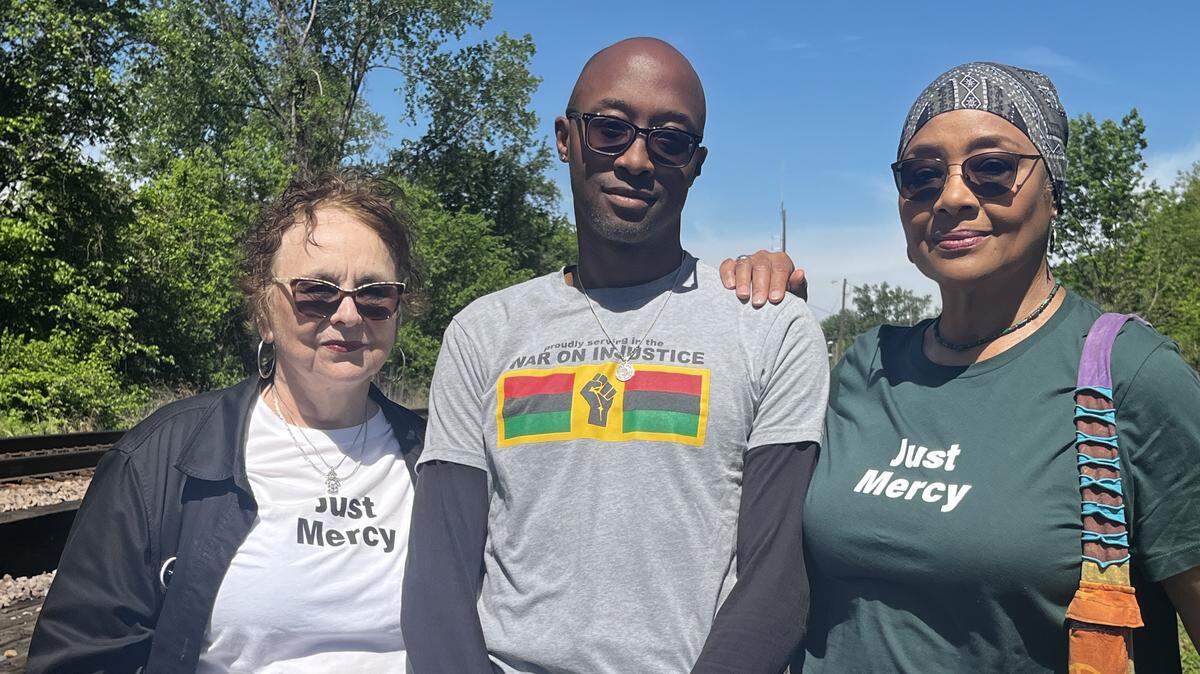
I was joined on this hunt by well-known Kansas City jazz vocalist Angela Hagenbach, her son Vincent Bell and two of her friends, Robert Kemper and Rebecca Ehrich. I was meeting them all for the first time to do something I was certain would tug at my emotions, but I wasn’t sure how.
Not knowing how far into the tangles this trek would take us, we prepared to trudge through pathless brush, wearing hats, long sleeves, boots with pants tucked into socks and our skin coated with bug spray to ward off ticks. We commented that we were on a mission and determined to find the exact Platte County location where 24-year-old Charles Reese, who had lived in Weston 145 years ago, was lynched from a bridge by a mob of white men.
Hagenbach dubbed us the “Charles Reese Foot Soldiers for Justice.”
‘To terrorize and control Black people’
A lynching is the public killing of an individual who has not received any due process. These killings were turned into public spectacles, sometimes picnics and Sunday afternoon gatherings on the courthouse lawn.
The NAACP, in its documentary, “The History of Lynching in America,” describes the act this way:
“Lynchings were violent public acts that white people used to terrorize and control Black people in the 19th and 20th centuries, particularly in the South. Lynchings typically evoke images of Black men and women hanging from trees, but they involved other extreme brutality, such as torture, mutilation, decapitation, and desecration. Some victims were burned alive.”
From 1882 to as late as 1968, nearly 5,000 Black people were lynched in America, and some argue the numbers are far higher because not all were documented. Consider also that Reese, whom I’m writing about here, was lynched in Weston a year before the time span reviewed in these numbers.
Our search for the Reese lynching site had actually been initiated months ago when I visited the Black Archives of Mid-America in Kansas City to gather information on a different story I was working on at the time.
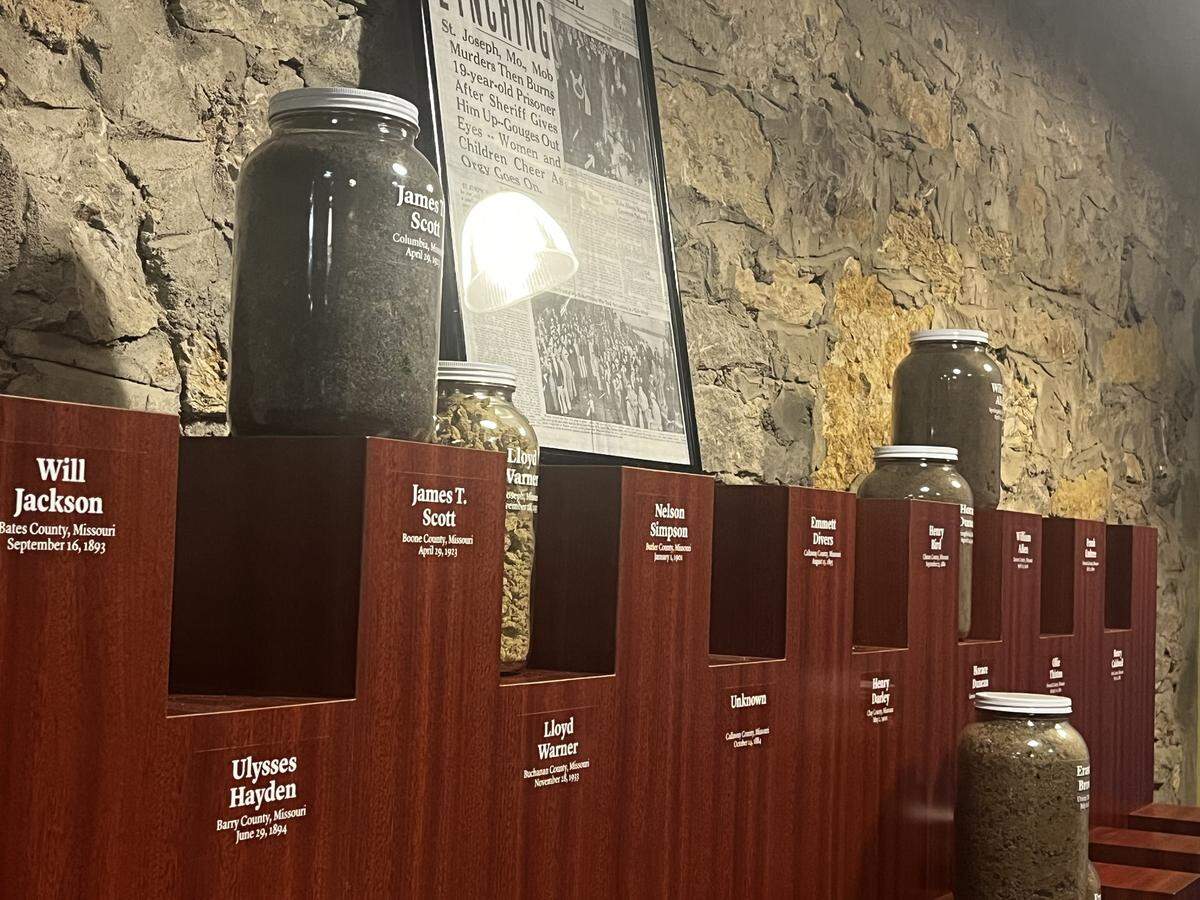
Shelves filled with jars of dirt
On that day, I strolled through the museum section of the archive and wandered into an amber-lit room where giant jars filled with dirt were perched on protruding wooden shelves of varying heights along the walls. Each section where there was supposed to be a jar had a label with a name, a place and a date. There were more empty ledges and labels than there were jars of dirt.
Eleven jars of dirt had found their place in the room, while some 49 ledges remained unclaimed.
The room is the Soil Collection Exhibit at the archives, but it’s often referred to as the lynching room.
It was designed to hold the soil memorializing every documented Black person who had been lynched in Missouri between 1877 and 1950. It is part of the Community Remembrance Project of Missouri, started in partnership with the national Equal Justice Initiative based in Montgomery, Alabama.
I visited the Legacy Museum in Montgomery in 2023 while participating in the National Association of Black Journalists Convention in Birmingham. One exhibit hall at the national museum is lined with soil-filled jars from around the country. The Missouri section is lacking. I asked Carmaletta Williams, chief executive officer of the Black Archives of Mid-America, why that is. She said, “People have to volunteer to do the research and collect the soil.”
In many parts of Missouri, that hasn’t happened. I decided right then that I would volunteer to help collect soil somewhere near Kansas City. I reached out to Weston’s Community Remembrance team, which had already done some research on the Reese story. That’s how I ended up searching for his lynching site.
The national project is part of an effort to raise public awareness and start conversations about reconciliation. Once the soil is identified and jarred, one jar stays with the community, a second goes to the Black Archives of Mid-America in Kansas City, and the third jar goes to the Legacy Museum. A community remembrance event is held in each town where the lynching site has been found and soil collected. A historical marker is raised at the site, lest we forget what happened there.
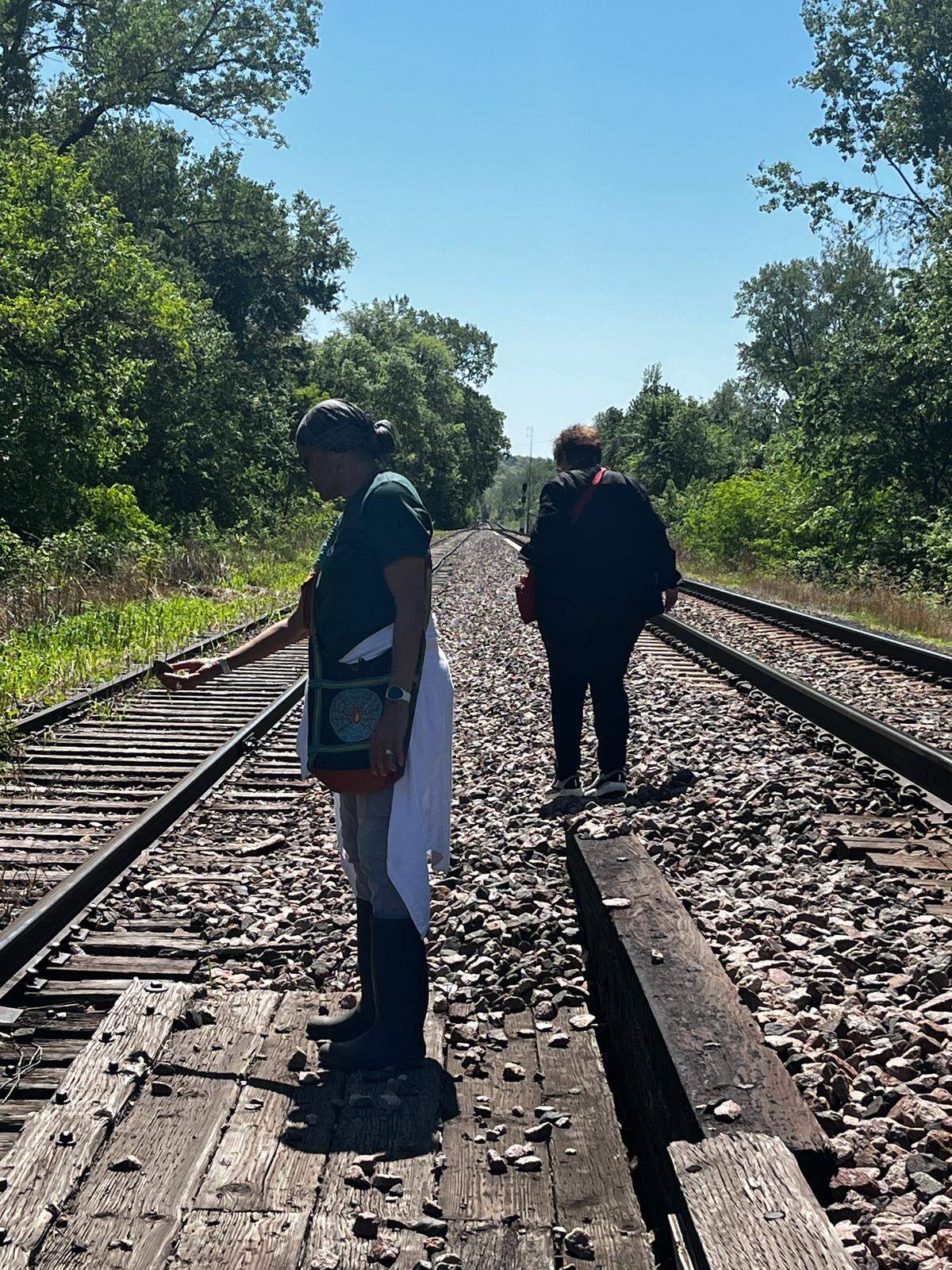
Railroad tracks over Bear Creek
In Weston that weekend, the five of us started walking across a rocky area toward the railroad tracks behind City Hall, which used to be the train depot. That building, which is at the farthest end of Main Street, has been restored several times.
The old tracks that ran the Platte County Railroad from St. Joseph to Kansas City as early as 1853 are decommissioned, but adjacent to them are new tracks that are very much alive. Trains still rumble through Weston several times a day and night.
We walked onto the old tracks, thinking this is where young Reese was likely dragged the night he was murdered. We had a map that marked the spot of the lynching. We also had the coordinates and newspaper accounts about what happened the night of the lynching. We were all keenly aware of the bias of the newspaper account, given the blatant racism of the time. Reese, then in his early 20s, was accused of raping Nancy Stillwell, the teenage daughter of a local farmer, and then cutting her throat.
It was later determined that Reese had not committed the crime. But before that was determined, he was arrested and jailed. And as often happened in such cases, townspeople filled with bloodlust, rage and racism, rushed the jail and dragged young Reese out. He was dragged down Main Street to the railroad tracks, where we began our search.
We were less than a mile from the old train depot when we stood atop a railroad bridge crossing Bear Creek. The description matched what news accounts described and the coordinates — recorded by the small drone we sent up — matched those we’d brought to the site.
The five of us stood silent. We quietly walked back and forth across the live tracks and then the retired tracks from one side of the old wooden bridge to the other, looking over as if we expected to see some other sign confirming what had happened in this spot more than 100 years ago.
This is only the first part of the story. Watch for part two — the day I return to the site to dig the dirt and fill the three jars that will mark as remembrances, in Weston, Kansas City and Alabama, of the lynching of young Charles Reese.