Funding minority students isn’t against the law. MU groups push back | Opinion
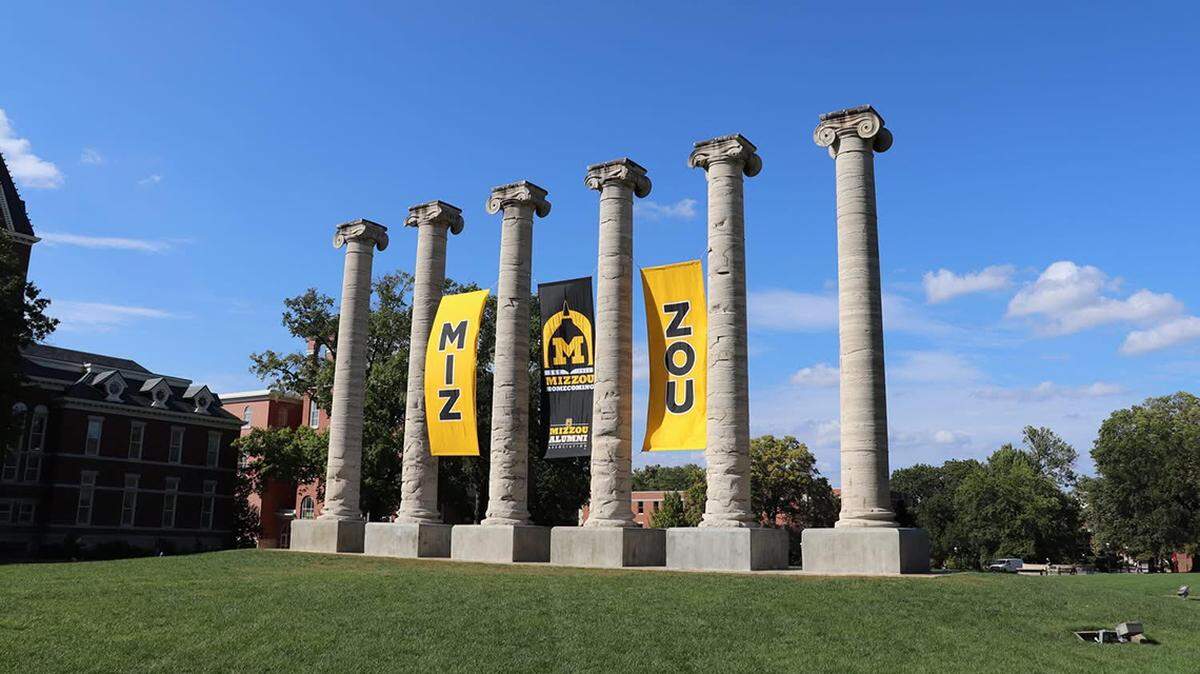
A diverse group of University of Missouri students packed a meeting hall on the Columbia campus Monday evening to express their ire with a university administration decision to defund five student groups representing Black, Latino, Asian and LGBTQ students.
University officials blame their action on a July 2025 guidance memo from the Trump administration. The memo threatens to cut federal funding to universities that continue to financially support student groups that primarily champion federally protected classes, as outlined in antidiscrimination laws prohibiting discrimination based on race, color, religion, sex and national origin.
On Friday several multicultural student organizations — the Legion of Black Collegians, Asociación Latina de América, Asian American Association, Queer Leadership Forum and FourFront (an identity council supporting diversity and inclusion) — were told about the changes set to start this summer.
Until now, each of the five groups has been classified as a university backed student organization and received a predictable amount of university funding each year, said Christopher Ave, a university spokesman. That money comes from a pool of dollars raised by student fees paid by every student who attends the university.
The university argued that under the threat of the Trump administration, it believes it can no longer use university money (in this case, student fees) to provide financial support, space or resources for groups that primarily serve minority students.
Continuing to fund those selected groups would put the university at risk of losing millions of dollars for research, Ave said. Federal financial aid could also be in jeopardy.
So, in other words, the Trump administration proposes to punish any institution that protects lawfully protected groups from harm. How’s that for twisting the intent of the law?
Reverse discrimination argument
The Trump guidance makes it clear though, that what it states is not mandatory; it’s strongly suggested. But beware the swinging axe.
“This guidance identifies ‘Best Practices,’ as non-binding suggestions to help entities comply with federal antidiscrimination laws and avoid legal pitfalls; these are not mandatory requirements but rather practical recommendations to minimize the risk of violations” the guidance states. It makes the reverse discrimination argument.
Apparently, though, the University of Missouri only needed a nudge to go after Black, brown and LGBTQ student organizations, and it has a not-so-welcoming history. It admitted its first Black student in 1950. The 1960s — when the Legion of Black Collegian was founded at Mizzou — was wildly discriminatory toward people of color and women. By the way, women’s organizations are not including in the reclassification.
In the last couple of years the university has abolished DEI programs and blocked scholarships intended specifically for any specified racial group.
The university has student groups for nearly every interest under the sun, including specific religious groups and for students with disabilities. Both are also protected classes under antidiscrimination laws. Ave said he was not certain how any of those other groups are classified.
Not defunded, but status changed?
In a statement on Monday about reclassifying — which essentially defunded — the five organizations in question, the university pushed back against a rush of student social media posts calling out the university’s action as an attempt at erasure.
University officials said it hasn’t defunded the groups but rather changed their funding status. Two things can be true. And in this case, they absolutely are.
The university has about 650 student groups on campus. The groups are divided into three categories. The smallest group — where these five groups had been classified — gets consistent annual funding. For example, the Legion of Black Collegians said that it received about $60,000 last year.
The largest group of student organizations, about 600 of them, which now will also include the five groups in question, has to bid for funding. Who gets funding in that group and how much is determined by MU’s Organization Resource Group, or ORG. Students told me the amount is capped at $3,000.
For the LBC that would be a significant loss of funding. Plus, there’s no guarantee they get any money at all. So you can see why students say they are being defunded. I agree, for the most part, that they are, because how much can you do with $3,000?
“At the end of the day, we are all competing for the same scraps,” Karina Franquiz, president of the Association of Latino American Students, said during the town hall. “And that is the issue at hand here.”
Ave told me that collectively the five groups got roughly $140,000 a year. Now that money gets tossed into the pool ORG will divide among some 600 student organizations.
Wait, but isn’t that $140,000 still student fee money? If any of it is given to any of the five groups targeted by the university, by their own explanation of this change, wouldn’t that still put them in Trump’s federal funding cutting crosshairs?
I asked the university spokesperson that question. He at first said he didn’t know the answer but later explained that since all the students in that larger pool are of the same status there’s no special treatment being given to any group over others.
During Monday’s town hall meeting, led by members of the five reclassified groups, students became emotional talking about how these particular student organizations changed their campus experience for the better. Several students stood to say that if not for these campus groups they might have left the university. Collectively, Black, Hispanic and Asian students make up 13 % of Mizzou’s student population.
The students leading Monday’s town hall called for this diverse gathering to unite and push back against the university decision with emails and phone calls to the campus leadership.
Some suggested that student-athletes opposing the decision also get involved. The last time that happened was 2015 when Black students at MU claimed university leaders failed to acknowledge incidents of racial discrimination on the campus. Students protested on the campus lawn, one student launched a hunger strike and the MU football team refused to play until campus leaders listened to students and responded to a list of demands. The university president and campus chancellor were forced out.
Now once again, students — who, by the way, are paying customers — at MU are not being heard. The university is not including students in decisions that impact their quality of life on that campus and so students are feeling ignored and discriminated against — and they are angry.
They are not alone. Some 400 others, including students, faculty, alums, community members and local and state politicians, joined — virtually — in the Monday night town hall.
Repeatedly, those in the online chat said, “This university does not care about minority students.” Others accused the university of being weak and not willing to work more closely with students to figure out how to better support them.
The university told me they wanted to be sure the five student groups weren’t being singled out to get special treatment and were made equal to other ordinary student groups on campus. I argue it’s MU’s decision to make examples of them that has singled them out.
‘From the voices of young people’
State Rep. Ray Reed, a Democrat from St. Louis, praised students for organizing a push against the university decision.
“Throughout our history, progress has often been driven not from the top down, but from the voices of young people willing to speak up, organize, and insist that our institutions live up to their highest ideals,” Reed said in a statement Tuesday morning. He called for the university to engage in “good faith,” dialogue with student leaders.
He said: “The students leading this effort are not asking for special treatment. They are asking for the chance to continue building community, to support one another, and to contribute to a campus that reflects the full diversity of our state and our country. That’s not just reasonable —, it’s essential.”
I agree. Of course, we must follow the law, but without alienating students. Universities by intention are supposed to be inclusive spaces expanding opportunity to support those who have otherwise not been supported, not narrowing it. So, how the university responds here is going to speak loudly about what it values. If Black, brown and LGBTQ students are not included in that mix, MU could find itself right back where it was a decade ago. That would be a shame.
This story was originally published April 8, 2026 at 5:08 AM.