MoDOT crews working overnight show government sometimes gets it right | Opinion
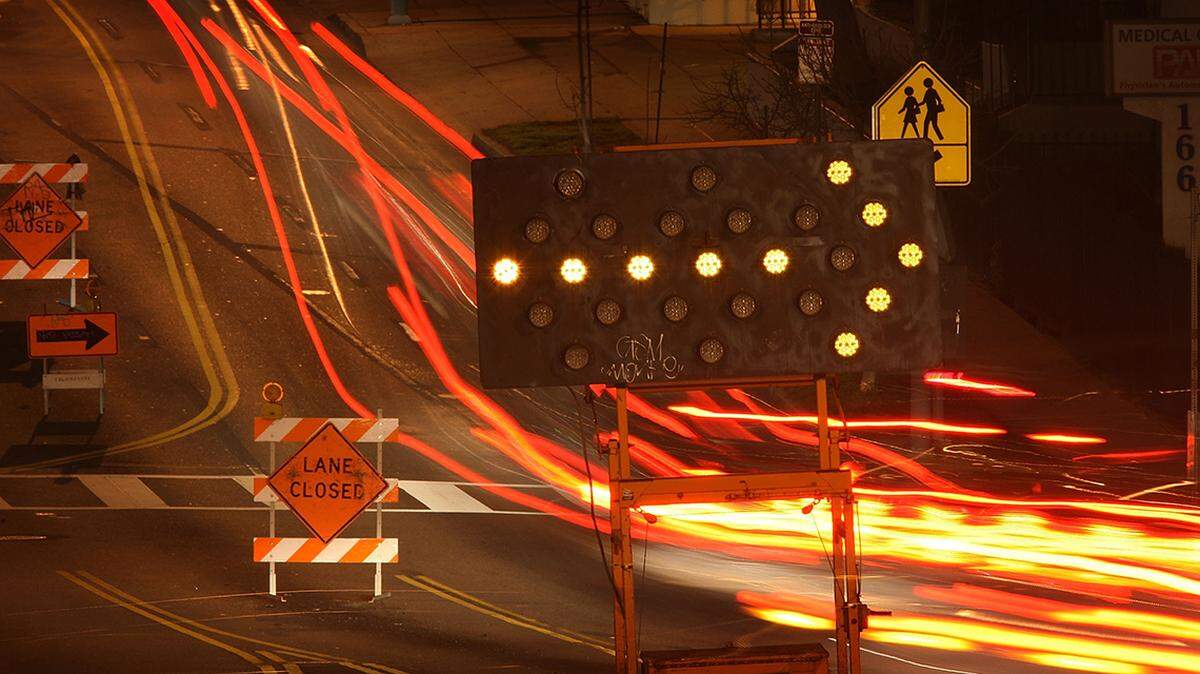
Tuesday night around 8 p.m., I was driving to the gym on Missouri Highway 152 in Kansas City’s Northland when I saw a flashing arrow sign moving cars over to the newly-resurfaced left lane. When I got closer, I saw crews getting ready to repave on the right.
What a great service to the public: Roads need to be renewed regularly to keep people and goods flowing smoothly, and how smart to do this nonnegotiable maintenance in the evening when fewer cars and trucks are on the road, instead of snarling workday traffic.
I’ve seen similar nighttime infrastructure work more and more in recent years, and it’s a reminder that no, our state, local and federal governments are not inept at everything they do. The Missouri Department of Transportation sometimes works on the roads while people sleep in the interest of public service and convenience, the agency’s Kansas City Assistant District Engineer Matt Killion told me Wednesday afternoon.
I’m not arguing that bureaucracies don’t make epic mistakes. We hear too many stories of system failures resulting in children without homes, pencil-pushers denying older adults earned benefits or veterans receiving substandard medical care. Gallup tells us “Americans’ satisfaction with the way things are going in the U.S.” is at 21% today, versus just over 70% as recently as the turn of the century. And it’s stayed consistently underwater since about 2005.
I know there are plenty of reasons for that. There’s a widespread feeling that our quality of life is on the decline — and there’s data to back it up. The Global Social Progress Index, a project from the Washington, D.C.-based nonprofit Social Progress Imperative, tracks data around a wide variety of categories and compares it. Among peer developed countries such as Canada, Denmark, Malta and Saudi Arabia, the U.S. comes in No. 1 in a single category: quality weighted universities. In many other crucial segments — child mortality, housing, safety, basic education, freedom and choice — we’re “underperforming.”
But things are pretty good in the day-to-day by other metrics. With some intolerable exceptions, you can drink from American water taps without worry. When you buy pills labeled aspirin, that’s what’s inside the bottle. When my neighbors raised the alarm about a scary intersection, Kansas City traffic engineers examined the danger and just last week, workers installed new traffic lights that have already kept motorists and pedestrians safer.
Utility regulation, affordable housing
These unquestionable good things are all the product of government. Although they provide many of our public utilities, investor-owned enterprises such as Evergy and Spire are regulated (not tightly enough when it comes to rates, in my opinion). When natural disasters destroy homes and ruin farmland, the Federal Emergency Management Agency steps in to make them whole. Do you use GPS on your smartphone to navigate to a new coffee shop or mechanic? The Department of Defense built that system, and the Air Force operates the satellites that make it work. It’s free for anyone around the world to use.
Of course, government isn’t the solution to every problem. The free market isn’t doing so hot these days in providing enough affordable housing for all, but most American cities haven’t come up with their own fixes either. The U.S. leads the world in pharmaceutical development, driven by the capitalist profit motive and counterproductive price controls in places such as Europe.
On balance, though, I don’t think Americans have enough appreciation for how much government has created our standard of living. From building codes to restaurant inspections, government is simply the collection of little rules mankind has come up with to promote the general welfare — and protect us from one another. If you want a warning about the depths human beings will sink to for money, look into China’s investigation of “gutter oil” used in cooking. It won’t make your stomach feel good.
Public services can’t turn a profit
The Founding Fathers’ Constitution is not a business plan. We’ve come to realize that public services work best when they’re not profit-making enterprises. When Americans finally come to their senses and federalize the health insurance industry at some point in the future, we’re going to collectively wonder why we spent decades tolerating the fact that we were the only developed nation on the planet where people routinely went bankrupt because of a cancer diagnosis.
In his book “Parliament of Whores,” satirist P.J. O’Rourke — self-dubbed “Republican Party reptile” — wrote: “When Republicans ruin the environment, destroy the supply of affordable housing, and wreck the industrial infrastructure, at least they make a buck off it. The Democrats just do these things for fun.”
O’Rourke’s tongue was firmly in his cheek, but his quip actually let slip a truism about his small-“L” libertarian/conservative framework: When capitalists get into the public service business, they’re there to make money, not make people’s lives better. Does anyone really think Elon Musk ran the doomed Department of Government Efficiency just to clean things up? I’m sure the now-shuttered operation admittedly leaking millions of Americans’ private data had nothing to do with Big Tech’s appetite for that information.
The private sector won’t give anyone universal health care, or clean water, or a court system — because there’s no way to monetize those things. So thank a public works employee the next time you brew a pitcher of iced tea or drive to the grocery store. We wouldn’t lead our comfortable modern lives without them.