Do minority student government groups help or hurt Mizzou? | Opinion

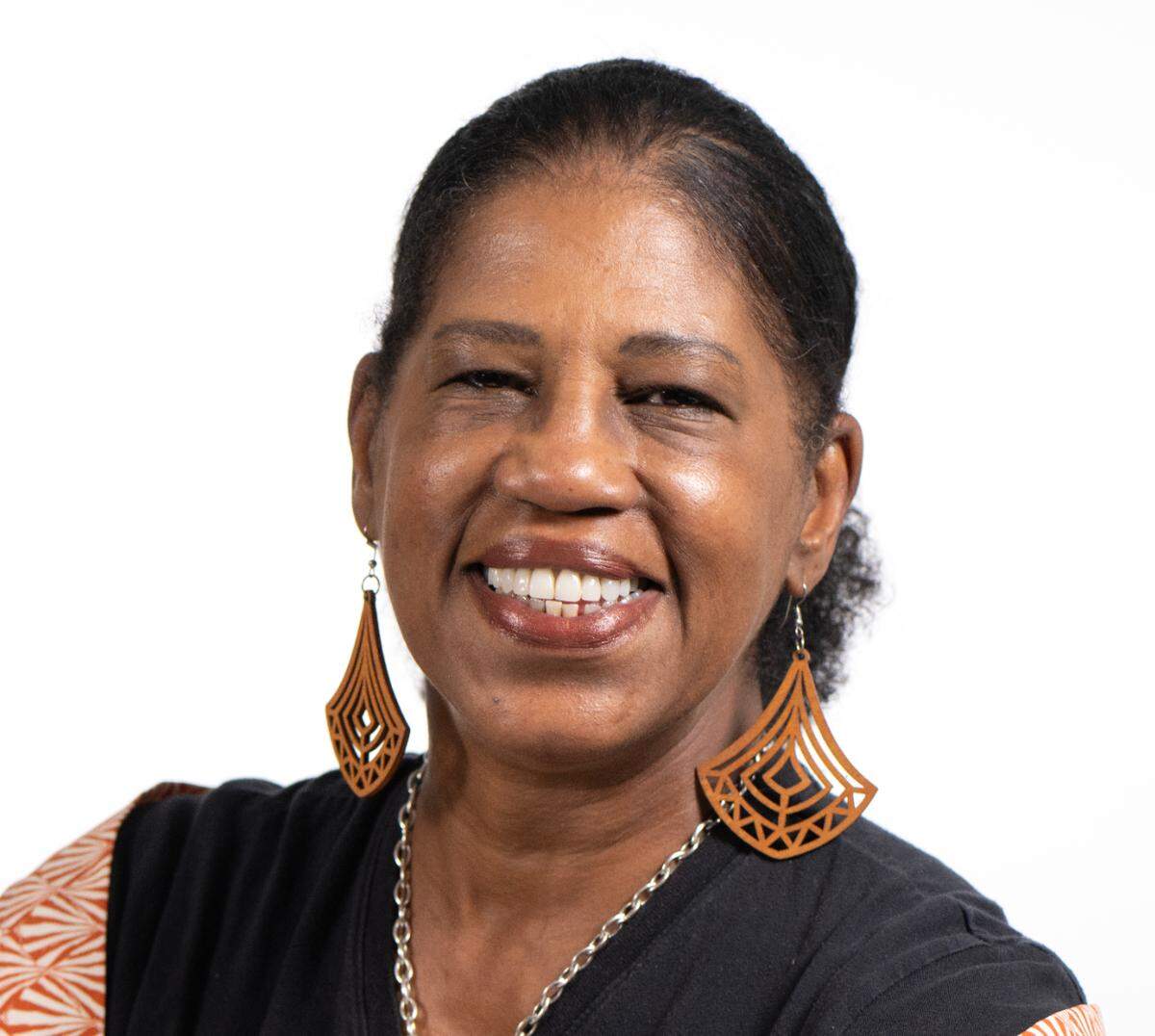
Editor’s note: Welcome to Double Take, a conversation from David Mastio and Yvette Walker tackling news with differing perspectives and respectful debate. This week, we have a special guest who will debate Mastio: Mará Rose Williams, our senior columnist and former education writer, who helped drive coverage of “The Truth in Black and White” — a 2020 series that apologized to the Black community for the part The Kansas City Star played in a racist history. It’s fitting that she help tackle the following topic of decisions made at the University of Missouri.
David Mastio: I understand that both recent events at the University of Missouri and its history going back to segregation are full of racist actions and generally awful treatment of Black people. Our colleague Toriano Porter has an excellent summary in his column about speaking at Journalism Day at Mizzou.
In many minds, that justifies the university’s extraordinary decision in 1968 to elevate the Legion of Black Collegians to become a student government for Black students on equal footing with the student government for all students. Today LBC is the only Black student government on a college campus ,according to Inside Higher Education.
That will end in July when the group, along with similar race- and sexual orientation-focused entities, is demoted from an independent student government to the same level as any other student organization. I agree with university administrators that this is the right decision for one simple reason: Continued segregation in America is not the cure for what so demonstrably ails us. Separate groups for separate races is the problem, not the solution.
You can tell that the LBC’s status was wrong by the fruit it produced. While Black people at Mizzou and in America have a unique history that must be reckoned with, the fact that we have a Black student government led to ones for Asians, Hispanics, Indigenous people and the LGBTQ community as well. One segregated group for a unique situation quickly led to at least four more such groups each less justified than the last, each further balkanizing the campus.
Moreover, if all the racial groups have their own student government, what kind of organization is the remaining broader student government? A white one? That’s sick.
Mará Rose Williams: I agree. A designated white-only group is sick. But since forever, that is exactly what has happened. That’s how we got here. The exclusion and lack of acknowledgement and acceptance of students of color into the larger student group is what created the current situation. Removing authority from Black, Indigenous, Asian, Latino and LGBTQ groups on campus now is not suddenly going to give the members of these groups space or a voice in the broader student government. It does the opposite. It shushes them. Or tries to.
Overall, I simply disagree with your premise that these affinity organizations are not needed because in today’s world, the broader, predominantly white governing body has their backs. It doesn’t, but it’s not necessarily intentional.
The fact that you, and many others, don’t understand the need for these historically marginalized student groups to have their own government bodies that can represent and speak for the needs of a collective group of smaller Black, brown and LGBTQ groups is exactly the reason why student organizations like LBC are needed on a college campus.
The reason Black student groups were established in the first place is that predominantly white institutions, while they proposed to welcome Black and brown students to their campus — Mizzou among them — made no room for those students to be heard or have a voice in the decisions being made by the majority population on the campus. Mind you, Black students, like all students, are paying customers of the university. What I’m describing here is taxation without representation.
When you are only 5% of the overall student population, as is the case for Black students at Mizzou, your voting power when thrown into the greater mix is weak. Campuses end up with a student government that, for the most part, represents the white student majority. Because, as we know, people tend to vote for people who look like them, talk like them and think like them.
A student government that is all white or majority white is not thinking about the experiences of Black students. You know why? Because in most cases, they are not familiar with the shared cultural aspects of being Black, Latino, Asian or LGBTQ in America. They don’t even know what they don’t know.
I’m talking about social and economic experiences created by the historically racially oppressive country that we live in. You said it yourself: Racism does exist. Let me add to that that systemic racism does exist. Racism and bigotry are not in check in America, nor are they at the University of Missouri.
A university is just a microcosm of the greater society.
David: I know there is still racism at the University of Missouri. Racism isn’t a problem for just African Americans. It is a problem for us all. Only by building a united, integrated movement against it will we overcome the racism that feeds on vestiges of America’s original sin just as much as it does modern-day segregation masquerading as racial sensitivity.
I appreciate why Black groups have been necessary in the past, but in the 21st century, there are darn few groups that refuse Black membership. The primary student government at Mizzou does not exclude Black people. As far as I can tell, it seeks them. — Stripping diversity out of student government — allows white students who are so inclined to just keep on ignoring minorities, failing to learn their struggles and missing opportunities to rub shoulders and work for and with them.
There’s a frustrating sense of defeatism about university students of any race retreating into segregated spaces. There will never be a time in young people’s lives when they are in a younger, more liberal and forward-looking crowd. If Black and brown people aren’t going to jump into the larger pool of society here, then where? And where can they learn with fewer consequences than in the forgiving environment of college?
Mará: When former University of Missouri System President Tim Wolfe resigned in 2015 after students protested because the university failed to hear their complaints about racism and inequities on campus, he said in his resignation speech, “Use this resignation to heal, not to hate as we move forward today for a brighter tomorrow.” In other words, learn from my mistakes.
More than a decade later, here we are trying to explain why Black and brown students deserve and need a specific governing body. And a university that is not listening and instead following the direction of an administration they know — and we all know — has racist ideas, they don’t hide that. Depicting President Barack Obama and his wife as monkeys is one example. The Trump administration and its efforts to abolish diversity, equity and inclusion programs aim to turn back the clock on racial advances. All of us should be pushing back against that.
David: Speaking of the authority figures on campus: They, including the faculty, are overwhelmingly of a liberal bent more keen to see Black students treated fairly here than anywhere else you’ll find in the country. Trumpy conservatives with their newly resurgent taste for racial animus are nowhere to be found. Nobody I can find associated with the university gave money to Trump in his three tries for president, but dozens gave to Kamala Harris, most of them white.
And why do we keep reverting to talking about the LBC? The Collegian’s existence created the permission structure for the Queer Liberation Front to be its own government for LGBTQ students. They don’t have anything like the history that Black Americans do. What are they doing with their own government?
You say the University of Missouri is still so rife with racism that Black students need their own government. We’ve tried it that way for almost 60 years and too little has changed. Maybe it is time for something new.
Mará: The idea that Black people need to fix the mess that white America, as the majority, created is offensive and absurd. Black Americans, and these students know this, and are tired of jumping into the “larger pool“ as you put it, wishing and hoping the white people who are already filling it up will make room for them.
Black Americans have already fixed their situation. In many places, we have said, “If you don’t want us in your group, OK — we will create our own and lobby for ourselves.” And yes, when other groups saw it working for us, they followed suit. I applaud them.
So why would these student groups want to return to a situation where they were marginalized or worse, completely ignored? They should do exactly what they are doing and fight against it.
If the greater white institution really wants to support Black, brown and LGBTQ groups on campus, then it should support the mechanisms in place and working for these groups. Don’t tear them down.
Let me add that none of these groups is exclusive, by the way. Anyone can join. But in the case of LBC, I know the mission is to support and advocate for Black students. If that’s your thing, no matter your ethnic group, then welcome.
Providing a platform for a particular interest group to have a voice is not segregation — it’s democracy. It has worked. Consider that in 1968, students were on campus waving Confederate flags and whistling “Dixie.” Black students quashed that.
Here’s how it should work: Each of these groups should have a mandated seat on the overall student body government with student government status. They each should be funded outright through the university and not have to jockey for a fraction of what they need to function.
They then should feel empowered — because in my scenario, they are supported and recognized by the institution — to bring issues before the overall student government or the university administration.
Think the Congressional Black Caucus in Washington, D.C., designed to strengthen the political influence of Black members.
No, these Black and brown students are not retreating into segregated spaces; they are gathering strength from one another to speak for themselves in a much louder voice.
Amaya Morgan, LBC president, told Inside Higher Ed: “As long as we’re a student government, administration is required to meet with us and required to hear us out and work with us on issues. And definitely, because (we’re not university-sponsored anymore) it gives them more of a reason to toss us to the wayside.”
This story was originally published April 10, 2026 at 1:40 PM.