There’s good news about race at MO and KS colleges and universities | Opinion
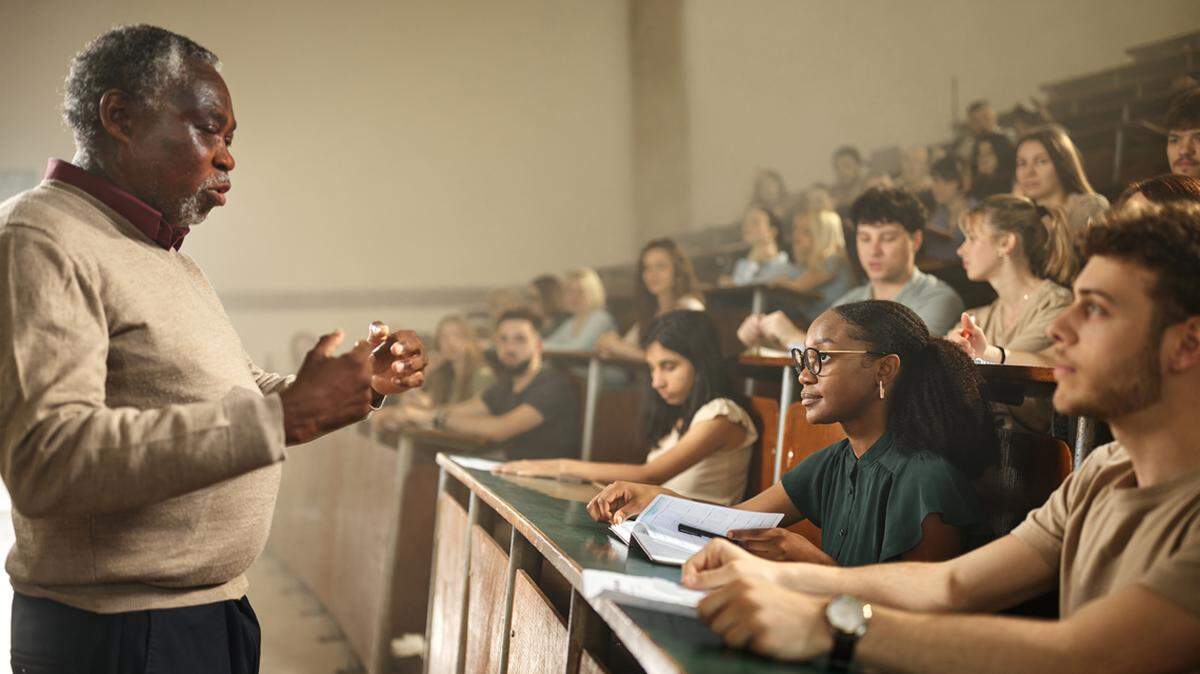
When The Supreme Court abolished race-based college admissions in June 2023, National Public Radio reporter and commentator Nina Totenberg noted that since “nearly every” school had adopted the practice that the destructive impact of the ruling would be felt nationwide.
“The Court subverts the constitutional guarantee of equal protection by further entrenching racial inequality in education, the very foundation of our democratic government and pluralistic society,” Totenberg quoted Justice Sonia Sotomayor in dissent.
She was right that the impact was nationwide. The impact has sure been felt in Missouri and Kansas, but not as the “entrenching (of) racial inequality” Sotomayor warned about, but perhaps as its rebirth.
According to new national data obtained by The New York Times, Black and Hispanic students have fewer opportunities at the elite private schools of the Ivy League and their selective competitors, but at home, Black and Hispanic enrollment boomed, according to state data analyzed by The Kansas City Star.
- Black enrollment at Missouri’s “flagship” public universities shot up 11.7% between the ruling and the next year’s freshman class. In Kansas, Black enrollment was up 15.9%.
- Hispanic enrollment at Missouri’s flagship public universities spiked 12.9%. Thirteen point three in Kansas.
- Enrollment for mixed race freshmen was about 10% in each state.
That’s true nationwide and at individual campuses in Kansas and Missouri as well.
The University of Missouri in Columbia saw Black enrollment rise 20%, Hispanic 19%, and mixed race freshmen increased an eye-popping 33%.
Kansas State University increased Black freshman enrollment 64% while Hispanic enrollment rose 19% and mixed race went up 25%.
Closer to home, the University of Missouri-Kansas City saw every one of those categories of minority enrollment rise more than 15%.
State schools produce excellence
Progressive education researcher Andre M. Perry of the centrist Brookings Institution sees an opportunity to change American education if “state schools seize the opportunity to show elite schools that you can produce excellence with inclusivity” not the exclusion of top schools. But he says all is not roses — there are dangers as well.
I think there is a bigger opportunity than that. If the explosion of racial diversity at the state level is sustainable, there is an opportunity to change American culture and race relations for the better.
In the era of what Justice Clarence Thomas called “rudderless, race-based preferences … (that) fly in the face of our colorblind Constitution” elite schools enrolled Black and Hispanic students who were not as qualified as their white and Asian peers — with lower grades and test scores. Each level of schools had to do the same thing in order to keep up their minority enrollment. The results were grade inflation and dismal graduation rates for Black and Hispanic students even when you took into account different races’ relative wealth and parents’ education.
With less elite schools now able to pick minority students who are just as qualified as their peers, we could see those grade and graduation disparities disappear if conservatives’ “mismatch theory” is correct. No longer will so many African American and Hispanic students be in remedial education or lower-level classes.
“Is it going to dramatically change what happens at state schools?” Perry asks. “I don’t know,” he says. Well I know what I am willing to bet — it is going to have a big impact.
And that is just the first part of what I think will be a culture shift on campus. No longer will there be the affirmative action “stigma” that Thomas excoriates in his concurring opinion to divide races on campus. And indeed, as minority numbers reach what Perry called a “critical mass,” the growing confidence they show will change the conversation and relationships across racial lines as well.
Over time, college culture and relationships spill out into the wider culture. That can’t help but be a boon to attitudes on all sides of our complex multicultural society.
A hit to future wealth?
Perry has other worries. Without access to the Ivies, the best of Black and Hispanic America will take a hit to their future wealth and opportunities that elite connections can confer. Too much of the state public education world isn’t as hospitable as it should be to growing minority numbers. You still hear the N-word called from the stands on college sidelines, Perry says.
That may be, but there’s one other way that I think this cultural change will have a positive effect on our society. For 50 years, affirmative action in higher education and the wider society has let America paper over the fact that particularly Black Americans don’t have the same opportunities others do from the time they are born. That has let us ignore the very problems Perry is talking about.
Moreover, shuffling around opportunities based on racial quotas has let too much of the Black community off the hook. Educators and politicians who have failed to solve the problem of unequal schooling in so many communities can point to successes without being forced to finally deal with pervasive problems. White society has put hard questions about our own role and attitudes on the back burner while we point to affirmative action programs that don’t impact us much.
Maybe a more equal higher education world can do something about how unequal the rest of the world remains. I hope so, “the very foundation of our democratic government and pluralistic society” that Sotomayor wrote about surely depend on it.
David Mastio is a national columnist for The Kansas City Star and McClatchy.
This story was originally published February 7, 2026 at 5:04 AM.