Hartzell Gray wants to go to Congress. He can’t even manage his own lawsuit | Opinion
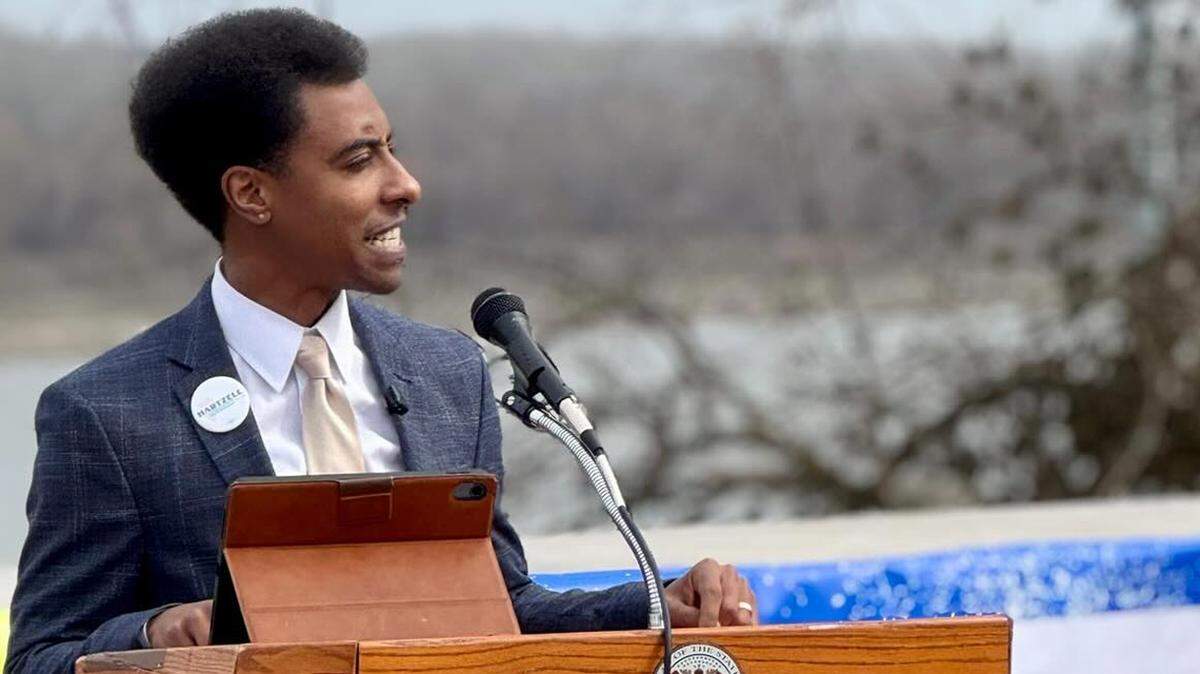
The First Amendment lawsuit filed last year by Hartzell Gray always carried an odd tension.
If you read the lawsuit closely, Gray’s most direct grievance appeared to involve the consequences he faced as a radio host at the public radio station KCUR after participating in activism and protests. Gray alleged he was pulled from shifts, lost pay and suffered professional fallout after then-mayoral Chief of Staff Morgan Said contacted station leadership about his political activities.
But Gray did not sue KCUR. Instead, he and his attorney Madison McBratney sued Kansas City and Said, arguing that the mayor’s office had improperly pressured the station and violated his First Amendment rights.
That disconnect always seemed likely to become a central issue in the case. But on Monday, the lawsuit collapsed for a different reason entirely: U.S. District Judge Greg Kays found that Gray and his attorney had repeatedly violated court rules, ignored deadlines and generally failed to competently litigate the case.
The order is brutal.
Kays accuses Gray of “self-servingly misrepresenting facts” and concludes that his actions demonstrated “a troubling lack of respect for the tribunal.”
That’s pretty extraordinary language from a federal judge about any plaintiff, much less someone currently asking voters to send him to Congress.
KCUR, journalism ethics
Gray occupied a somewhat unusual niche in Kansas City public life. He was essentially a professional emcee — a charismatic personality with a microphone who built a following as an in-stadium host for Sporting Kansas City and an on-air presence at KCUR.
Those worlds can coexist comfortably well enough. But eventually Gray began channeling that public persona into overt activism with KC Tenants, the renters-rights organization that regularly confronts City Hall over housing policy.
That put KCUR in an awkward spot. There’s a big difference between newsroom employees quietly holding political opinions — everybody has those — and one of your on-air personalities grabbing a microphone at a rally and firing up a crowd against City Hall.
When Said complained to KCUR about the (rather obvious) conflict of interest there, Gray and his supporters tried to frame it as a case of political repression and government intimidation. But there was always a far more mundane explanation: maybe KCUR management simply became uncomfortable employing someone who was simultaneously acting as an activist against City Hall while working at a station that covered City Hall.
The lawsuit suggests Said issued “vague threats” to KCUR leadership about Gray’s extracurricular behavior. If those conversations happened exactly as alleged, they may well have been inappropriate. Public officials should not be casually leaning on newsroom management about journalists or public-facing media employees they dislike. That is a fair criticism.
But the lawsuit always seemed confused about who actually made the employment decisions at issue.
The city did not suspend Gray from shifts. KCUR did.
The city did not employ him. KCUR did.
If Gray believed he was treated unfairly because of activism, the more natural legal dispute always appeared to be with the employer that allegedly altered his work situation — not a sprawling civil-rights case accusing City Hall of retaliation and conspiracy.
Instead, the lawsuit dragged a remarkable collection of people and institutions into federal litigation: KCUR staff, activists, Sporting KC personnel, city officials and political operatives.
Gray then appears to have lost interest in the whole thing.
Serious challenge to Mark Alford?
In his order dismissing the case with prejudice — meaning it is over for good unless revived on appeal — Judge Kays described a cascade of missed deadlines, incomplete discovery responses, and procedural issues:
- Kays noted that Gray refused to sit for a deposition unless ordered to do so by the court, describing the standoff as part of a broader pattern of nonresponsiveness and delay surrounding efforts to schedule Gray’s testimony.
- At one point, Gray tried to quash subpoenas seeking records from KCUR, KC Tenants and Sporting KC. Kays described the effort as “borderline frivolous,” noting that Gray himself had made those relationships central to the lawsuit.
- At another point, Gray canceled a deposition at the last minute citing a “family medical emergency.” The defendants later produced evidence that he attended a social event later that same day.
“He was never available,” said Tom Porto, who represented Said. “It did eventually make you wonder, like, wait a minute, is this lawsuit even a serious pursuit for this guy? Or is it something else?”
Monday’s dismissal seems to answer that question. McBratney, Gray’s attorney, did not respond to a request for comment.
Since this lawsuit was filed in April 2025, Gray has launched a congressional campaign as an outspoken progressive populist candidate in the Democratic primary for Missouri’s 4th District, now represented by GOP Rep. Mark Alford. The district has been aggressively reshaped into far less favorable political terrain for Democrats.
But after Monday’s ruling, the campaign feels even less like a serious attempt to win office and more like an extension of the same politics of performance that surrounded the lawsuit itself.
Serious lawsuits and serious political campaigns require discipline, organization and follow-through. People running for Congress ought to be able to handle deadlines, depositions, and the basic machinery of institutions.
After reading the order, it is difficult to escape the conclusion that the case — and perhaps the congressional candidacy attached to it — were never very serious undertakings.
This story was originally published May 12, 2026 at 10:21 AM.