What happened when a Kansas City coffee shop eliminated tipping | Opinion
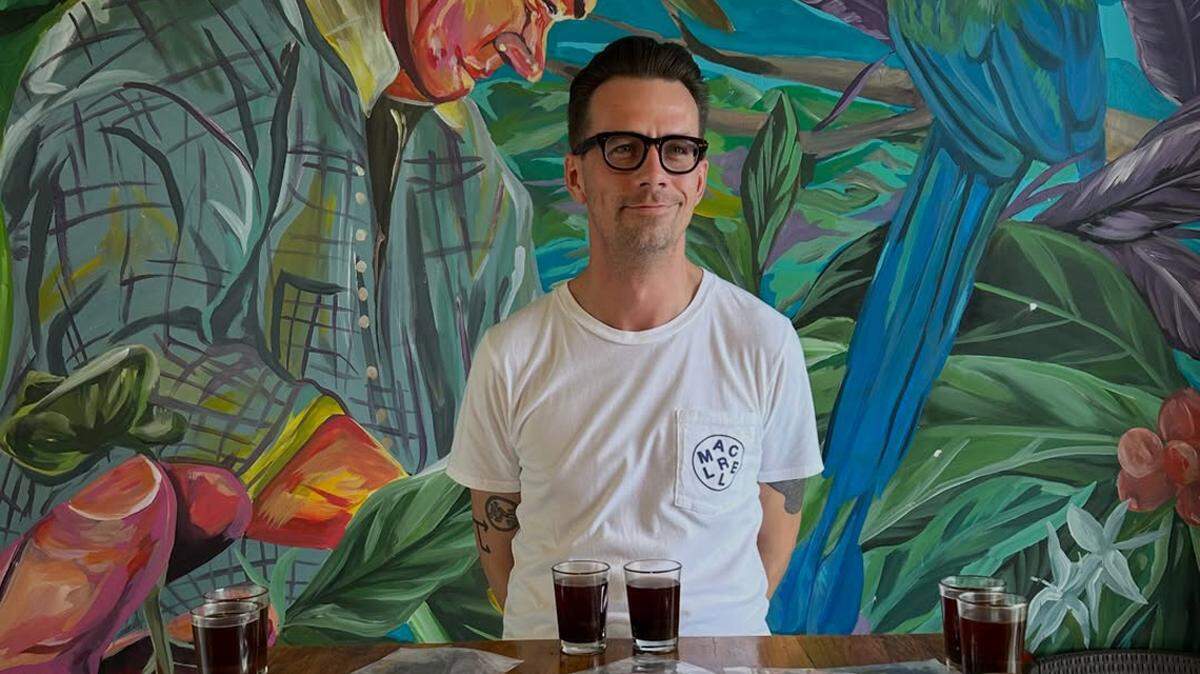
When Christopher Oppenhuis opened Take Care in Kansas City’s Crossroads in late 2023, he was trying to simplify the way a coffee shop works.
He called it “subtle hospitality,” a return to what he saw as a more straightforward relationship between customer and business. Prices would reflect the full cost of the product. Employees would be paid a steady wage. The transaction would be simple.
“Customers — people — used to be offered more in places like this,” Oppenhuis told me at the time. “So part of what we’re trying to do here is give people back some of the things that have been taken away from them.”
In addition to rejecting shrinkflation by serving bigger drinks and larger bags of coffee beans, Oppenhuis and partner Mark Sappington also did away with gratuity. No tip jar, no iPad to tap your tip into. The price was the price, nothing more.
It lasted 18 months. By last May, they’d abandoned the policy entirely.
I thought of Oppenhuis recently after I interviewed Rob Waiser, a University of Kansas professor who recently co-authored a Harvard Business Review article about how tipping is encroaching on more and more parts of our lives in America.
Guiding Waiser’s research was an attempt to answer the question of why no-tipping policies historically haven’t worked in this country.
“There have been a number of restaurants here in the U.S. that have tried to get rid of tipping,” Waiser said. “They came out and said, ‘We’re going to pay our workers a living wage and we’re going to tell our customers they don’t need to tip.’ And very few of them have succeeded. Most of them either reversed that policy or went out of business, with a few exceptions.”
His article concluded the policy doesn’t work because raising wages means raising prices, putting no-tipping businesses at a competitive disadvantage. It also limits their ability to attract the highest-performing workers, who follow the upside of tips.
Take Care customer pushback
I called up Oppenhuis to see if his reasons lined up with the academic explanations Waiser arrived at. Mostly, they did.
“In order to keep up our no-tipping policy, we would have had to charge a lot more for our products,” Oppenhuis said. “We can’t charge $10 for a latte in Kansas City. People here just won’t accept that, even if you’re telling them that price covers a living wage for our employees. But if you price it at $7 or $8, they are much more OK with tipping that person up to $10, because it makes them feel like they are helping the barista more directly.”
He continued: “In a way, customers seemed to feel that we were taking the decision away from them. They wanted to decide for themselves. And we got a lot of pushback from customers about it.”
The shop had set out to remove a layer from the transaction. Instead, it introduced a different kind of friction.
“Trying to defend the system became more of a chore for my employees than just going back to what 99.9% of businesses like ours do,” he said. “It just created more tension over time.”
There were staffing realities, too. In a tip-based system, pay isn’t guaranteed, but it can be higher, especially for experienced workers. If you’re a server who makes good money in tips, you’re probably not taking a job that doesn’t offer them, which makes it harder for no-tipping restaurants to attract top staff.
“People would move on to other similar positions where some days they could make more money, even if it wasn’t guaranteed,” Oppenhuis said.
And in order to continue to retain staff and raise wages, coffee prices would have had to keep going up.
“With the system now, by having a solid base wage with tipping, we’re paying staff more than we ever could,” Oppenhuis said.
Employees typically make more money
Take Care discontinued its no-tipping policy right about a year ago. Oppenhuis views it as a kind of noble experiment that ended in a “win-win-win,” he said. The customer is empowered to tip staff as they please. The employees typically make more money. And the coffee shop can sustain its prices, even as the cost of goods continues to increase.
“Fortunately, we haven’t had to raise our prices more than once in the 2 1/2 years we’ve been open,” Oppenhuis said.
Oppenhuis added that he’d been inspired, prior to opening, by some Minneapolis coffee shops with a no-tipping model years before. But when he went to visit the spots last April, two of them had reverted back to tipping.
“Not that I needed permission, but seeing that kind of gave me permission to be like, maybe I don’t need to die on this hill,” he said.
The next month, Oppenhuis did away with the policy.
“If we’d kept going, it would have been the end of our small business,” he said. “Now, I feel like we’re in a really good spot. We have the same model as everybody else. So then it’s like, well, how do we separate ourselves with our coffee and service? And that’s what we’re trying to do every day.”