Should you tip on a carry-out pizza? And other modern tipping quandaries | Opinion
A few weeks ago at Kauffman Stadium, a friend and I went to grab beers for our group. He bought the first round; I hung out in line and waited to help carry them back.
Four Boulevard Brewing Company drafts came out to something like $64, though it might have been a little more than that.
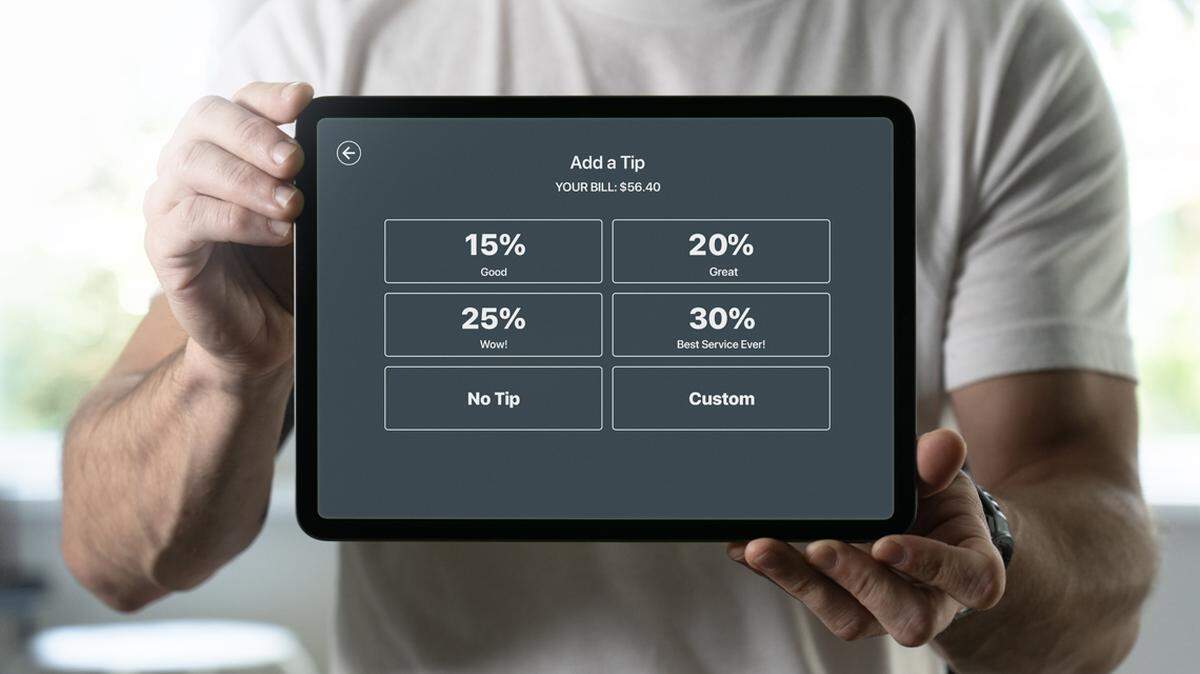
He tapped his card, and then came the tip prompt.
I watched him eye the screen, which offered default options of 15%, 20% and 25%. He tapped 20%, adding about $12 to the total. That’s roughly $3 per beer to the bartender for pulling a handle, work that took maybe 45 seconds.
I watched my friend tip and knew I would have done the same thing a few weeks earlier. But I’d recently made a resolution to pay closer attention to how, and why, I tip. That shift started with a conversation with a University of Kansas marketing professor named Rob Waiser.
Waiser and several colleagues recently published a Harvard Business Review article titled “When Tipping Becomes a Customer Experience Problem.” It lays out how tipping in recent years has spread into unlikely corners of the economy, and examines how it can either enhance or damage the customer experience depending on how it’s implemented.
The piece is aimed at businesses, urging them to think more carefully about how aggressive tipping prompts can backfire. But it’s rooted in an idea most people intuitively understand: Tipping in this country has gone off the rails.
The point of a tip, Waiser told me, is for customers to decide how much they want to pay for service — to show their appreciation.
“But that’s not really how people are deciding their tips anymore. You’re tipping because you think the worker is underpaid, or because you’re standing there at a coffee shop, and they flip the screen around and the barista is watching you and the people behind you can see what you do.”
“You no longer feel like you can give a tip based on the service you received,” he said. “You’re tipping based on things like social pressure or empathy or embarrassment, which are things that really shouldn’t have anything to do with tipping.”
Pay for food, also service in restaurants
Waiser and his co-authors boil tipping down to three principles: distinctiveness, visibility and proportionality. I don’t own a business, but as a tipper I’ve found the framework to be useful in my everyday life.
Distinctiveness is the idea that tipping only makes sense when there’s a clear service component separate from what you’re already paying for. Example: At a restaurant, you pay for the food, but you also pay for the service that exists alongside it.
“And that service could be good or bad, so you tip accordingly,” Waiser said. “But your tip is distinct from the meal you’re paying for.”
Contrast that with the video game industry, where CEOs have floated the idea of letting players tip developers after finishing a game they liked.
“There’s nothing distinct happening there besides purchasing the game,” Waiser said. “You buy the game. You’re paying for the game. There’s no other service being provided that you should tip for.”
Then there’s visibility. Tipping assumes the customer can actually evaluate the service. In a bar or restaurant, you can see whether someone is working hard or loafing, whether they’re friendly or rude. But at an auto shop — another area where tipping has made inroads — you don’t know if the mechanic has properly fixed your car when you pick it up. You only know later if it breaks down.
“So at the time that I would be paying for that service, there’s nothing visible to me that I can base a tip on,” Waiser said. “There’s nothing that would allow me to make a decision on how much to tip that person, because the service itself is not visible.”
Baseline of 20%?
And then there’s proportionality, which is the one that gets bent most often.
In theory, tips are supposed to scale with service: better experience, higher tip; worse experience, lower one. In practice, that’s not how most people behave. The percentage is usually fixed before the service even begins — 20% not as a reward, but as a baseline.
“I think if you ask most people how much they tip, it doesn’t really depend very much on how good the service was — everybody sort of has their amount that they tip based on how they feel about themselves as a tipper, or based on how much compassion they have for the workers, and so on,” Waiser said.
If everyone is expected to tip roughly the same amount regardless of what happens, the connection between performance and pay weakens. The tip is not proportional to the quality of service. “The way one of my coauthors put it is ‘monetizing empathy,’ ” Waiser said. “It’s this idea of businesses depending on customers having empathy for the workers. As a customer, you end up tipping because you have this general sense that the workers aren’t getting paid enough otherwise.”
’They just hand you the screen, and the screen asks’
The main reason tipping can feel so overwhelming lately isn’t especially mysterious. It’s the same thing reshaping much of daily life: technology.
Not long ago, asking for a tip in an unusual setting required a person to actually ask. That was awkward enough that most didn’t. Now it’s built into the payment.
“They just hand you the screen, and the screen asks,” Waiser said. “It’s a lot easier for places that haven’t been traditionally tipped businesses to start asking for tips.”
That shift has expanded tipping into — no joke — self-checkouts, airlines and doctor’s offices. It’s easy enough to smash “No tip” in those kinds of ludicrous settings. But others are murkier.
One of my hidden agendas in talking to Waiser was to get him to weigh in a dilemma I regularly face. If you call in a pizza for pickup (or some other to-go order), you’re more than likely going to end up staring at a screen asking you to tip, usually with those preselected 15%, 20% and 25% options. But why tip as if it’s delivery or table service when you’re the one who’s done all the work?
My policy is to override the defaults and tip a buck or two, though sometimes I hit the 20% out of habit, forgetting briefly where I am and how little service I’ve been provided. And more and more, I’m not sure I should pay that buck or two at all.
“I’ve stopped tipping in situations like that,” Waiser said. “That’s one of those situations where I’ve decided that I’m not going to reflexively tip because I feel guilty because you’ve asked me for one.”
On the other hand, Waiser added, “I’m probably tipping the restaurant workers who do serve me — waiters and bartenders — more as a result of doing this research. Because the research also made me aware of how low the tipped minimum wage is here in Kansas.”
He’s right about that; we’re going to talk about it in this space later this week. But first, I’ll have a column tomorrow about what happened when a local business tried to eliminate tipping.