In Kansas City’s Northeast, good fences are not making good neighbors | Opinion
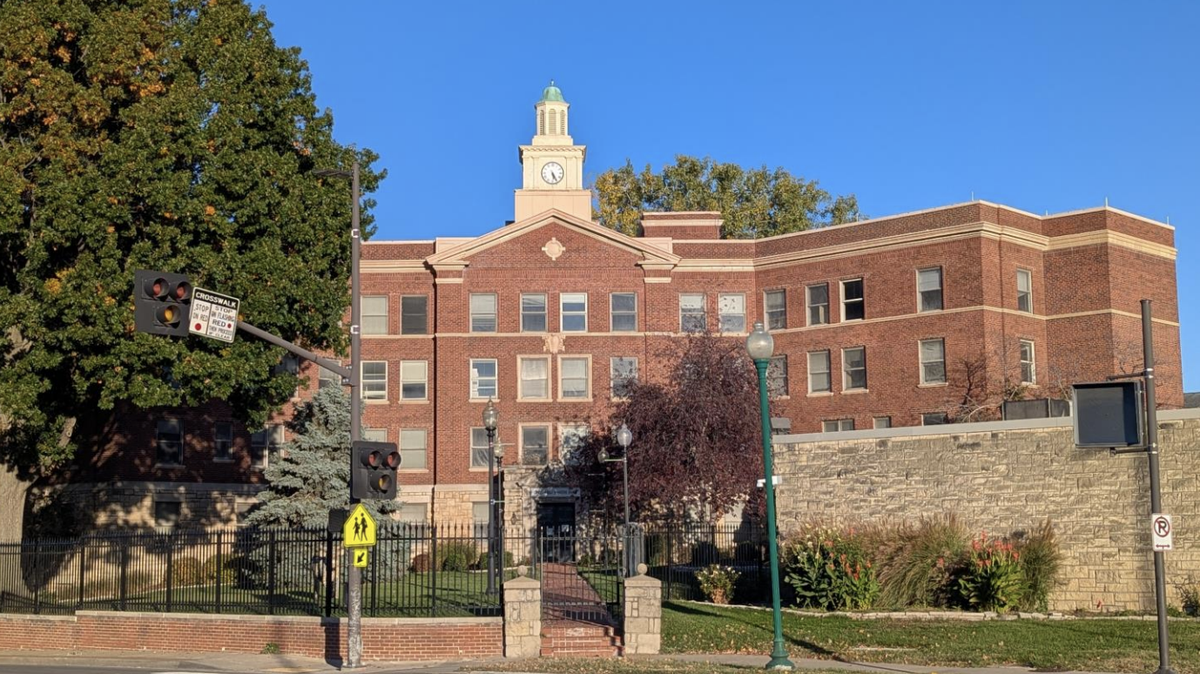
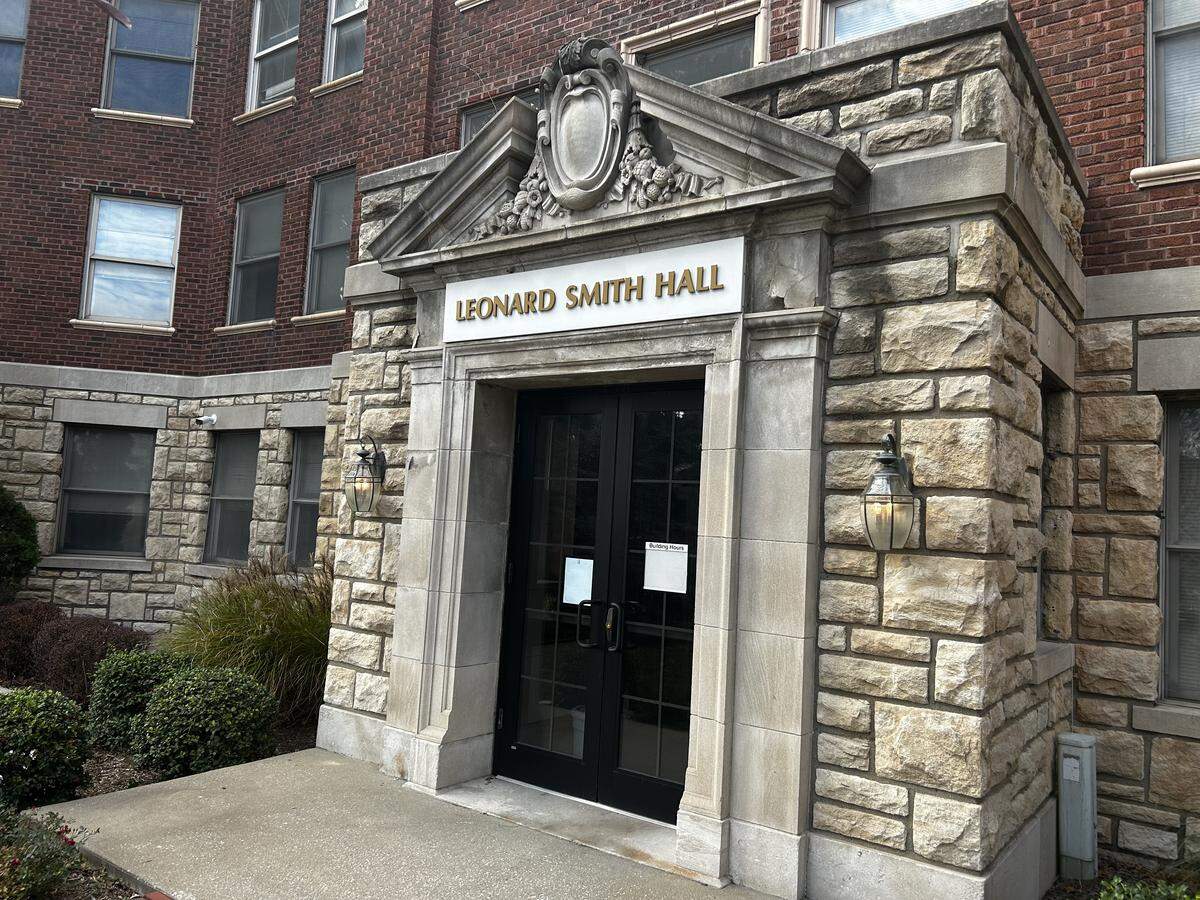
Kansas City University is likely to get its way with Leonard Smith Hall, a 99-year-old building that many neighbors hoped would continue to anchor the western gateway to the historic Northeast.
The City Plan Commission voted Wednesday to deny the historic overlay designation that was Smith Hall’s last real shot at survival, clearing the way for KCU to demolish the 1927 brick nurses’ residence and replace it with a biomedical research facility.
In rejecting the historic designation, the City Plan Commission overrode recommendations from both the Historic Preservation Commission and city staff, who had supported landmark status for Smith Hall. The City Council still has the final say and could theoretically override the CPC in favor of the preservationists, but I don’t like those odds. Smith Hall is almost surely a goner.
How much that matters depends, as these fights often do, on how you feel about old buildings. But in the Northeast, the debate over Smith Hall is also a proxy for something bigger: the increasingly strained relationship between KCU and the neighborhood it calls home.
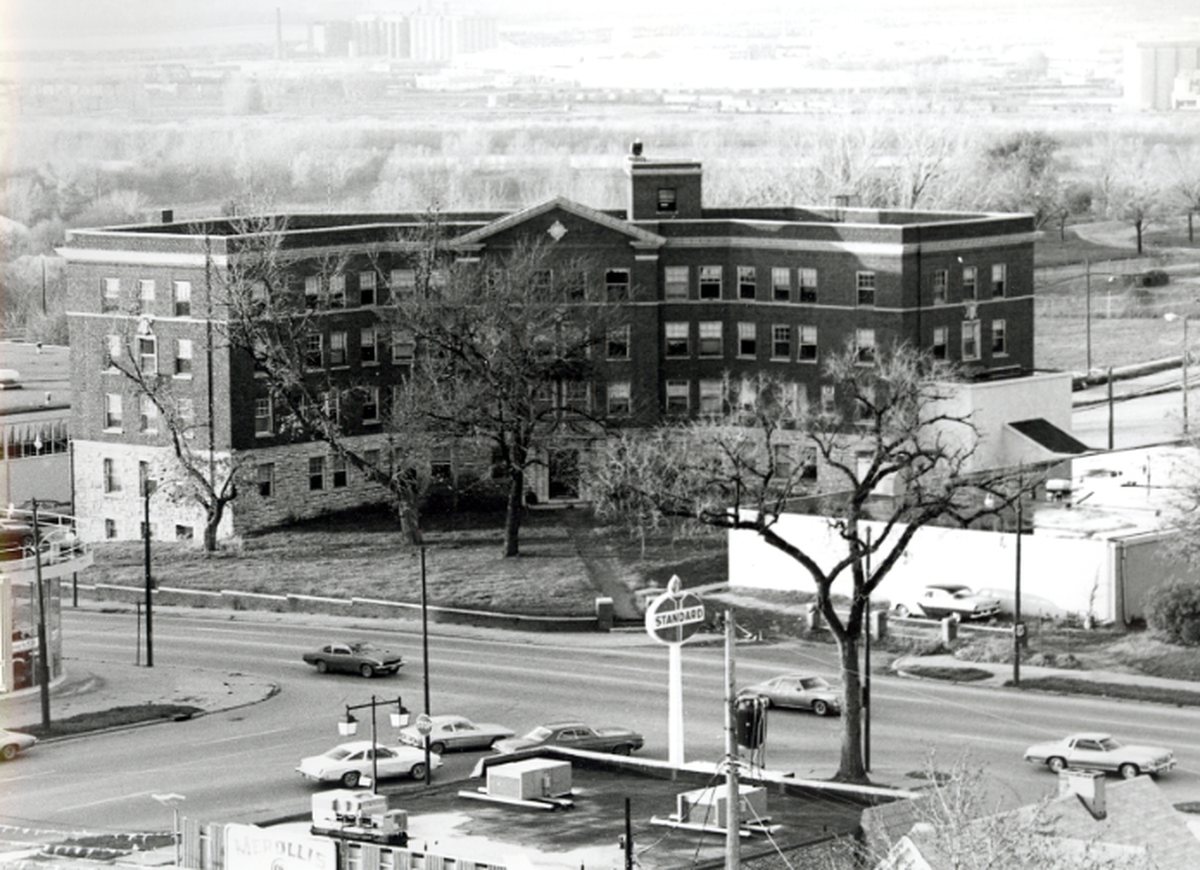
Smith Hall’s historic significance
In a perfect world, Smith Hall would stay standing. But it’s probably not the strongest poster child for historic preservation.
Preservationists argued the building deserves a place on the city’s historic registry for several reasons:
- It is one of only two structures on the KCU campus that date back to the days when Children’s Mercy Hospital operated there.
- It was designed by Hoit, Price and Barnes, the Kansas City firm behind the Power & Light Building and the Kansas City Museum. Its Georgian revival style — featuring a clock tower, brick façade and limestone trim — echoes the historic architecture in the area.
- Also: Its connection to Children’s Mercy, one of the nation’s most respected children’s hospitals founded by two pioneering women physicians, gives it historical weight.
- And because of its prominent location along Independence Avenue, it’s one of the first buildings you see entering the historic Northeast from the west.
Heritage Consulting Group, hired by KCU to assess the building’s significance, rebutted many of those claims. The architecture, the firm found, was not all that exceptional. It was a competent Georgian Revival compromised by replaced windows, added stairwells and other alterations. Even the clock tower preservationists prize wasn’t original; it was salvaged from another building and installed in 1993.
Inside, the building’s dormitory bones — shallow ceilings, narrow floor plates, tight column spacing — make it impractical for modern research or classroom use. KCU said it spent decades trying to make the building work, cycling through prayer rooms, study spaces and physical therapy facilities before reaching the same conclusion each time: The layout simply can’t support the large teaching spaces, research labs and heavy mechanical systems modern medical education demands.
KCU’s broader role in the region also seemed to weigh on the commissioners’ decision. Commissioner Tyler Enders noted that KCU is the leading producer of physicians practicing in Missouri, many of them headed into primary care fields where shortages are severe. The university’s need for new space to support that mission appeared to outweigh the concerns of neighbors worried about the aesthetic character of the neighborhood.
“If there was a way for KCU to use this building for administrative purposes or dormitories, I have confidence that they would do so,” Enders said. “I feel the pain and frustration about seeing a beautiful building no longer be there. But based on the criteria, I don’t think there’s any way I can vote for approval of the historic overlay.”
The commission then voted to reject the historic nomination.
Pendleton Heights versus KCU
But the public comments Wednesday showed that, for many neighbors, Smith Hall was only part of the story.
What surfaced instead was a broader frustration with how Kansas City University has interacted with the neighborhood around it. There is a clear sense among residents that the institution has steadily expanded while walling itself off from the community outside its gates.
Over the past few decades, KCU has demolished at least 16 buildings around its campus as it has grown, replacing several of them with parking lots. Streets that once connected Pendleton Heights to Independence Avenue have been closed off as the campus expanded. The school now sits like a sleek, gated island in a neighborhood that is scrappily rebuilding itself.
Diane Faelber, who lives in the area, said the message KCU sends to students is that the neighborhood outside those gates is something to avoid.
“Those kids are encouraged not to leave the campus,” Faelber said. “Don’t go to PH Coffee. Don’t go over to the delicious pizza place over on Lexington. Don’t venture out of this fenced-in area. The people (at KCU) do their day’s work, and then they scurry on back to the suburbs. They don’t live in our neighborhood.”
John Bordeau with the Pendleton Heights Neighborhood Association said KCU’s changes have negatively reshaped the physical layout of the neighborhood.
“We used to have three ways to get to Pendleton Heights,” he said. “As the university has grown, we’ve lost three different roads that used to lead into Pendleton Heights. In exchange, we got parking lots and parking lots and more parking lots, all surrounded by spiked iron fences.”
Eric Rosell, owner of PH Coffee, said he appreciates the KCU students that come to his business for drinks and to study. He said the neighborhood isn’t trying to block the university’s growth.
“The idea that we’re stopping progress is fake,” Rosell said. “We’re asking that if you want to take down a historic building, could you come talk to your neighbors about what its significance might mean to us. That conversation has not happened with this project at all.”
Faelber cited the Robert Frost poem “Mending Wall,” with its famous line, “Good fences make good neighbors.” In the poem, the line is spoken by a character who believes in boundaries, while the narrator questions whether the wall is needed at all.
“The poem is actually about how fences divide and create isolation,” Faelber said. “Frost intended it to highlight the human tendency to build walls that keep people apart.”
That sentiment captures an undercurrent the vote on Smith Hall didn’t quite resolve.
The historic Northeast is a slowly gentrifying neighborhood. Homes that were abandoned shells a generation ago are being restored by residents who pour their own money, and often their own labor, into them. The neighborhood has texture, diversity and momentum.
It also has a powerful institutional neighbor that, by nearly all accounts, treats communication as an afterthought.
Even though he voted against Smith Hall’s preservation, Enders offered perhaps the sharpest observation of the meeting in his closing remarks, almost as an aside.
“I do think for KCU — what a tremendous resource you have in a community that cares as much as Pendleton Heights,” Enders said. “You don’t have that in most of the city. So it does seem like an opportunity going forward to figure out how to engage, because we don’t get this sort of reaction from almost any other neighborhood.”
Neighbors who care don’t have to be an obstacle. They can be an asset. KCU might try treating them like one.