Tensions flare in KC neighborhood as historic building faces bulldozer
I met up last week with Michael Bushnell outside the scruffy 7-Eleven in the Northeast where Independence and Highland avenues meet. I thought we’d walk across the avenue to Kansas City University’s campus and have a look at Leonard Smith Hall.
But Bushnell shook his head.
“Security’ll escort us off the property very quickly,” he said, pulling on the brim of his 1984 Reagan-Bush campaign hat. “They don’t like outsiders. Even a couple of upstanding individuals like us.”
So we stayed on the corner, talking over backfiring motorcycles and blown-out mufflers, staring at a historic brick building that might not be standing for much longer.
Bushnell knows more about the Northeast than just about anyone living. He edited the fine neighborhood weekly Northeast News for about a quarter century until last year. In that role, he chronicled the rise of KCU as a dominant force in the gradually gentrifying area. The medical school — oldest in Kansas City, and largest in Missouri — owns the most property, has the most money, and serves as a kind of gateway to the Northeast.
But it’s also walled off from it — physically, by security gates, but also, to some, philosophically. Neighbors like Bushnell feel the school treats their historic buildings like they’re disposable.
“It’s a mixed bag with them,” Bushnell said. “It’s great having them here on this end of the avenue — they’re a positive anchor that doesn’t put up with crime in the neighborhood. But they aren’t transparent. Anytime they want to do something that imposes on the neighborhood, it’s like, ‘Here’s what we’re doing. To hell if you don’t like it, thank you very much.’”
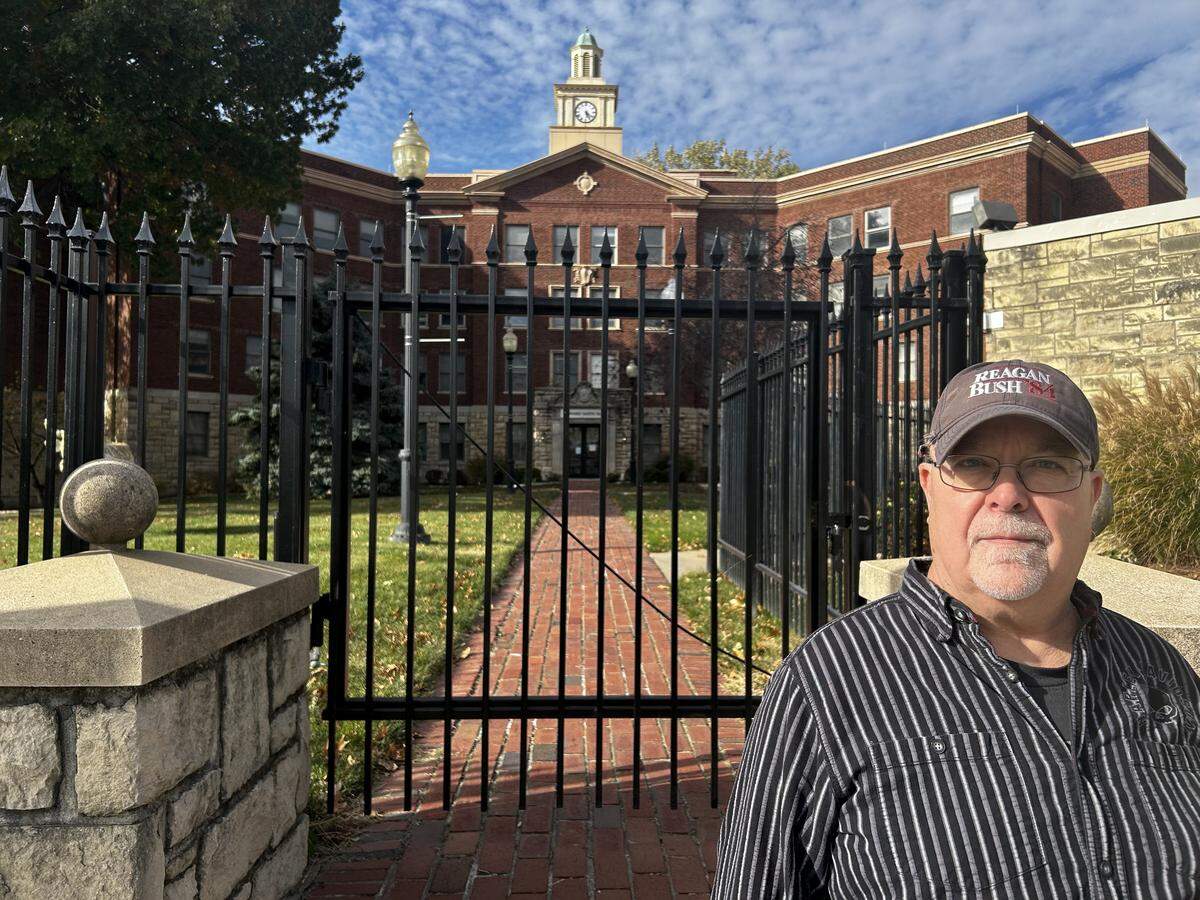
Smith Hall is the latest battleground in that ongoing tension.
The building, constructed in 1927, is one of two remaining structures on KCU campus that dates back to the days when Children’s Mercy Hospital operated on the grounds. There’s the original hospital, which the school now uses as an administrative building, and then there’s Smith Hall, which was a nurses’ residence later converted into classrooms and study rooms by KCU.
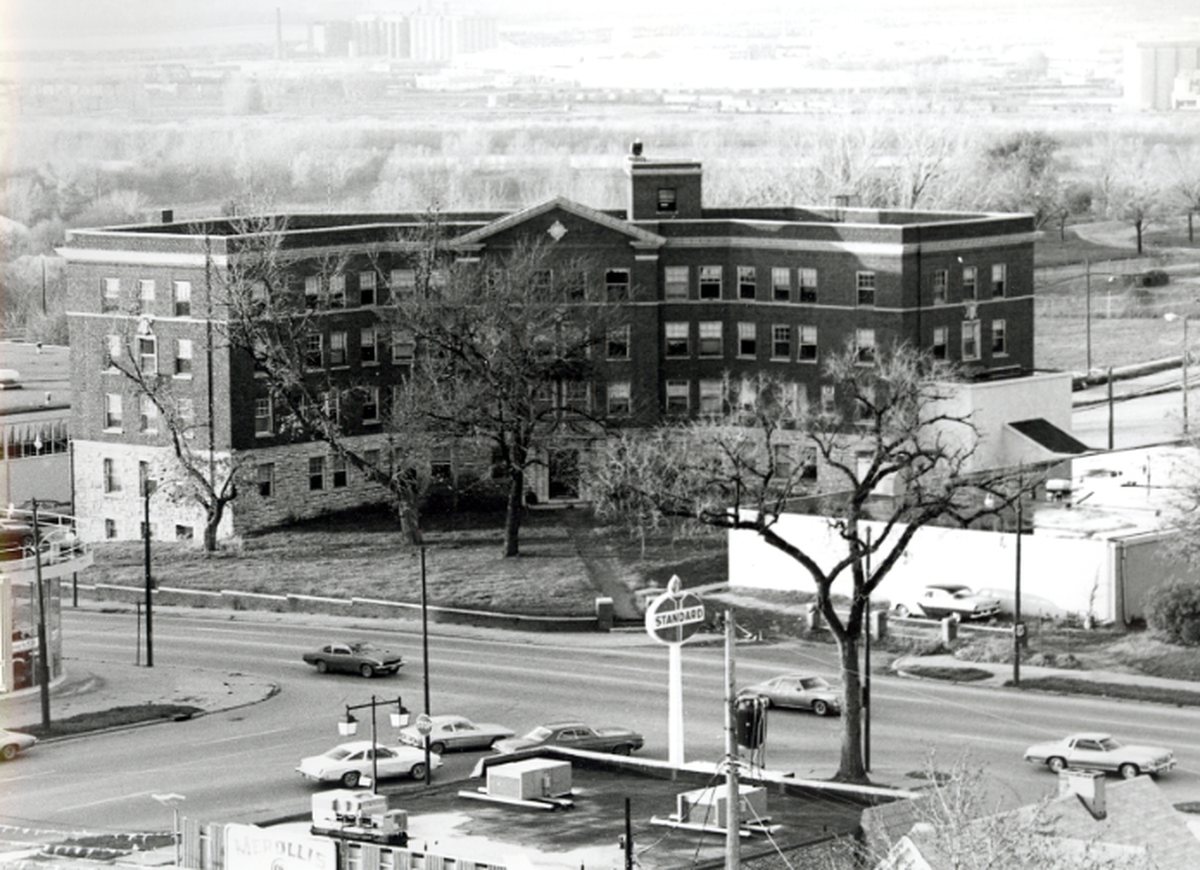
Bushnell and others argue that Smith Hall’s historical connection to one of the nation’s most prestigious children’s hospitals and its distinctive architecture — the clock tower on top, the limestone-trimmed facade, the wedge-shaped wings — make it a building worth saving.
KCU says time’s erosions have left Smith Hall too worn for modern use. It intends to bulldoze the building and replace it with a “state-of-the-art facility dedicated to biomedical research and population health,” KCU spokesperson Elizabeth Alex told me, that “will provide cutting-edge facilities for scientists and students researching causes and cures for some of the most devastating diseases of our time.”
Alex said KCU made the decision after an exhaustive study where architects and engineers explored the possibility of renovating the building, noting that KCU spent $20 million restoring the original hospital back in 2015.
But it was not meant to be.
“Due to the original design limitations of Smith Hall, environmental hazards and aging, it is, unfortunately, not feasible to renovate or retain that structure.”
Preservationists say this is part of a larger pattern whereby KCU acquires historic properties, lets them deteriorate, and eventually demolishes them to make way for new construction.
The most glaring example, they say, came in 2017 with Colonial Court, a five-building, 30-unit complex of three-story apartments just east of the original hospital building. KCU bought the complex, built in 1916, and promptly leveled it. The area is now a parking lot.
KCU also purchased and tore down three other homes on the east end of its campus around that time. All the structures dated back to the early 1900s; one was built in 1886.
“Those demolitions robbed the city of history and of needed affordable housing, and KCU has not returned those lots to tax-producing use,” said Jan Bentley, a preservationist who’s been involved in the fight to save Smith Hall.
Kent Dicus, who lives in a restored Queen Anne in Pendleton Heights and chairs the Northeast KC Historical Society, noted that KCU has also closed off Woodland Avenue north of Independence Avenue.
“It was a major artery in the neighborhood,” Dicus said, “and they’ve broken that connection.”
Dicus, Bentley, and others have proposed a compromise with KCU: keep the facade, build behind it. Dicus noted that Missouri’s Jesse Hall did exactly that — retained and repurposed the classic exterior, updated the interior.
“If I go back and don’t recognize where I had classes, I don’t have the same connection to the school,” Dicus said. “I would think KCU’s alumni would feel the same way.”
Alex said the university intends to preserve “items of historical significance” from Smith Hall, including “the clock tower and important aspects of the facade.”
But the preservationists aren’t content to take the school’s word for it. After learning of KCU’s plans, they scrambled to nominate Smith Hall for the city’s historic registry. They got the application in with a day to spare earlier this month. As a result, KCU now can’t get its required demolition permits until May.
The big decision on Smith Hall is expected next month, when the Historic Preservation Commission takes up the nomination at its Dec. 19 meeting. It will then make a recommendation to the full city council, but it’s expected the council will rubber stamp whatever the commission recommends.
“We think we have a viable case,” Bushnell said. “Make it a museum of osteopathy. Do some kind of adaptive reuse. We just want a transparent and honest conversation. The neighborhood deserves that.”
This story was originally published November 24, 2025 at 6:00 AM.