New signs Costco’s business center is coming. Here’s what midtown KC loses | Opinion
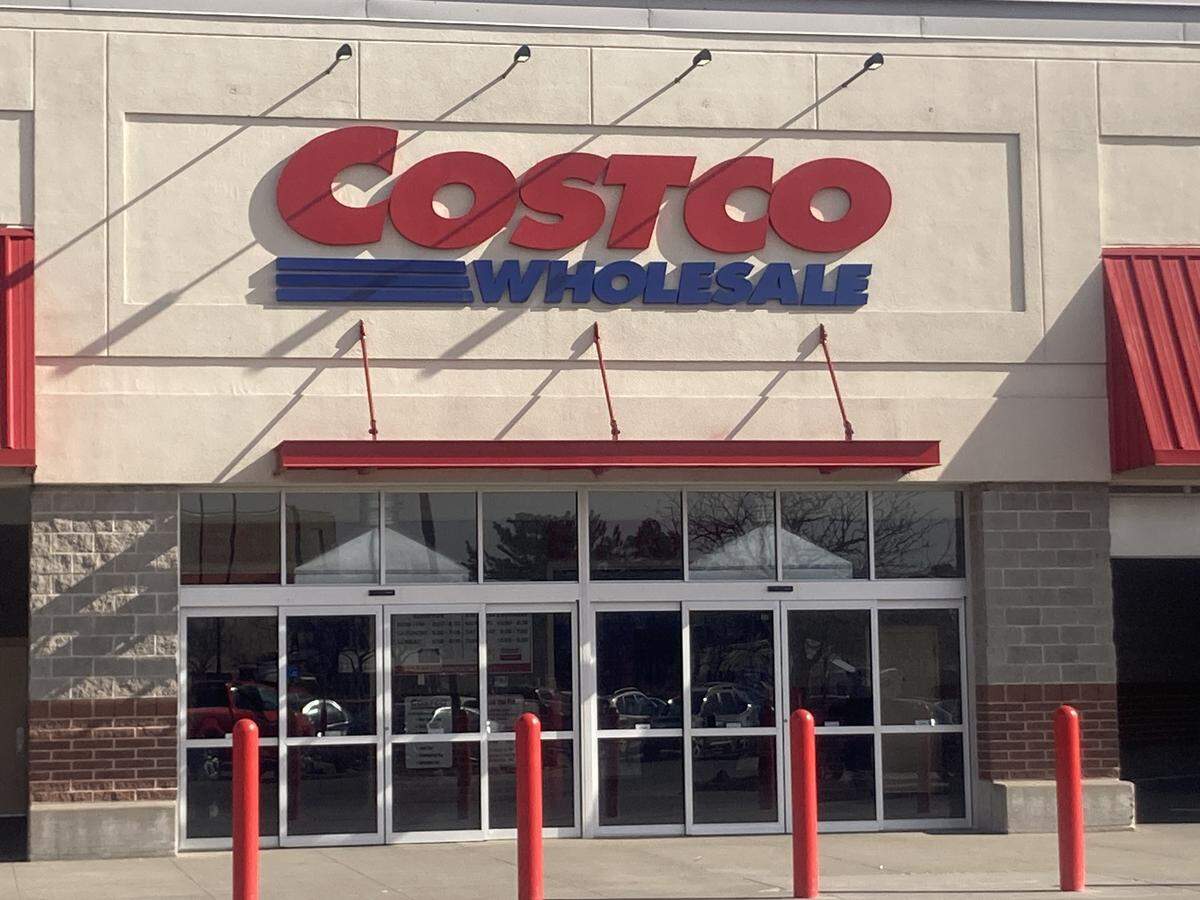
The midtown Costco we know and love is going away.
I know this is because my optometrist told me.
Dr. Jing Ye keeps a small office in the optical department inside the Costco at 241 Linwood Blvd. I found her after years of bouncing between optometrists who always seemed to think a routine eye exam was the opening bid in a much more expensive negotiation. With Dr. Ye, I book an appointment, show up a few days later and pay a flat $94 — no insurance, no upselling. Thirty minutes later, I’m back in the parking lot with an updated prescription and the rest of my afternoon intact. Beautiful.
I stopped by last week for my annual exam and learned it will be my last there.
“They’ve told us we have to be cleared out by the end of October,” Dr. Ye said.
Her understanding, she added, is that the store will then close for three to four months starting in November while it is renovated into a Costco Business Center.
Rumors have circulated for months that Costco intends to convert its midtown store into a kind of Costco cousin — a pared-down, bulk-only format aimed at restaurants and retailers rather than consumers. It would mean the loss of the optical department, the pharmacy, the food court, the bakery, the clothing section, the tire center and, most devastating of all, the $5 rotisserie chickens.
City Hall, meanwhile, has been trying to decode what Costco won’t publicly say. In January, the City Council passed a resolution directing the city manager to engage the company about reconsidering or preserving the store “in substantial form.”
Also in January, Costco submitted plans showing an expanded and reoriented loading dock and increased outdoor storage — physical changes consistent with a shift away from a traditional retail store. Fourth District councilmembers Eric Bunch and Crispin Rea raised concerns about those preliminary plans, and just last week Mayor Quinton Lucas said talks with the company were ongoing and that he was “encouraged” by the conversation.
It’s comforting, in a general kind of way, to know the city is trying to do something about this. But if people who operate inside the store are being told to clear out by the end of October, that suggests the decision has already been made.
And Dr. Ye isn’t the only one who’s received a move-out date. After my eye exam, I stopped by the pharmacy and told them I was considering transferring my prescriptions there. Probably not a good idea, I was told: They’re closing the pharmacy in October. For good measure, I stopped by the tire center on my way out. Same story.
The Glover Plan
On Monday, I called the man so closely associated with the midtown Costco that the original redevelopment plan still bears his name.
Jim Glover served on the City Council across three separate terms, from the early 1990s through 2015. In 1992, he floated a somewhat radical idea: Bring suburban-style big-box retail into the urban core along Linwood Boulevard between Gillham Road and Main Street.
“The area was totally blighted,” Glover said. “A lot of the housing had fallen down, there had been a bunch of fires, and the crime was so bad that I was told firefighters wouldn’t go in there without a police escort.”
The city acquired about 30 acres of property, demolished what was left, remediated the area of environmental problems and prepared the site for commercial activity. Glover’s proposal — later dubbed the Glover Plan — relied on tax-increment financing, but with an added wrinkle: A portion of the tax revenue generated at the site would be directed into a housing program to renovate and stabilize the surrounding neighborhoods.
But Midtown Marketplace, as the development was named, struggled for years to find tenants. Costco, in particular, was skeptical.
“Their demographic analysis didn’t show that they’d be successful there,” Glover said. “We went after them. They didn’t come to us. And they said no to us three times before they said yes.”
Critical to that eventual decision was the housing fund.
“That was a key piece of it,” Glover said. “If you fix up the housing in the area around a development, it makes the development a lot more stable. People move back into the area, and people who maybe wouldn’t have come into the area before now feel comfortable shopping there. And that makes businesses more open to taking a chance.”
In 2000, the city finally struck a deal to bring Costco and Home Depot to the site. Skepticism persisted until the doors opened in 2001. Then the crowds started rolling in. The big-box design wasn’t going to win any architecture awards, but one-stop shopping proved to be a hit in midtown.
Over time, the tax revenues generated there did help renovate nearby housing stock. Take a drive along Armour Boulevard between Main and Troost, Glover said, where restored apartment buildings line the blocks just south of the center.
“Costco has been a great boon to midtown for 25 years,” Glover said. “It has provided groceries, clothes, hearing aids, eyeglasses — so many items and services we really didn’t have in the area before. And you can’t leave out the fact that it employs a lot of people in the core city with decent wages and full benefits. Plus, the location meant they can get there by the bus, so you don’t have to have a car. That was critically important, too.”
I asked Glover what he would do vis-a-vis Costco if he were still on the council. He laughed and said he wasn’t going to answer that question. Then he did, a little.
“It may be too late, but the best thing to do in economic development situation like this is to ask them if there’s anything the city can do to get them to keep the store as it is,” Glover said. “Also, I probably wouldn’t negotiate it in the press. These large retailers don’t like seeing their names in the paper.” (Respectfully, I must disagree with former Councilman Glover on that last point, as my line of work depends on a different theory of how information should move.)
Glover, who mentioned on our call that he was currently wearing glasses purchased at the midtown Costco, emphasized one final point. It’s one I’ve been thinking about too.
“I don’t know if this is true for everybody, but I see somebody I know every single time I’m in that Costco,” Glover said. “It’s really a community space, a gathering place almost.”
If this business center thing happens — and it sure seems like a runaway train at this point — I’ll technically still be able to flash my member card at the door and buy some paper towels or pancake mix. But it won’t be the same kind of place. A business center isn’t where families go to pick up dinner, prescriptions and back-to-school basics. I’ll miss the familiar faces in the aisles more than the loss-leader rotisserie chickens.
This story was originally published March 3, 2026 at 11:01 AM.