
What taxpayers deserve as officials steamroll us on Royals, Chiefs stadiums | Opinion
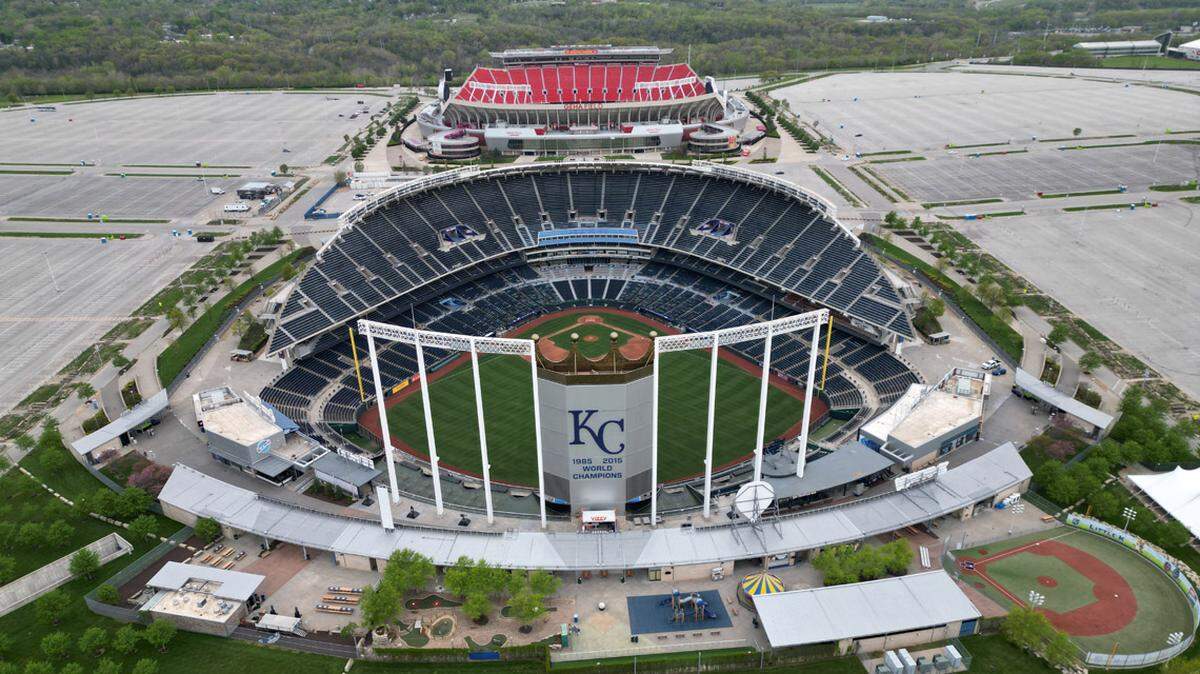
The Missouri General Assembly has approved a framework for pouring hundreds of millions of tax dollars into stadiums for the Kansas City Royals and the Kansas City Chiefs (and, potentially, in other cities in the state). The measure is designed to match a similar funding blueprint in Kansas that is set to expire at the end of the month.
Some here will see passage of the Missouri stadium bill as a cause for celebration. It is not.
There is still too much we do not know. We don’t know where either team wants to play. We don’t know how much either team will contribute to the building fund. We don’t know how much public money will be needed for ongoing maintenance and repairs.
We do know local taxpayers will be asked to supplement the building budget if the teams stay in Missouri. How big will that subsidy be? How will it be paid? For how long? Who knows?
It isn’t clear whether voters in Kansas City will even get a chance to weigh in on a Royals stadium request. Mayor Quinton Lucas has suggested a subsidy is possible without a vote, a shameful position for a local politician to take.
That isn’t the only problem with the Missouri stadium legislation, which was cobbled together behind closed doors, in the closing hours of the legislative season. It includes a Rube Goldberg-like scheme that might provide some property tax relief in some counties.
We support property tax reform. We think it should be in a separate bill.
Non-sports needs unmet
Too often, here and around the country, public tax dollars are spent on highly profitable teams and professional sports leagues, while important non-sports needs remain unmet.
It’s deeply regrettable. It’s also, sadly, the world in which we live.
Yes, the teams provide a value that can’t be measured precisely in dollars and cents. They unite our community in a divisive time. They can be fun to watch, and talk about. For some, they provide our region with an identity.
But that value comes at a massive cost. And taxpayers, even those who can’t pay the cost of a ticket, have supported the teams in good faith for decades, shelling out hundreds of millions of dollars to build and maintain the Truman Sports Complex, where the teams play. They have done so largely without complaint.
That’s why it’s appalling — and politically dangerous — that the teams and local politicians have treated those taxpayers so shabbily over the past two years, as the stadium story has unfolded. We cannot recall a major local decision so marked by obfuscation, secrecy and bad faith.
Do you doubt it? The Royals began this discussion by promising to improve downtown, and enhance underserved neighborhoods. They may have abandoned that goal. We don’t know why.
We do know the teams have brilliantly played Missouri against Kansas for the past year. That strategy has undoubtedly raised the public costs of these projects.
Yet the Kansas plan is also shrouded in mystery: What are the boundaries, for example, of the district that would provide STAR bond revenue for the private facilities? The public doesn’t know.
The state is negotiating with the teams in secret. It’s likely the terms won’t be known until after a deal is signed, which is an affront to every Kansas taxpayer — no matter how much we might like to see the state take part in local sports subsidies.
We regret these concerns, and others. But we are firmly convinced that public support for these projects requires decisions made in the public’s interest, not just the teams’ or the politicians’.
With that in mind, we make these recommendations for both clubs — and implore them to make up their minds before the end of the month.
Support for Chiefs
The Chiefs should stay at the Truman Sports Complex, and use the Missouri stadium bill to seek subsidies for improvements there.
Renovations at Arrowhead Stadium is clearly the cheapest alternative, and the best. The team has said rebuilding the facility would cost roughly $1.15 billion, which is less than half the estimated cost of a new football stadium.
The team would need support from Jackson County taxpayers (or, potentially, Kansas City taxpayers) before qualifying for state aid for renovations. We think taxpayer support for a Chiefs-only renovation is an achievable goal, particularly if the team comes up with at least 33% of the cost of the renovations — and if it agrees to a new lease agreement that significantly extends their time at the facility.
Arrowhead needs improvements, although it seems to have miraculously avoided the “concrete cancer” that supposedly plagues Kauffman Stadium across the street. It remains a good place to watch a football game or a concert. Saving the stadium should be the priority.
There are vague promises of additional events at a new stadium, with a dome, in Kansas. We’re highly skeptical that those promises would be fulfilled at a stadium located more than 15 miles from downtown Kansas City. Even if such events were added to the calendar, they would not justify the cost of $3 billion — which would have to include a major contribution from the team of $1 billion or more.
The Chiefs could build a new domed stadium in Missouri, of course. There has not been a significant public discussion of such an option.
Royals stadium location
There is increasing speculation the Royals are considering a move to south Overland Park, near the old Sprint campus at 119th Street and Nall Avenue. It’s hard to envision a worse choice.
The site is across the street from a hospital, which would face inevitable traffic problems on game days. There are residences and businesses nearby. Streets would have to be widened and improved.
More important, a Johnson County stadium flies in the face of the team’s stated reason for relocation, which was — once — improvements to downtown Kansas City.
We still think the East Village, northeast of City Hall, is the best place for a revitalization project that includes a stadium. We understand, though, that the team may prefer the Washington Square Park site, near Crown Center and Union Station.
That site has problems, including its size and potential disruptive effect. It does have some advantages, including nearby hotels and public transit. As a fallback site, Washington Square is a good option.
We don’t support a North Kansas City stadium for the baseball team. Among other things, the cost to Clay County taxpayers would be enormous. That location would also demand transportation improvements, including better bridge access to the area.
A stadium in the heart of Kansas City would force serious negotiations with the city, and taxpayer assistance, which should include a vote. Getting it won’t be easy. It would require a team contribution and a long-term lease. But it makes the most sense for the community if, and only if, the Royals remain committed to leaving Kauffman Stadium.
We understand these are difficult decisions for both teams. But they’re tough for fans, too, and for locals not interested in sports who will have to pay part of the price. There is an argument for supporting at least one stadium in Kansas, so that taxpayers there get a taste of what Missouri has faced for decades.
Kansas facilities would also be privately owned, presumably, which benefits taxpayers.
In the end, though, a Royals stadium in the heart of the city and a refurbished Arrowhead seem the best, least costly and easiest alternative in this debate. We hope the teams, and the local political community, endorse that outcome in the days ahead.