Kansas will vote on electing state Supreme Court. It’s an opening for abortion opponents
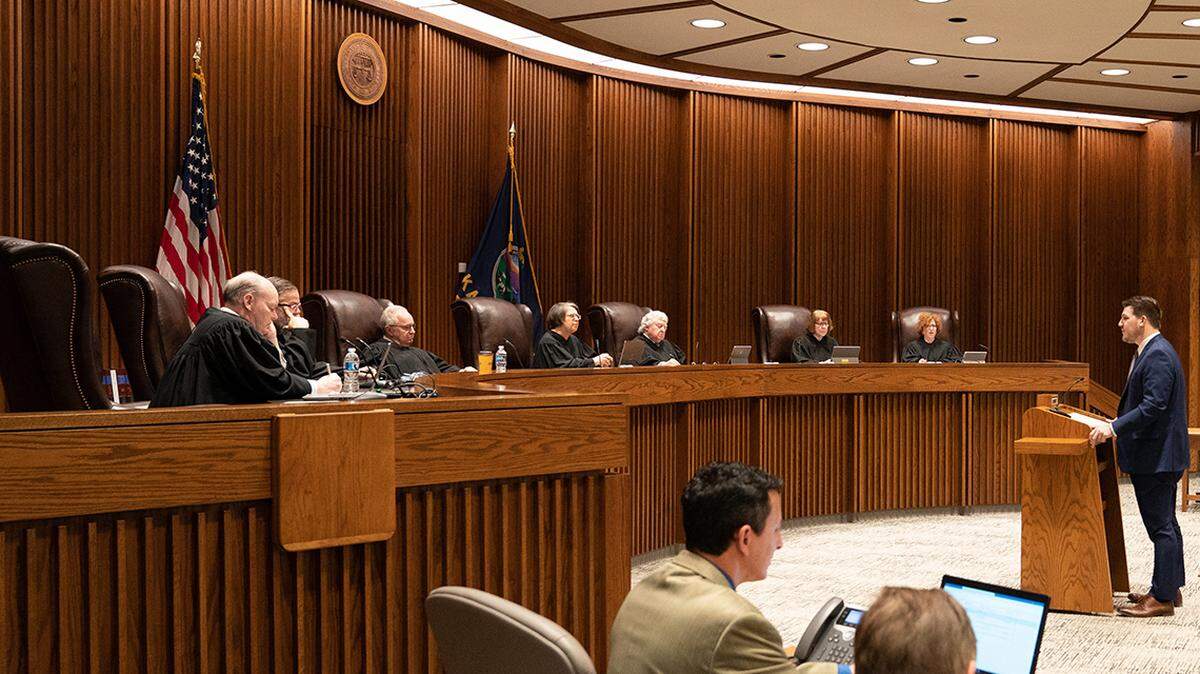
Kansas voters will decide next year whether state Supreme Court justices should be elected, a monumental choice as Republican lawmakers try to bring to heel a court that’s protected abortion access.
The Kansas Legislature on Wednesday placed a question on the August 2026 ballot asking voters if they want to directly elect the high court’s seven justices.
If voters approve a state constitutional amendment to hold elections, the decision would carry profound consequences for the Kansas judiciary and risk politicizing the courts. Other states with elected supreme courts have seen judicial contests turn into partisan, money-fueled brawls that rival races for governor and other offices.
Supreme Court elections would offer conservatives a path to assembling a new, anti-abortion majority on the court after its landmark 2019 decision that the state constitution protects the right to end a pregnancy. Kansas voters in 2022 rejected a proposal that would have overturned that decision, leaving lawmakers with few tools to restrict abortion.
The current amendment would allow justices to make political contributions, take part in political campaigns and hold office in political parties. In theory, a justice could simultaneously lead the state Republican or Democratic party while sitting on the court.
“Today marks an historic turning point in Kansas. Voters will now get to decide whether to reclaim the right to vote for justices, which they enjoyed from statehood until 1958,” Republican Attorney General Kris Kobach said in a statement after the resolution’s final passage Wednesday.
On Wednesday afternoon, Democratic Gov. Laura Kelly told reporters that direct election of justices would be “a mistake.” She chided GOP lawmakers for putting the proposed constitutional amendment on a primary ballot instead of scheduling it for a general election, when more voters participate.
“I will remind Kansans that the Legislature tried to pull a similar maneuver by putting a very serious ballot issue on the primary ballot. They did that in 2022 with the abortion amendment,” Kelly said. “Kansans turned out and I hope that Kansans will recognize that this whole election of Supreme Court justices is starting down the path again to ban exactly what Kansans said they didn’t want banned in 2022.”
Republicans have long viewed the Kansas Supreme Court as too liberal, but past efforts to influence its ideological direction have proven fruitless. While justices stand for retention elections on regular cycles, campaigns by anti-abortion activists and death penalty supporters to oust the justices have fallen flat over the past two decades.
Past legislation to move Kansas to a “federal model” where the governor nominates justices and the state Senate confirms has also failed to advance, though Republicans successfully moved the state’s appeals court to that process several years ago.
The amendment, passed by the House in a 84-40 on Wednesday and by the Senate 27-13 earlier this month, goes far beyond past GOP efforts to curb the judiciary. If approved, Kansas would likely join eight other states in holding partisan elections for justices.
Democrats savaged the proposal, warning electing justices would weaken judicial independence. Expensive, high-stakes contests would leave the high court vulnerable to outside influence from wealthy interests, they said.
“It’s not about justice. It’s about selling our Supreme Court to the highest bidder,” Senate Minority Leader Dinah Sykes, a Lenexa Democrat, said. “No Kansan should be forced to buy the protection of our highest court.”
“Once we put a for sale sign on the Kansas Supreme Court, we will never get justice back,” Sykes said. “Out-of-state interests and national political organizations will simply buy the results that they want and need.”
GOP supporters of the amendment cast it as an effort to hand power back to voters.
“I’m a little bit taken aback by the fear of the voters,” Senate President Ty Masterson, an Andover Republican widely expected to run for governor, told his colleagues during a floor speech on the measure.
“Right? I mean, I just don’t understand. It feels like it’s being proposed that we somehow have a duty to protect people against their own choices, as if they’re too dumb to make them.”
Electing justices?
For over half a century, the governor has chosen members of the court from a list of finalists curated by a nine-member nominating commission. The current system, instituted after a major political scandal in the 1950s, has over time shielded the court from partisan politics.
On the nominating commission, each of the state’s four congressional districts is represented by one lawyer and one non-lawyer. The lawyers are elected by other lawyers within their district, while the governor appoints the non-lawyer members. A chairperson is elected by lawyers statewide.
The amendment would abolish the commission. The measure doesn’t require partisan elections, but would allow the Legislature to set the rules of the elections. Even if lawmakers make the contests nominally nonpartisan, the wide leeway for political activity by justice candidates could effectively lead to Republican vs. Democratic races in all but name.
But Republicans counter that the justices have grown too removed from the public. Only one member of the current court, Justice Caleb Stegall, was appointed by a conservative governor. Gov. Kelly has appointed three of the court’s seven members because of retirements from the bench.
House Speaker Dan Hawkins, a Wichita Republican, wouldn’t say last week whether he would want directly-elected justices to reconsider abortion rights in the state constitution. “Honestly, that’s up to them, whether they do that, how that ends up working,” he said.
But the GOP speaker acknowledged that reproductive issues could take center stage in future Supreme Court elections if voters choose that method of selection.
“(Judge candidates) go out and campaign based on the things that they can campaign on. They have a judicial cannon that they have to abide by when they’re working in their elections,” Hawkins said. “That same thing will apply to Supreme Court justices.”
As the amendment made its way through the Legislature, Republican lawmakers repeatedly asserted the U.S. Supreme Court had reversed rulings of the Kansas Supreme Court at a higher rate than any other state supreme court. But Democrats and other opponents of the measure have questioned the talking point, which appears to have originated with Kobach.
Kobach’s office conducted an analysis of Kansas cases that have reached the U.S. Supreme Court over the last 20 years and found seven rulings were overturned while only one was affirmed.
However, Kobach acknowledged to The Star that his office did not perform an analysis of the 49 other state supreme courts to determine whether Kansas’ overturn rate of 87.5% in recent decades was in fact the highest. “We got that number from — I can’t remember which source,” Kobach said.
And in any case, Mike Swenson, a representative for the Kansas Trial Lawyers Association, said the attorney general’s metric is faulty because the nation’s high court only grants review for lower court rulings it’s likely to reverse.
Decision ‘too important’
Twenty-one states currently elect their Supreme Court justices. Kansas is one of the 14 states with a merit selection system, first adopted by Missouri in 1940.
However, as Republicans are quick to point out, Kansas’ is the only nominating commission where attorneys make up a majority of members — five of the nine people who interview prospective justices and supply the governor with a list of three names to choose from.
“This is too important to leave it to a handful of elite professionals,” said Rep. Bob Lewis, a Garden City Republican and attorney, during a House Judiciary Committee hearing Monday. “This group of people, of which I’m a member, probably, I think polls would show (lawyers) don’t share the same values as Kansans at large.”
But Rep. Lindsay Vaughn, an Overland Park Democrat, pushed back, contending that the judiciary “has never been intended to be a coequal political branch.”
“It is a coequal impartial branch of the government that provides an important check and balance on the other two branches,” Vaughn said.
Merit-based selection ensures that justices are chosen based on their legal experience and judicial temperament rather than their political allegiance, she said.
Rep. Mark Schreiber, an Emporia Republican, was one of four GOP lawmaker to oppose placing the constitutional amendment on the ballot. Earlier this week, he told his fellow judiciary committee members about an advertisement circulating with a photo illustrating of Schreiber attached to puppet strings and being manipulated by the Kansas Trial Lawyers Association.
“I think it’s an example, even before a committee vote for something like this to come out, the type of electioneering that will occur when the Supreme Court justices are up for election,” Schreiber said. “We’ve all seen it in our own elections — postcards with strange pictures and sayings about what we’ve done or not done.
“I think that kind of material will influence the vote to the point where it’s not the best system compared to what we have now.”
This story was originally published March 19, 2025 at 12:51 PM.