
Missouri Supreme Court, look at new evidence in Nathan Hawkins’ murder conviction | Opinion
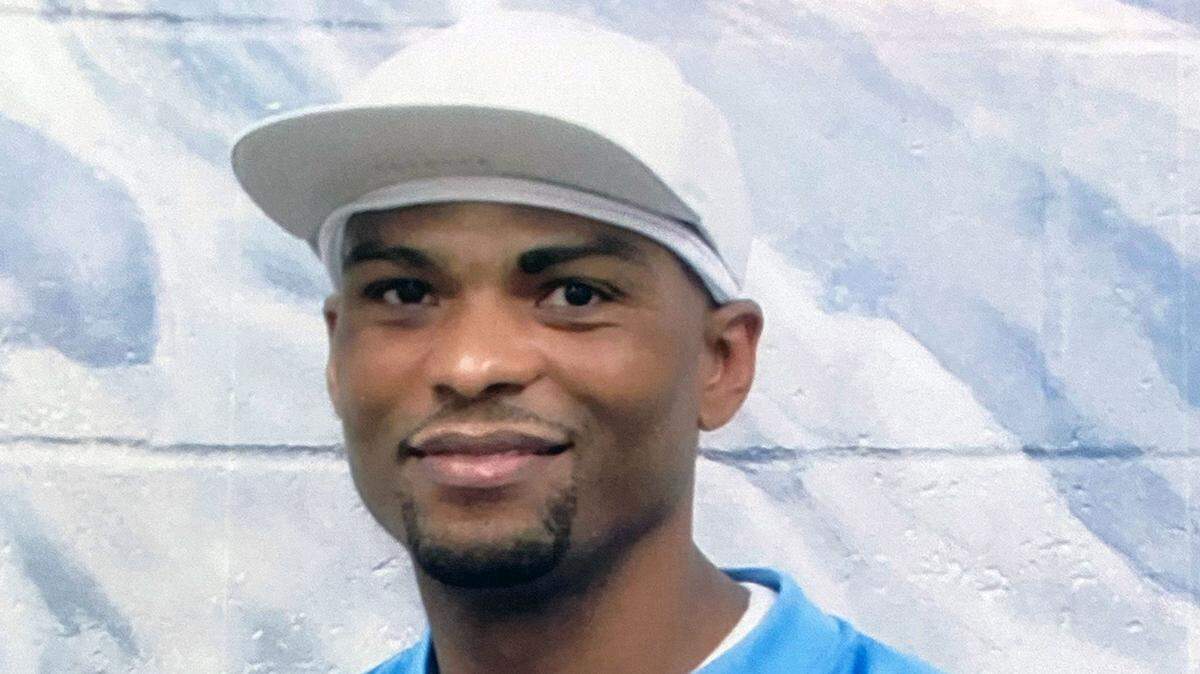
We don’t know if Nathan Hawkins is innocent of the first-degree murder conviction that remanded the Missouri man to prison for life without the possibility of parole. His culpability in the fatal shooting of Eric Cooper 25 years ago is for the courts to decide.
Hawkins’ attorney Kevin Schriener recently filed a legal motion requesting the Missouri Supreme Court to appoint a special master to weigh new evidence in Hawkins’ long-standing claims of innocence.
The state’s highest court has the authority to appoint the special master to hear testimony and pore over information that was not available during Hawkins’ initial trial in Monroe County in 1999. It should.
After hearing arguments from defense attorneys and the state, the appointee would rule on the merits of new evidence introduced in the case and offer recommendations for post-conviction relief, if any at all.
“This is a hard road to go,” Schriener said. “It’s difficult to get relief.”
In the name of justice, we encourage the Missouri Supreme Court to consider:
- In a 2019 sworn affidavit, Donald “Uncle Mo” Smith, the state’s only eyewitness to the shooting, contradicted his trial testimony, and that could absolve Hawkins of wrongdoing.
- Forensic analysis questions the validity of the state’s argument that Hawkins ambushed an unsuspecting Cooper as he sat helplessly in a vehicle.
If Hawkins’ claims of constitutional error were substantiated by the Missouri Supreme Court, the body could declare manifest injustice and order Hawkins’ immediate release from prison, according to Schriener. That scenario is highly unlikely, legal experts told us.
In this case, a fair and impartial evidentiary hearing in front of a judge appointed by the state Supreme Court is the best recourse.
Eyewitness testimony error-prone, studies show
Last year, we wrote about Hawkins, an inmate at Crossroads Correctional Center in Cameron. He was sentenced to life in prison for killing Cooper, of Monroe County. For the last 25 years, he has sat behind bars. From the time he was arrested, Hawkins has maintained he fatally shot Cooper in self-defense.
We implored the Missouri Court of Appeals, Western District to hear fuller testimony of the lone witness, as sworn to in the 2019 affidavit. In October, and without explanation, the state’s appellate court declined to hear the case.
Credible claims of innocence deserve to be heard in open court, we said then. We strongly believed evidence discovered after Hawkins’ conviction for first-degree murder and armed criminal action should be enough to warrant an evidentiary hearing.
New testimony from Smith and new blood spatter analysis could support Hawkins’ claim that he fired one round at Cooper, and did so out of fear for his life.
After closely examining recent legal filings in this case, we stand by our initial assessment: Hawkins has legal grounds for post-conviction relief, as Schriener argues again in court documents. The attorney isn’t wrong.
But is the Missouri Supreme Court willing to right this possible injustice?
Smith was the only eyewitness to the shooting. Thanks in large part to his testimony, a Monroe County jury rejected Hawkins’ claims of self-defense and found him guilty. He has fought for his freedom since.
It’s worth repeating: Eyewitness testimony is error-prone and often flawed, studies have shown. Perjury and false accusations — found in 57% of exoneration cases, according to the National Registry of Exonerations — often send innocent folks to prison.
For years, Missouri lawmakers have failed to protect innocent people from faulty eyewitness testimony. In Illinois, a prison review board examines claims of wrongful convictions. Missouri should consider a similar setup.
And Smith’s unwillingness to come forward sooner with what he witnessed, and his role in the aftermath of the shooting, are important to note.
After Cooper was shot, Smith hid a gun belonging to Cooper and later sold it, Schriener claimed in legal documents.
Forensic evidence paints different picture of crime scene
Retractions from witnesses don’t guarantee a defendant a new trial, defense attorneys told us. But forensic evidence not available at trial counters the state’s long-held theory that Hawkins executed Cooper.
In court documents, Monroe County prosecutors described the shooting as a hit. It wasn’t, Hawkins contends. He shot out of fear for his life, he said.
At trial, Hawkins testified that he fired one shot at Cooper from the front porch of a trailer park home as Cooper sat in the passenger seat of a vehicle driven by Smith. The weapon was capable of firing more rounds, Hawkins told us during a phone conversation from Crossroads Correctional Center.
He was 19 and scared, he said. On occasions prior to the shooting, Cooper had threatened him, he testified in court.
At trial, Smith, the only eyewitness, claimed he was unaware of what the victim was doing immediately before he was shot. But the sworn affidavit Smith signed in 2019 provides the missing pieces that verify the only difference that has ever been in question: the position Cooper was in as he was shot.
In the affidavit, Smith — who has since died — included a potentially important detail omitted during testimony.
“The victim Eric Cooper was turned around in the seat with his body angled towards the back seat when he was shot by Nathan Hawkins,” he wrote. “When the victim was shot he slumped over leaning sideways.”
Two years prior, a forensic scientist hired by Hawkins concluded it was possible Cooper was in the passenger seat turned toward the back seat when he was shot. The analysis refutes the state’s theory that Cooper sat face forward in Smith’s vehicle. There was no ambush, Hawkins says.
Claims of self-defense unsuccessful after conviction
In legalese, one theory supports lawful self-defense while the other supports murder. The state Supreme Court must appoint a neutral arbiter to settle the matter.
Cooper died from a bullet wound to the head. Before he was shot, Cooper made aggressive hand gestures — gang signals, court records state — at Hawkins. Cooper then reached into the back seat of the vehicle Smith drove as if he was retrieving a weapon, Hawkins testified.
Hawkins’ actions, he claims, were lawful.
“How is that not self-defense?” he argued. It is a legitimate question the Missouri Supreme Court must seek to answer.
In Missouri, no inmate claiming self-defense as innocence has been granted post-conviction relief, according to Hawkins. His arguments could set a state precedent for wrongful convictions being overturned by legitimate self-defense claims.
“He has a unique case,” Schriener, the attorney, said. He gives credit to private investigator Latahra Smith of Kansas City for her work to uncover the truth.
Leaving Nathan Hawkins in prison without consideration of newly discovered evidence would be a grave injustice, Schriener argues in legal filings. We don’t disagree.
This story was originally published August 11, 2023 at 5:03 AM.