
KCK’s ‘back-alley’ COVID tests: ‘Just a guy in a minivan, a paper mask and no gloves’
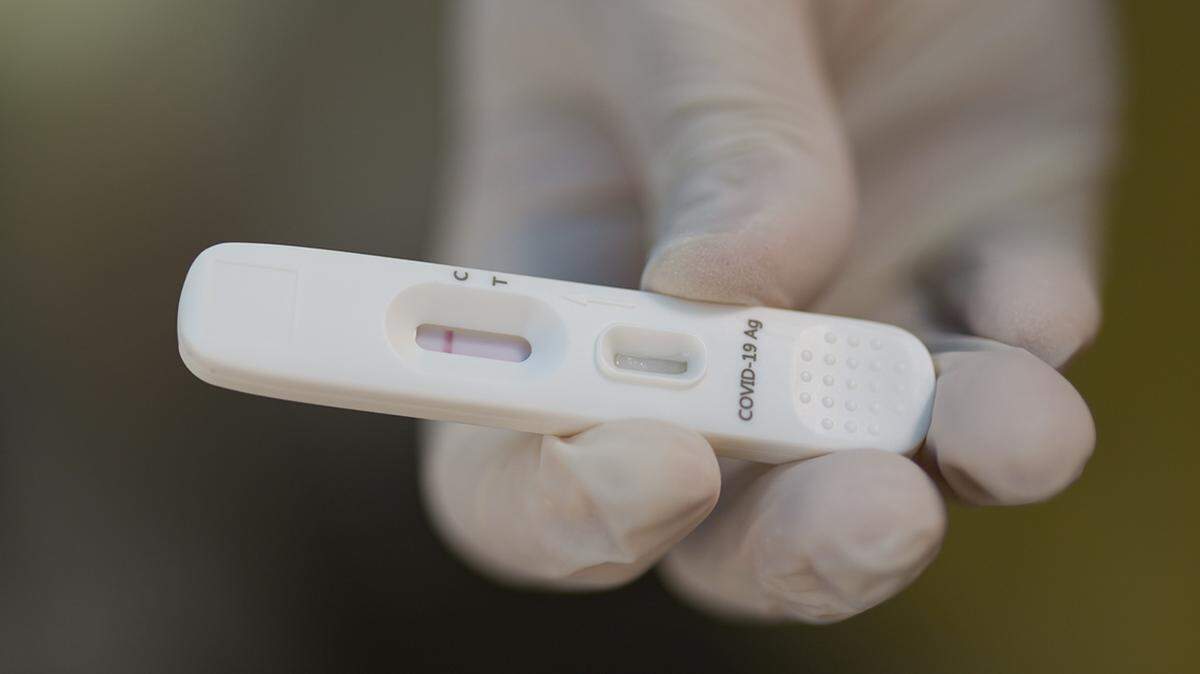
A Kansas City, Kansas, teacher felt sick, and looked all over for a rapid COVID-19 test so she could return to work without worrying that she could be spreading the virus. But when she found no such tests in the usual places — retailers can’t keep them on shelves and official testing sites keep running out and closing — she resorted to meeting a stranger she found online.
For $60 in cash, he administered her test in an abandoned parking lot behind an old bank building near Rainbow Boulevard in Kansas City, Kansas. It was “like a back alley COVID test,” said the teacher. “It was just a guy in a minivan, a paper mask and no gloves.”
In 15 minutes, via text message, she got the hoped-for negative result from the rapid antigen test. But was the test she got even real, and was the result accurate?
“This is becoming an issue,” said Dustin Johnson, vice president of operations for the Better Business Bureau of Greater Kansas City. “People need to be alert, be cautious and watch out for scams.”
Johnson said the BBB has not gotten complaints about this particular outfit, KC Rapid Covid Testing, whose Facebook page lists 14 sites in the Kansas City area. But Johnson said the encounter the teacher described “is either a poorly run operation or it’s someone who got their hands on some tests and is taking advantage of demand. It’s a mess.”
A Tuesday story on NPR’s ‘All Things Considered,’ ‘Why COVID tests can cost anywhere between $20 and $1,400,” interviewed Adam Tanner about a piece he’d done for Consumer Reports. “The current U.S. rules,” Tanner wrote, “allow for-profit pop-up sites offering simple rapid tests to operate without any experience in health care or science.”
“When we think of testing labs,” Tanner told NPR’s Ari Shapiro, “you might imagine someone working in a lab coat working with test tubes and studying science instruments, but these are of course easy tests that we know as at-home tests. They’re simple enough that anybody can do them at home, buy them over the counter or the internet. So if you set up a testing counter on a street in a van, they are simple enough where it’s hard to make a mistake. These are ‘labs,’ or operations that are allowed to operate waiving the usual federal government rules.”
Which is meeting a need. But with no regulation, how do consumers know which operators are reputable?
A call to the number the teacher used went directly to a recording. “You have reached KC Rapid Covid Test. … Due to a high call volume, please text your information to us and we will get back with you as soon as possible.”
This outfit is not to be confused with Rapid Test KC, or GS Labs. That Nebraska-based testing lab was sued this summer by Blue Cross Blue Shield of Kansas City for allegedly exploiting the pandemic by charging insurers grossly inflated rates for COVID-19 diagnostic testing. In a statement responding to the suit, the company denied the accusation, saying its prices “accurately reflect the level of service we provide.”
Rapid home test kits are also showing up for sale on social media sites at inflated prices. In Florida, one testing site is in trouble for issuing negative results to customers before they have even been tested.
Rapid antigen tests like those used at home
On Facebook, KC Rapid Covid Testing refers to its operation as BG Laboratories which “provides Rapid Antigen Covid testing, with results guaranteed in 30 minutes or less.”
After several text messages, the man behind this operation, Adam Roorbach, called to say “BG Laboratories is me.” Is he a laboratory? No. Is he a medical professional or lab tech? No. “I have a day job; this is a side gig. It’s on the up and up.”
Roorbach said he got an emergency use authorization from the Kansas Department of Health and Environment after he paid a fee and his application for a Clinical Laboratory Improvement Amendment certificate was reviewed and approved by the state.
The state confirmed that. Such operations “are necessary for conducting point of care tests for diagnostic purposes,” said Matt Lara, a KDHE spokesman. CLIA regulates clinical laboratories.
Roorbach says he bought rapid testing equipment from Henry Schein, a medical products distributor in New York.
Basically, Roorbach is charging people to do what they could do themselves with a home testing kit in their own living room.
But they can’t find one. And on Tuesday, the seven-day average of new cases across the Kansas City area hit an all-time high, with nearly 15,000 new COVID-19 infections reported in the past week.
Some cities across the country have reported drive-up lines a mile or longer for free home rapid antigen tests.. They run out quickly. Those giveaways are not happening in Missouri and Kansas, although Missouri is sending out free kits one at a time, and there are drive-up sites for PCR tests, which are analyzed in a lab.
At a drive-up testing site in Overland Park on Sunday, people waited nearly two hours to be tested.
Missouri residents can order an in-home PCR test from the state, which has to be mailed back to a lab for testing. Missouri’s health department recently announced a testing site at Kauffman Stadium.
Of course entrepreneurs are filling in the gaps. But as the Better Business Bureau says, consumers should proceed with caution.
This story was originally published January 11, 2022 at 10:59 PM.