
Other states are giving away tens of thousands of home COVID tests. Why not Missouri?
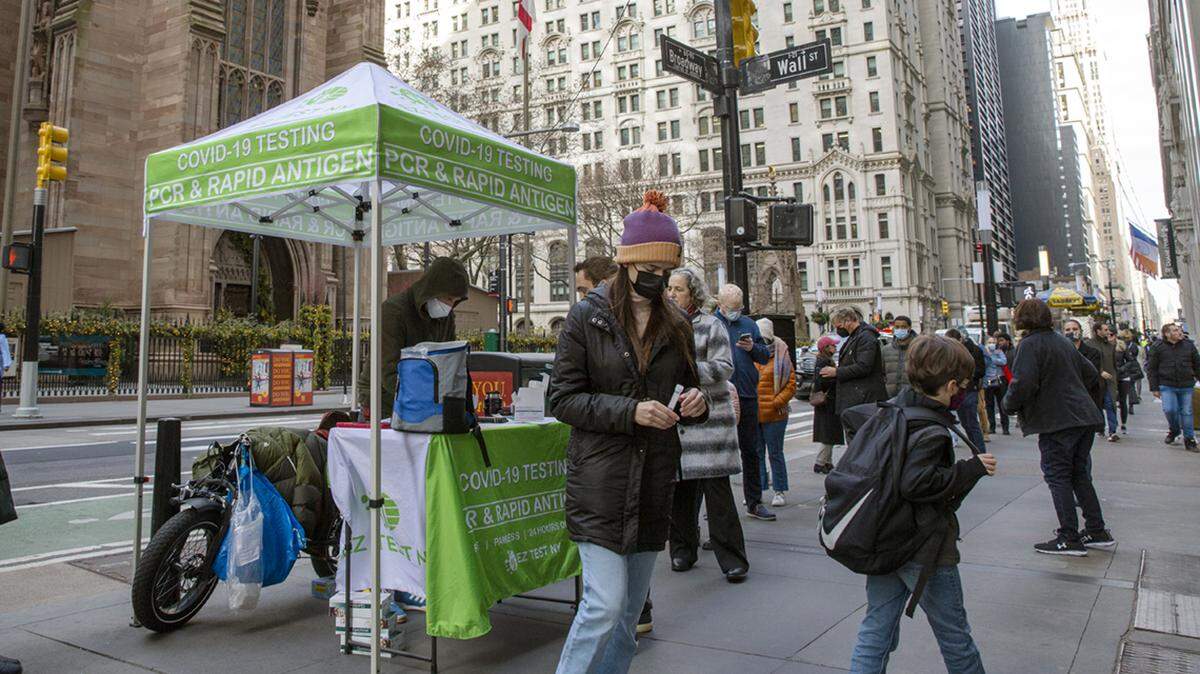
Cities across the country have reported mile-long lines of hundreds of people waiting to snag a few free COVID-19 home rapid testing kits. But not in Kansas City, because there are no drive up, walk up kit giveaways happening here.
There is a limited supply available to some agencies upon request. That definitely makes it harder for residents to quickly test for the virus, which is surging everywhere, and in no way helps to slow the spread of the highly contagious omicron variant that is straining hospitals and driving up demand for tests.
“There is not an infinite amount of resources, so we have to maximize available resources throughout the state and ensure the most vulnerable have access,” said Lisa Cox, spokeswoman for Missouri’s state health department.
Cox said the supply of rapid antigen tests, which give results in minutes, are “stretched so thin, retailers are also having a difficult time keeping their shelves stocked. The PCR testing supplies are much more available at this time.” PCR tests must be analyzed in a lab.
A search for rapid tests on the CVS website showed none in stock.
Missouri contracts with Fulgent Genetics to handle PCR testing. The state only made 15,000 tests available each month. It hadn’t come close to that number of orders until December when requests soared. They’ve added 10,000.
The Biden administration has faced widespread criticism for not producing enough tests in time for the highly contagious omicron variant. Nevertheless, many cities in New York, Pennsylvania and Colorado have managed to give away tens of thousands of home rapid-test kits. Why? Because those state and city leaders ordered them early. Missouri chose to spend its money on drive-up testing and home PCR tests.
”We do need to be good stewards of the resources available to our state especially during this time of high demand,” Cox said.
A quick test at home makes sense for residents to know if they are infected before deciding to head out to a restaurant, sporting event, theater or gathering with friends or family.
Yes, the rapid tests are more likely to give a false negative, but that’s not going to be every test, and it is convenient.
The average Missouri resident has to go to a testing site or fill out an online form and submit that to the state. They will send one test and it takes at least two business days to get it. You send your sample to Fulgent and wait another day or two for results. Missouri won’t send a second test until the first one has been used.
At your local pharmacy, a rapid home test runs from $10 to $40. A home PCR test is upwards of $100. A lot of people can’t afford that.
It’s the PCR tests that are recorded by the state and affect the state’s case numbers. Testing gives the state a better picture of how the virus is spreading.
We know numbers are rising. Maybe that’s not something that state leaders who’ve opposed vaccine and mask mandates to mitigate virus spread want to know. Recall back in 2020, former President Donald Trump wanted states to “slow down testing, please.” He said, “When you test you create cases.” More cases “makes us look bad.”
The Kansas City area is approaching record level averages of more than 1,200 COVID-19 cases per day. But because home testing is not reflected in the state’s official numbers, the true infection rate is likely seven to 10 times higher.
The White House has said it plans to deliver 500 million free at-home testing kits directly to the public. But that program is not expected to start until later this month.
Local testing clinics are seeing “a substantial increase” in demand for testing, and “we expect that it will be getting worse,” said Cathrine Wiley, spokeswoman for Samuel U. Rodgers Health Center in Kansas City, which operates a walk-in testing clinic Mondays, Wednesdays and Fridays.
Jackson County Health Department wants home tests but hasn’t gotten any from the state or federal government said Mariah Cox, department spokeswoman. “We are seeking COVID-19 home testing kits through our own ordering process.”
If the state could make more home rapid tests available, “it would definitely alleviate the pressure that testing clinics are seeing now,” she said.
With COVID-19 cases soaring nationally to more than 400,000 a day, the faster people can detect infection, the better chance we have of stopping the spread, and keeping our schools and businesses open.