
He forgave Malcolm Johnson for killing his son but is angry that cops killed Johnson
Seven years ago, Nate Hogan’s 22-year-old son, Monteario “Monty” Hogan, was shot and killed behind a Family Dollar in Raytown. He was shot once in the head.
That loss, Hogan said, is compounded every time he hears about another young Black man killed by gun violence. Yes, even when that man, Malcolm Johnson, is the same person who killed his oldest son.
In an interview last week, Hogan got emotional when he spoke about how Kansas City police shot his son’s killer to death in March.
“The first thing I had to do when Monty was killed was to forgive Malcolm,” Hogan said. “Not forgiving him wasn’t going to hurt him — it would only hurt me, my family. I knew that forgiving him would release me to find my joy. After something like that, how do you go back, give yourself permission to be happy again?” said Hogan, chairman of the Kansas City Public Schools board.
“The other reason, I’m a Christian. I knew forgiving him was the right thing to do. I don’t know where that man came from. I don’t know what trauma he had in his life that took him down a path” that led to him shooting Monty and being killed himself. Hogan said he thinks about students in the KCPS district, and that so many of them experience trauma at home, “and then we expect them to be model students.”
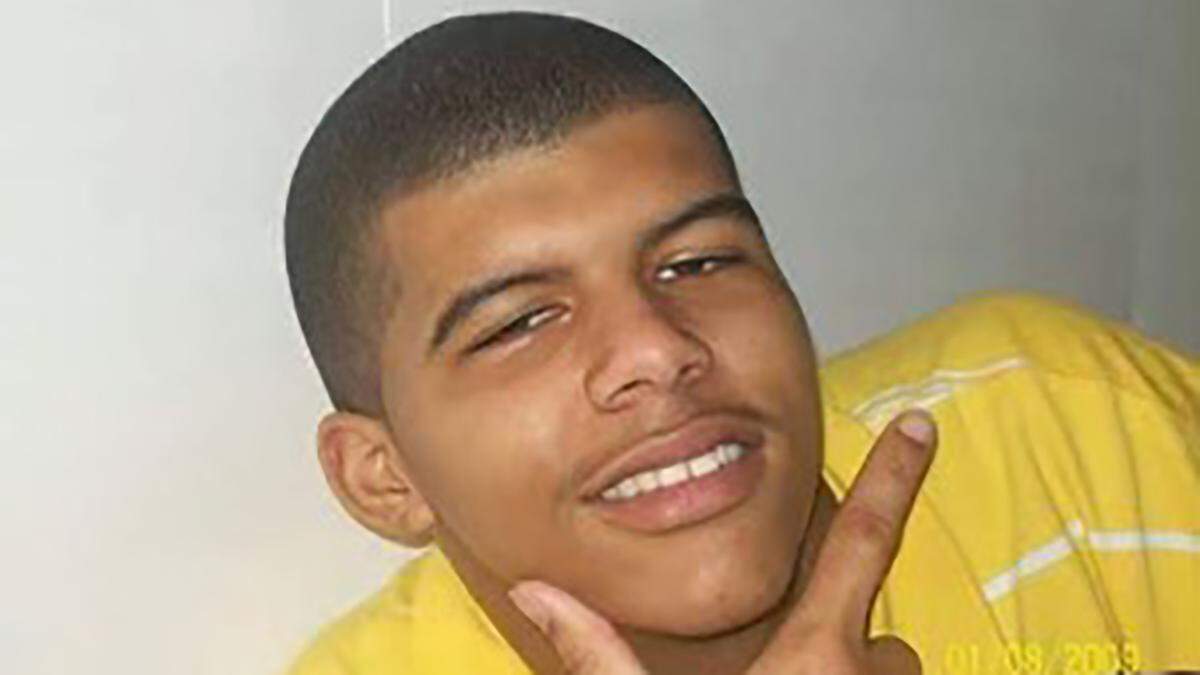
Addressing those traumas, poverty, drug abuse and more, Hogan said, would go a long way to halting gun violence. “We can’t seem to change the trajectory of violence. It is a public health crisis. Like the opioid epidemic. But we seem to be a helluva lot more willing to address problems when they involve white America. Shouldn’t we pour in the same amount of resources when it involves our Black men? But that’s a political football no one wants to address.”
That’s what makes Hogan angry. That, and that he thinks yet another law enforcement agency botched dealing with Johnson. And if that is so, he said, “police should be held accountable,” and a Missouri Highway Patrol investigation of this police shooting “may not be an effective means to do that.”
The Missouri Highway Patrol has been the lead investigative agency for police shootings in Kansas City since June 2020. Before that, the Kansas City Police Department investigated its own officers.
Back in February 2016, while Johnson was being held for murdering Hogan’s son, the Jackson County Detention Center mistakenly released him. KCPD eventually caught up with Johnson, 15 weeks later, when police found him with a stolen, loaded gun and put him back in jail.
Originally charged with second-degree murder for killing Monty Hogan, he pleaded to a lesser charge and stayed in jail four years before he was released.
Witness protection fund almost untouched
What happened the day police killed Johnson? Local Black pastors and some community activists say a widely circulating video of the shooting differs from the initial police account.
Hours after the shooting, the Highway Patrol said that when officers approached Johnson to arrest him, he resisted. During the struggle that followed, they said, Johnson pulled his handgun and fired, wounding an officer in the leg. That officer returned fire, fatally shooting Johnson.
Video of the shooting shows a secondslong scuffle with police and then Johnson chest down on the ground with about five officers on top of him. It shows Johnson’s feet kicking and his toes pointing down toward the floor when he was shot. Though the shooting itself is not visible, it’s hard to see how he could have shot anyone from that position. Johnson’s family has said an officer shot him twice in the head at close range, and that the officer may have been wounded by a police bullet that ricocheted.
“Sadly,” Hogan said, KCPD officers “have taught us to be completely suspicious of anything they communicate publicly.”
He’s right about that. Without trust, it’s hard to see how KCPD can start solving more crimes, and the department doesn’t seem to want to take even the most basic possible steps to build that trust.
Just last week, for example, we learned that Kansas City police have dipped into a state-financed $1 million witness protection fund to support violent crime investigations exactly once. In the four months that money has been available, the KCPD has spent $116.68 of the fund Mayor Quinton Lucas pushed hard for last year, arguing that it would help witnesses and victims feel safer when they come forward.
Chief Rick Smith has often complained about the lack of cooperation from the community, so why not do something to change that?
Video of Malcolm Johnson’s shooting raised not only questions about the veracity of the initial police account, but about police procedures and conduct. Is it SOP to run into a convenience store with guns drawn? And did no one think to use a stun gun instead of a deadly weapon?
“No human being deserves to have their life taken from them execution style,” Hogan said, “no matter what that man did to my son.”
When he heard that Johnson had been killed by police, “My first thought was, he has a family. I felt for his family. They didn’t ask for this. I would never want anyone to go through what I went through.”
Are you listening, KCPD? This doesn’t have to keep happening. But it will, unless the department makes the kind of serious changes it isn’t even contemplating, like hiring a police chief who believes in transparency and holds problem officers accountable. While Chief Smith keeps insisting that nothing’s wrong that doing more of the same can’t fix, the body count keeps mounting.