Kansas City's loudest Facebook group wants a seat at the table | Hudnall
The World Cup is over in Kansas City. What a nice month that was.
Back to reality.
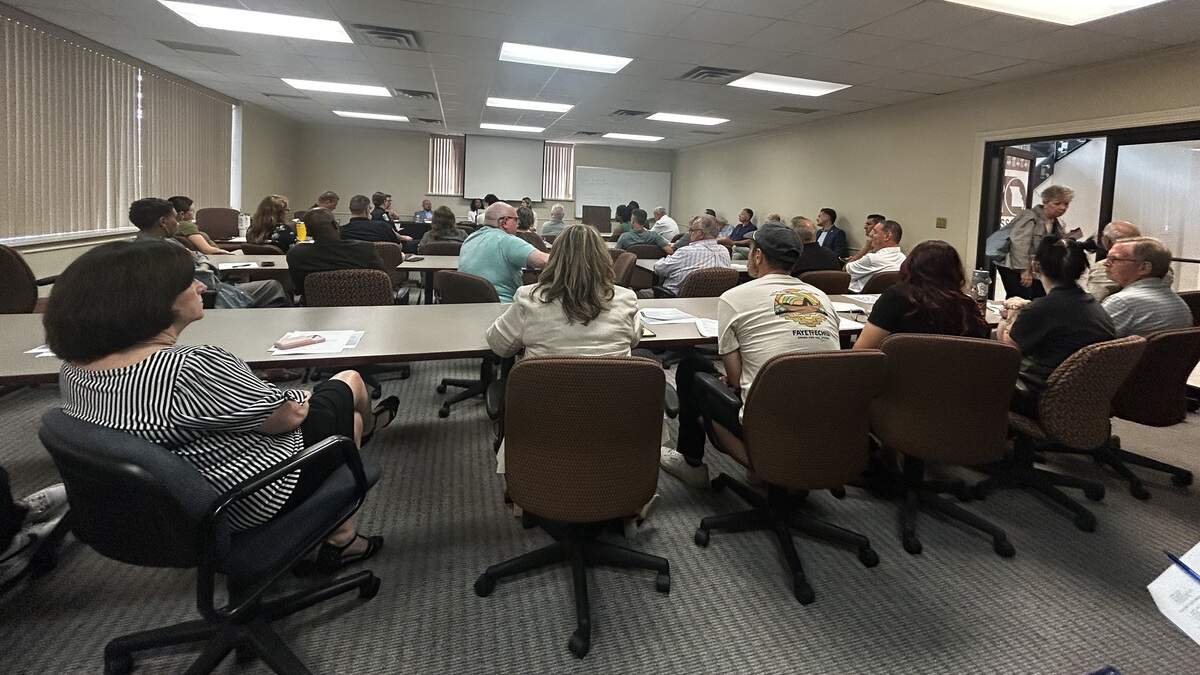
For several civic leaders Monday morning, this reset arrived in the form of a two-hour roundtable at the Missouri Restaurant Association’s offices in south Kansas City. About 70 business owners gathered at the invitation of Matt Alexiou, founder of The Real Kansas City, an increasingly influential Facebook group built around frustration with City Hall.
Alexiou, who owns Southside Bar & Grille near 103rd Street and State Line Road, started the group four years ago after repeated complaints to the city about homeless people defecating on his restaurant’s patio went nowhere. Today it has more than 20,000 members, many of whom share a broadly conservative outlook on local politics.
“We all love Kansas City but hate what it is becoming,” reads the group’s mission statement. “There is currently a dark cloud growing over our city due to City Leadership under the control of the Mayor Wasting Millions on programs that only enable the situations not fixing them. Our city and our media will not show you what we will post on this page.”
It’s a Facebook group, which means anyone can post. That can be a mixed bag. On its worst days, The Real Kansas City can be conspiratorial, bitter and rife with misinformation. People blame the mayor for a police department he doesn’t control, City Hall for county property assessments, or homelessness on local officials who are confronting a national problem with limited resources. Many members seem determined to absolve the police of failures that obviously belong to the police.
On its good days, though, the page is illuminating. You do sometimes see stuff on there that you won’t see anywhere else. Business owners post security camera footage of repeat thefts. Residents document illegal dumping, encampments and broken infrastructure that linger for months. They vent about valid complaints: inconsistent code enforcement, a city bureaucracy that often feels indifferent and the absence of a permanent municipal jail.
Monday’s meeting suggested that Alexiou wants to leverage The Real Kansas City into something more than a Facebook group. It was an attempt to turn an online forum for frustrated residents into something like an organized political force. Whether elected officials like its politics or not, they increasingly have to reckon with the people and ideas behind it. The group has become too big for City Hall to dismiss.
KCPD chief, city officials at meeting
The guest list Monday included KCPD chief Stacey Graves, council members Wes Rogers and Ryana Parks-Shaw (both eyeing next year’s mayor’s race), Jackson County executive candidate Dan Tarwater and several high-level city officials, including Diana Knapp (recently hired to lead the city’s corrections and rehabilitation efforts), deputy director of Housing and Community Development Mary Owens and Public Safety Director Lace Cline.
They presented information to, and answered questions from, a crowd of about 70 small business owners. Though the meeting was, as one attendee put it, a bit of a “bitch session,” the back-and-forth was respectful. People tend to be a lot more polite in person than online.
I am not sure what will come of the meeting, or if anybody felt much better afterward, but I learned a few things.
One is that the city’s temporary jail — we are not supposed to call it the World Cup jail anymore, because it didn’t open in time for the tournament — is still delayed, because the city has hired only about a third of the 79 employees needed to staff it. Knapp said the qualifications are modest: Applicants must be at least 18, have a high school diploma, pass a drug test and not have what she called a “ridiculous rap sheet.”
“If you know somebody who’s got a kid who needs a job,” she told the audience, “send them our way.”
The permanent jail is even further out. Voters approved a public safety sales tax to fund it last year, but it’s still about four years from opening, with construction still at least 18 months away because the city first has to relocate the adjacent tow lot. The timeline drew audible groans.
Homelessness, which is worse in Kansas City than in most cities in America, dominated much of the rest of the discussion.
The city has hired a consultant from Houston who helped drive that city’s unhoused population toward “functional zero” — the idea that once someone is identified as homeless, the city can get them housed within 48 hours. Kansas City’s version, Housing Gateway, is funded with $4 million from the council plus private fundraising, and the first rollout is expected in early August.
The city will have a long way to go, though, based on comments from the crowd. Alexiou pointed out that some people are receptive to services to help them. But the ones who aren’t are the real problem.
“My thing is, how do you get those guys off the street who don’t want help? I don’t know how other parts of town are, but down here at 103rd Street, it’s literally like Disneyland” for homeless people, he said. “In a quarter-mile area, they can make money panhandling, get food, get alcohol, get drugs, and nobody messes with them.”
“It’s a complete nut show down here after 10 p.m.,” he added.
Other complaints
Bill George — who owns commercial property around the metro and is CEO of Kansas City Transportation Group, which includes zTrip — argued that the city’s problems extend well beyond crime and homelessness.
He recounted spending two years obtaining permits to redevelop a former Berbiglia Wine & Spirits building, cleaning out what he claimed were hundreds of barrels of human waste left by squatters, then dealing with theft after the project was complete.
He contrasted that experience with nearby suburbs.
“I can go into any city — Leawood, Olathe — and it is a pleasure doing business,” George said. “They will walk you through department to department and introduce you to the next person you need to talk to. Try that in Kansas City. It’s like you’re the bad guy for going in and trying to get anything done.”
Bill Nigro, a Westport property owner with a longtime flair for colorful and provocative criticisms of City Hall, was even less charitable, calling the city’s codes department a “criminal organization.”
“They slow everything down in this town,” Nigro said. “They’re the biggest roadblock we have.”
David Lopez, owner of Manny’s Mexican Restaurant in the Crossroads, said his biggest frustration is the city’s failure to police illegal activity during First Fridays.
At this point, Lopez said, “the 311 operators know me by my first name.”
“In the heart of the Crossroads, we’re taking a 20% hit on sales every year because of illegal events that are happening next door to us,” Lopez said. “Our parking is being taken up, our customers are being harassed and panhandled, people are coming into our restaurants and harassing our customers. They’re using our restrooms illegally, passing out in our restrooms.”
He went on: “Everybody in this room who works for the city, you’ve heard from me. And nothing gets done.”
Jail ‘the most expensive solution’
Earlier in the meeting, Councilman Johnathan Duncan, an outspoken progressive, offered a counterpoint to the prevailing view in the room that the city’s crime and homelessness problems would be solved by throwing more people in jail for longer. The people cycling through the system are often severely sick, he said, and locking someone up for six months only to release them no better off doesn’t fix anything.
Jail “is the most expensive solution we have,” Duncan said. “We have to look at things more holistically. We’re moving toward building a jail, but we also are moving toward a community resource center that’s actually providing that treatment, the crisis stabilization, the rehabilitation, the detox, and getting people on medications.”
Duncan exited the lion’s den early, but Lopez and Alexiou later made a point to respond to his argument by citing the skyrocketing insurance rates business owners like them pay as a result of break-ins.
“It might be an expensive night to house the guy,” he said. “But everybody in the city limits is paying higher car insurance, home insurance, business insurance. … It dwarfs whatever one night is.”
Given how often he is cited on The Real Kansas City as the cause of so many of the city’s problems, Mayor Quinton Lucas’ name hardly came up on Monday, save for a comment from George about the mayor frequently being, to the detriment of the city, “on three sides of a two-sided issue,” which drew some laughs.
But the two people in the room looking to replace Lucas seemed to understand the day’s assignment. Parks-Shaw communicated that she’d received the frustrations and encouraged attendees to scan a QR code where they could register more complaints and feedback with the city. “We’re hearing you,” she said.
Rogers offered some comments more directly tailored to the small-business conservatives in the crowd.
“You guys deserve a jail, and you deserve more officers,” he said. “And you deserve to have us back off you a little bit, by the way. We at the city need to figure out a way to cut some red tape for you guys so we can get some more tax revenue to reinvest it in the city to make it more safe.”
“Thank you for investing in our community,” Rogers added.
Maybe he believed it, maybe he was pandering a little. Either way, it seemed to be confirmation that The Real Kansas City’s members have assembled into a constituency it would be unwise for most local candidates to ignore.