It was fear and loathing at Kansas City’s Costco community meeting | Hudnall
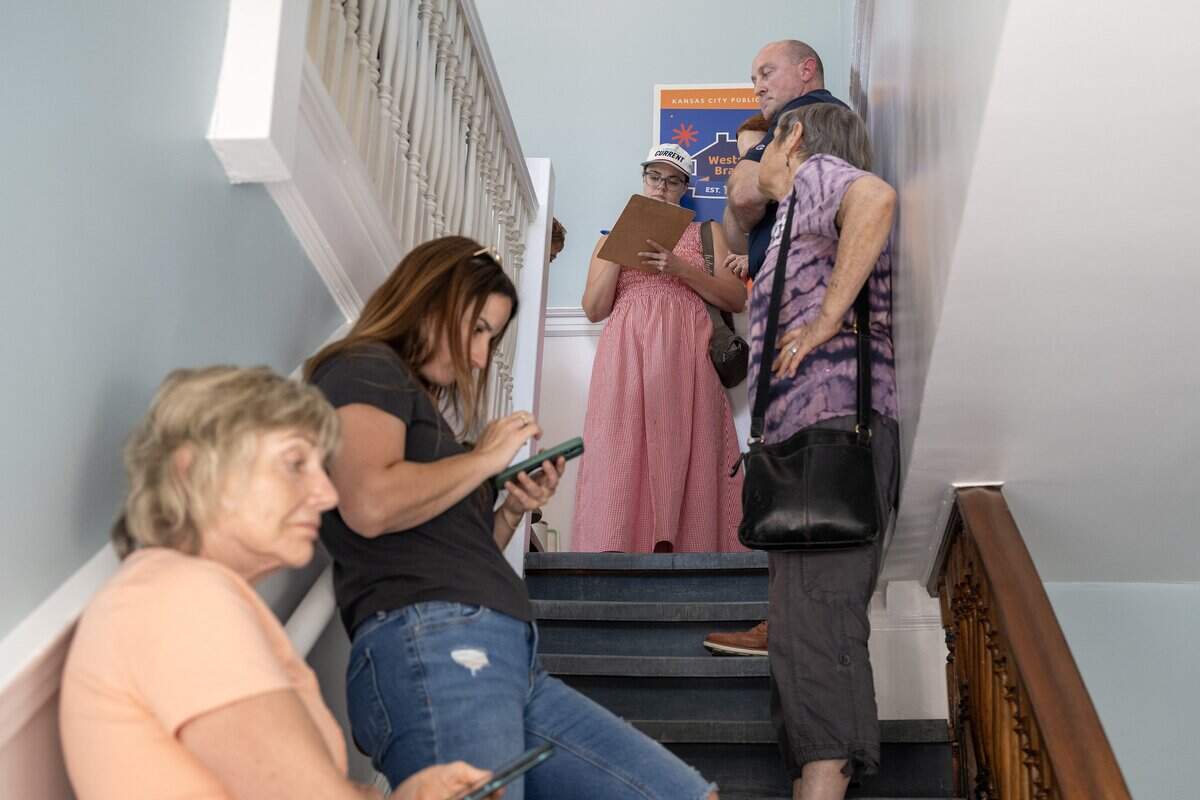
On Tuesday evening at the library’s Westport branch, I stood (and later sat; the meeting went on for a while) and watched roughly 70 people argue with a corporation that has very obviously already made up its mind.
Costco wants to convert its Linwood Boulevard location into a Costco Business Center. You already know this. The plan has received the kind of scrutiny usually reserved for pop stars or papal enclaves. I alone have already written two pieces about it.
And yet, there I was last night, at a meeting so packed they had to run it twice, since the upstairs room couldn’t hold everyone who showed up.
Viewed one way, it is a testament to the power of the Costco brand that so many Kansas Citians were willing to show up and voice their opinions about a membership-only warehouse club. Costco should be proud.
Unfortunately for Costco, just about every single person there was mad about the proposal. Assuming everything goes according to plan — and I do assume that — the Linwood Costco will close in the fall and reopen in the spring with far fewer offerings.
Costco’s business centers — the company has 26 and counting in the U.S. — are aimed primarily at restaurants, offices, convenience stores and other commercial customers. The gas station will remain, and the food and beverage offerings will actually expand.
But there will be no pharmacy. No optical department. No tire shop. No electronics. No clothes. No bakery. No liquor. No rotisserie chickens. No food court. I repeat: no more $1.50 hot dogs.
Questions for Costco
Costco’s plan, which includes adding shipping docks and reconfiguring the parking area, requires approval from the City Plan Commission. That process in turn requires a public neighborhood meeting where the company explains its plans, answers questions and listens to concerns.
The company sent three Costco representatives to Tuesday’s meeting. They were there to serve as pain sponges, explaining a decision they did not make to people who desperately wanted someone to blame.
The questions, and accusations, came quickly and with varying levels of heat.
One woman said she had heard the store was being converted due to theft and low sales.
“If it’s low sales,” she said, “that’s because you opened up too many Costcos in Kansas City and drove some of that business away.”
The pharmacy became a symbol of the larger frustration. Residents said the loss would fall hardest on older customers and people who rely on the store as a one-stop shop. Others argued that midtown already has fewer big-box options than the suburbs, meaning the people who choose to live in the urban core will now have to drive farther for basics.
One attendee questioned the planning behind the meeting itself, asking Costco representatives whether they were surprised by the turnout and why the company had chosen such a small room.
“This is a great example of your poor planning,” he said. “There’s enough people upset about this to fill an auditorium.”
Another member of the crowd seemed to be entering the bargaining stage of grief.
“What if you did a hybrid business center, where you have a little deli or bakery, and keep the liquor section?”
Expanded groceries, beverages, cleaning supplies
On and on it went. The Costco reps had thin gruel to share. It amounted to: This decision had been made at a corporate level many layers above them, and now would you like to see what our plans are for the business center?
We learned that 65% of the products in Costco’s business centers are unique to those locations, including expanded selections of groceries, beverages, cleaning supplies and other commercial goods. The Linwood store would add about 600 grocery items, serve more restaurants and businesses, and offer a quicker shopping experience with less foot traffic. The gas station will stay open during the renovations and after, keeping the same hours. The store’s hours will be 7 a.m. to 6 p.m. every day.
Nobody cared. The basic shape of this plan has been known for months.
After 45 minutes of withering feedback, one of the Costco reps then made the mistake of suggesting some of the assembled were looking at things from a “glass-half-empty” perspective. The crowd erupted in jeers.
“I’m not being dismissive,” he said. “What this ends up with is — you end up with a business center. The alternative is, the store closes.”
Sad to say, but he’s probably right.
The one remaining question is whether the city is willing to exert what leverage it has. The City Plan Commission will hear Costco’s plan July 15 at 9 a.m. and make a recommendation before the proposal goes to the City Council for a final decision.
“It’s not a done deal,” Councilman Crispin Rea told me after the meeting. “But only if we can point to legitimate planning concerns, like traffic or site issues.”
I suppose that’s possible. And I suppose some kind of compromise could be reached where Costco keeps the pharmacy or food court open. But Costco holds just about all the cards here. It owns the building and its plans are entirely reasonable. It has served the community well, but it is not required to maintain a specific business model just because residents have become accustomed to buying Kirkland jeans and double-chunk chocolate cookies. This is America.
More to the point, Kansas City probably shouldn’t send a message to the business community that City Hall can rewrite a company’s business plan whenever enough customers are unhappy.
Which means we Costco members may soon have to confront an uncomfortable truth: The rotisserie chickens were never actually ours.
This story was originally published July 8, 2026 at 8:36 AM.